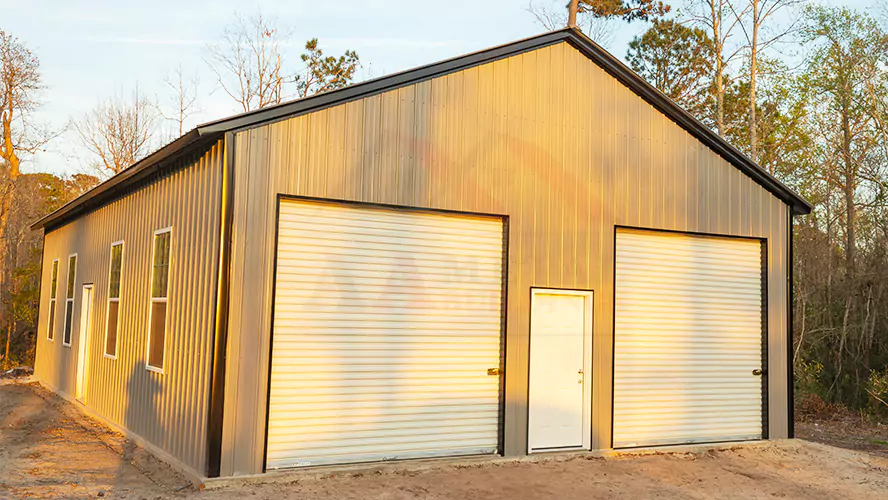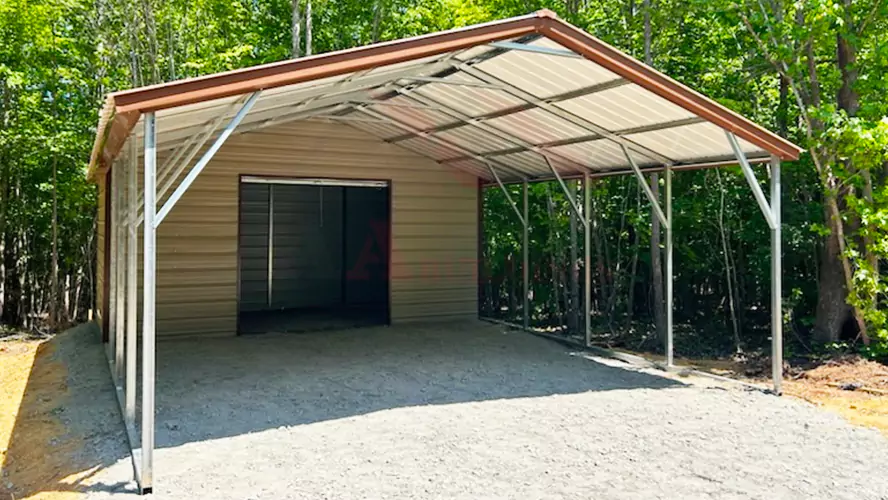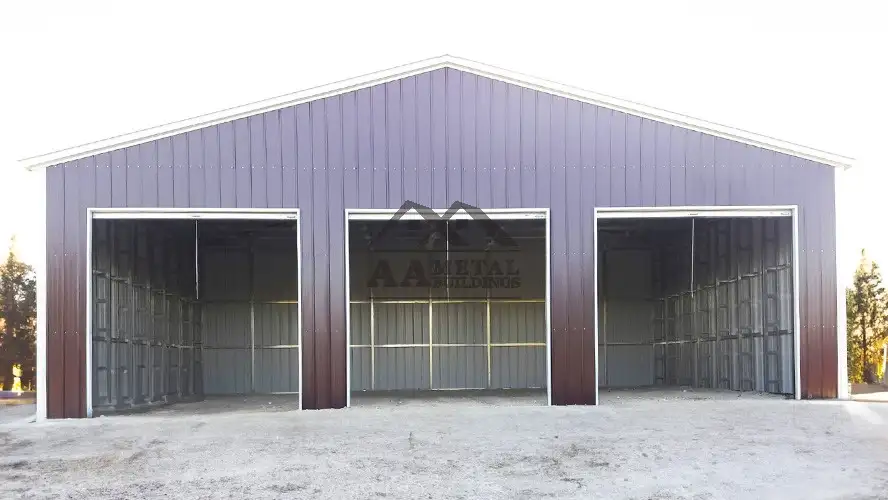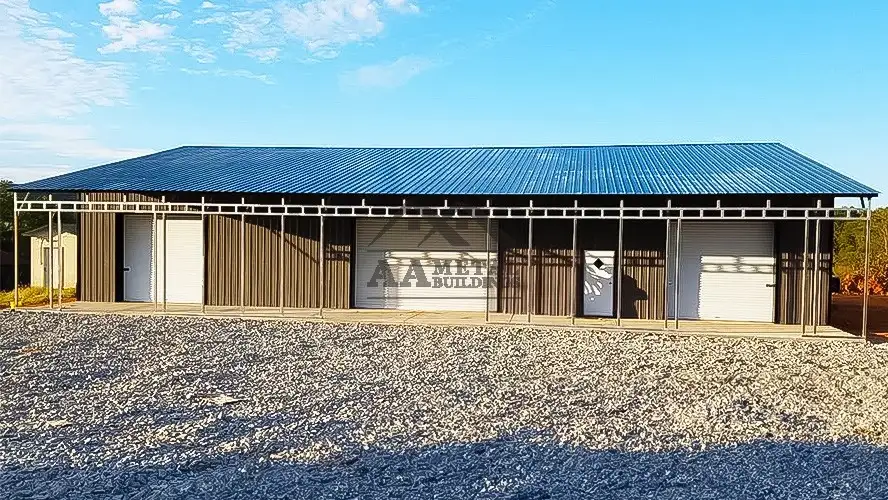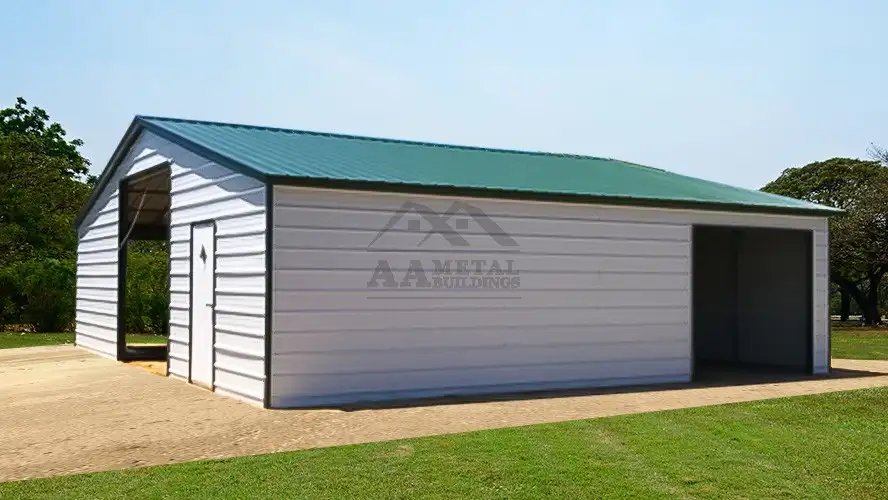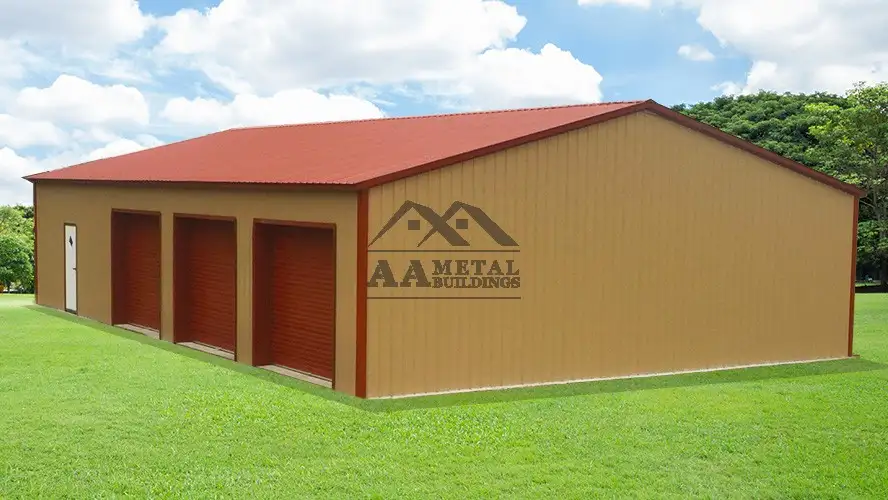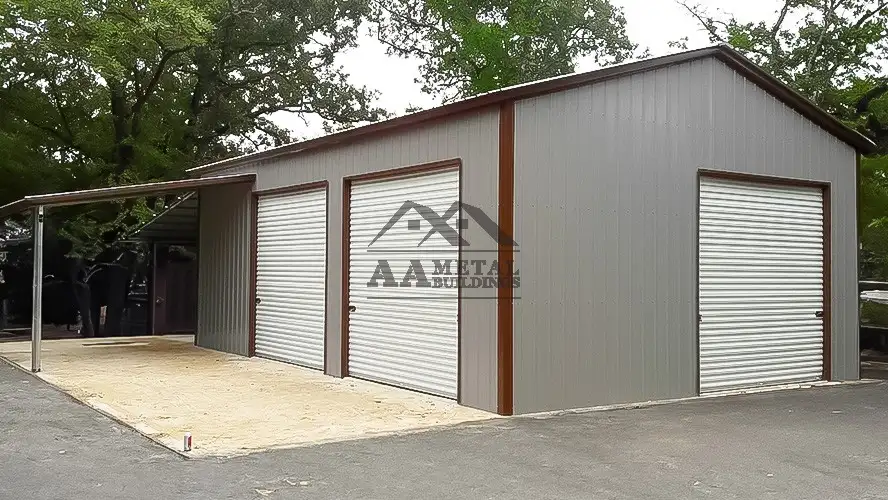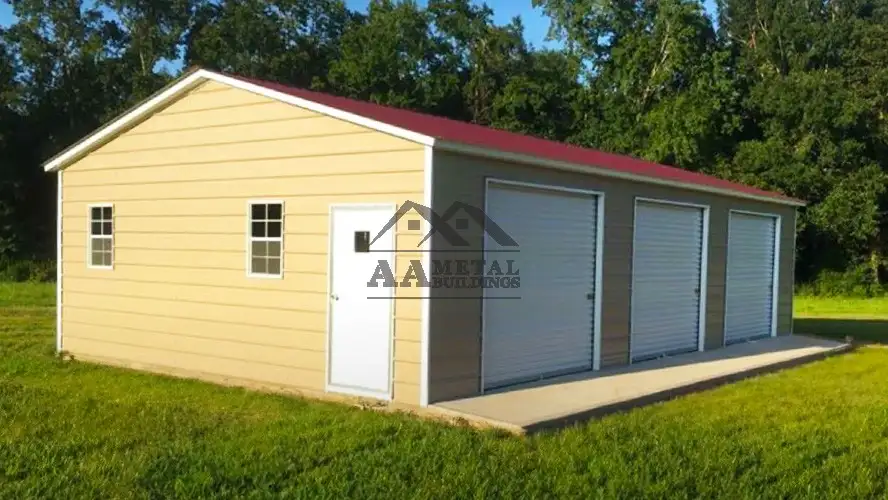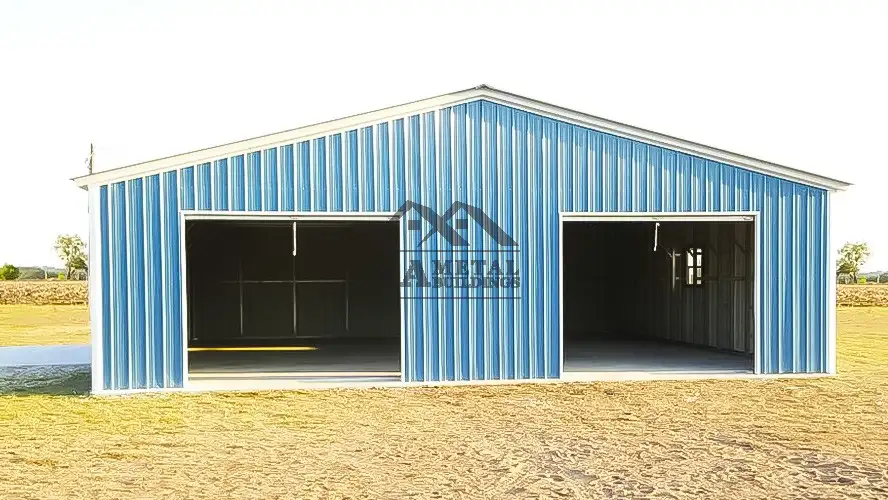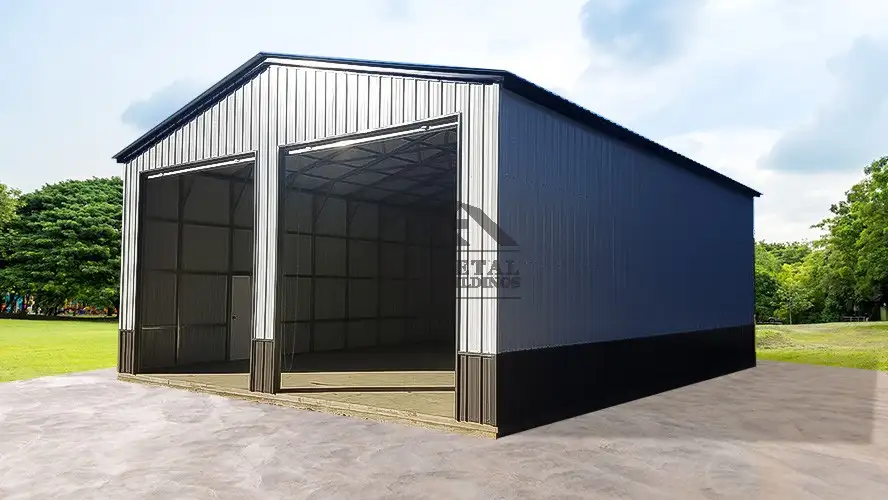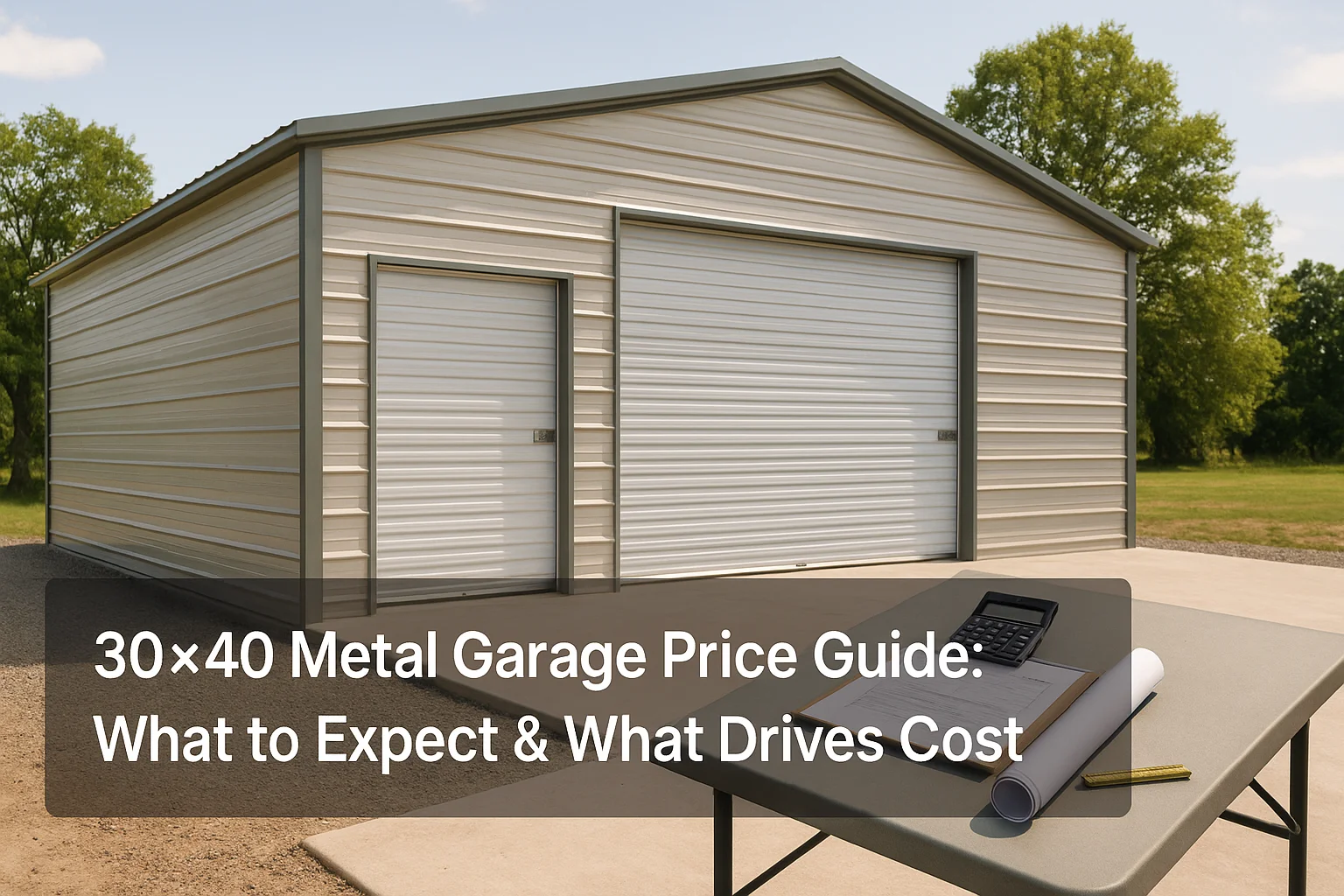
You’re looking at a 30×40. Solid choice. Big enough for two full-size trucks and a real workbench—if you lay it out right. Here’s the same talk I give, standing on a gravel pad with a tape in my hand.
What It Is
30×40 = 1,200 sq. ft. That’s room for vehicles, a work zone, and shelves without crab-walking between them.
What usually works:
- Two 10×8 or 10×10 roll-ups on the long wall
- One walk-door, one or two windows for daylight
- 10–12 ft eave height (go 12′ if a lift or roof racks are in your future)
- Frames: tubular (14-ga or 12-ga) or rigid-frame (I-beam)
- Roof: horizontal, boxed-eave (A-frame), or vertical
Bottom line: Same footprint, very different buildings depending on frame type, height, and openings.
Who a 30×40 Fits Best
- Two daily drivers plus a real bench and tool storage
- Truck + boat or UTV, without shoe-horning
- Weekend welding/woodworking with space to turn around
Bottom line: If 24×30 looks tight on paper, 30×40 gives you breathing room you won’t outgrow in six months.
What a 30×40 Typically Costs (Planning Numbers)
Numbers swing by region, soil, loads, and crew rates. Use these to budget; your final spec decides the finish line.
| Scope | What you’re getting | Planning Range* |
|---|---|---|
| Tubular steel, enclosed | 14-ga frame (12-ga upgrade), wall/roof metal, trim, install | $16,000–$26,000 (building) |
| Rigid-frame (I-beam) kit | Engineered kit, ~26-ga panels, drawings | ~$24,000+ (kit only) |
| Rigid-frame shell installed | Kit + erection (no slab/electrical) | $29,000–$52,000 |
| Concrete slab (30×40) | 4–6″ slab, sub-base prepared | $7,200–$12,000 |
| Electrical run & wire-out | Trench, subpanel, basic circuits/lighting | $1,200–$7,100+ |
| Permits/fees | Local permitting and inspections | $150–$2,000 |
*Budgetary only. Local conditions and choices drive final price.
Quick take:
- Tubular 30×40 on a slab with a couple of doors commonly lands mid-$30s to low-$40s all-in.
- Rigid-frame 30×40 with real loads, insulation, and decent doors often ends up $50k–$80k. Slab spec, labor rates, and trench length move the needle.
Bottom line: Most overruns come from the slab, the trench, and “one more door.” Plan those early.
What Drives Cost (The Levers)
Frame & Steel Gauge
- Tubular: 14-ga is budget. 12-ga is stiffer and common in “certified” packages for wind/snow.
- Rigid-frame: hot-rolled I-beams, engineered to your site loads, cleaner interior for insulation and wall finishes.
Bottom line: Higher wind/snow or interior finish plans? Don’t stay at 14-ga.
Roof Orientation
- Horizontal / boxed-eave: cheapest; panels run side-to-side and hold leaf litter.
- Vertical: sheds water/snow best; adds sub-framing and cost.
Bottom line: Under trees or in snow country, vertical pays you back in less cleanup and fewer panel headaches.
Doors & Openings
- Two 10×10 roll-ups plus a walk-door adds several thousand depending on insulation and openers.
- Taller/wider doors push you to taller eaves. Chain reaction.
Bottom line: Door count, size, and insulation swing totals fast.
Concrete (Where Projects Are Won or Lost)
- 4″ slab is common for cars/light trucks if the base is right.
- 6″ slab with reinforcement for heavier rigs, lifts, or point loads.
- Put a vapor retarder under it and saw-cut on time.
Bottom line: You only pour once. Don’t under-spec the part you can’t upgrade.
Site Work & Utilities
- Grading, stone base, and truck access matter more than folks think.
- Power trench distance rules the electrical bill; welders/EVs want a bigger subpanel.
Bottom line: The distance from your main panel to the shop is a sneaky cost.
Loads & Code
- Your zip’s wind/snow numbers decide bracing, anchor count, sometimes panel thickness.
- “Certified” (tubular) or engineered drawings (rigid-frame) keep plan review smooth.
Bottom line: The steel follows the loads. Bring real numbers when you request quotes.
Foundations & Anchoring (What Holds It Down)
Common setups we install:
- Slab-on-grade + wedge/expansion anchors (tubular)
- Cast-in anchor bolts for rigid-frame base plates
- Helical/auger anchors on gravel/ground installs (tubular), where allowed
Things to watch for:
- Soft sub-base = slab cracks and sticky doors
- No vapor retarder = condensation under tools
- Anchor patterns that don’t match leg spacing (yes, it happens)
Bottom line: The building is only as good as the dirt and the anchors.
Insulation, Condensation & Comfort
Good, better, best:
- Fiberglass blanket/batts: R-13 to R-19 walls, R-30+ ceiling where you’ve got depth.
- Spray foam: best air-seal and condensation control; higher cost; great at the roof.
- IMP (insulated metal panels): highest performance, premium price.
- Drip-stop membrane: low-cost roof solution for unconditioned shops.
Ventilation matters: ridge/soffit or gable vents, and a fan if you heat with propane.
Bottom line: If people or nice tools live in there, plan real R-value and airflow.
Roof Styles — Quick Compare
| Roof Style | Best For | Trade-offs |
|---|---|---|
| Horizontal | Mild weather, tight budgets | Cheapest; holds debris on ridges |
| Boxed-Eave (A-frame) | Cleaner look, moderate weather | Still horizontal panels; similar cleanup |
| Vertical | Heavy rain/snow, tree litter | Higher material/labor; least maintenance |
Bottom line: If you’re already raking the house roof, vertical cuts that chore.
Example Builds You Can Plan Around
1) Simple Garage (Tubular)
- 14-ga frame, boxed-eave roof, two 10×8 doors, walk-door
- 4″ slab, basic grading, no power yet
- Mid-$30s to low-$40s total in many markets
2) Weekend Shop (Rigid-Frame)
- I-beam shell, ~26-ga panels, two insulated 10×10 doors
- 6″ slab with thickened edges at door lines
- 100A subpanel, basic lights/outlets
- $55k–$75k depending on labor and trench distance
3) Wind/Snow Version
- Heavier steel, vertical roof, extra anchors/bracing
- 6″ slab, better door insulation, foam at the roof
- Premium over the two above—steel and labor are the drivers
Bottom line: Pick the bucket that matches how you’ll use it, not just what looks cheapest this week.
Layout Mistakes We See All the Time
- Doors too small. Full-size trucks and roof racks want 10×10.
- Not enough height. Lifts and tall racks like 12′ eaves.
- No wall real estate. Leave 3–4 ft beside parked rigs and 2–3 ft at the bench.
- Power in the wrong place. Put 240V where the welder will actually live.
- No apron. A 4–6 ft apron outside the roll-ups keeps mud out and bumpers happy.
Bottom line: Tape it out on the driveway before you order. Real dimensions beat guesses.
Permit & Paperwork Basics
Expect a simple site plan, anchoring details, and your wind/snow numbers. Fees range from pocket money to “wish I’d budgeted it,” depending on the city.
Bottom line: Plans with real loads and real anchors move faster and avoid rework.
Quote Checklist (No Surprises Later)
- Frame type and gauge in writing
- Roof orientation (horizontal / boxed-eave / vertical)
- Door sizes, quantities, insulation, and openers
- Slab spec: thickness, reinforcement, vapor retarder, cuts, thickened edges
- Anchoring method and count
- Electrical scope: trench length, subpanel size, number of circuits
- Lead times for steel, concrete, and crew
Short Path to a Good 30×40
Pick the frame that fits your weather and future plans, don’t skimp on the slab, and size the doors for the biggest thing you might roll in later. Do that, and this isn’t just storage—it’s the most useful place on your property.
Design & Next Step (AA Metal Buildings)
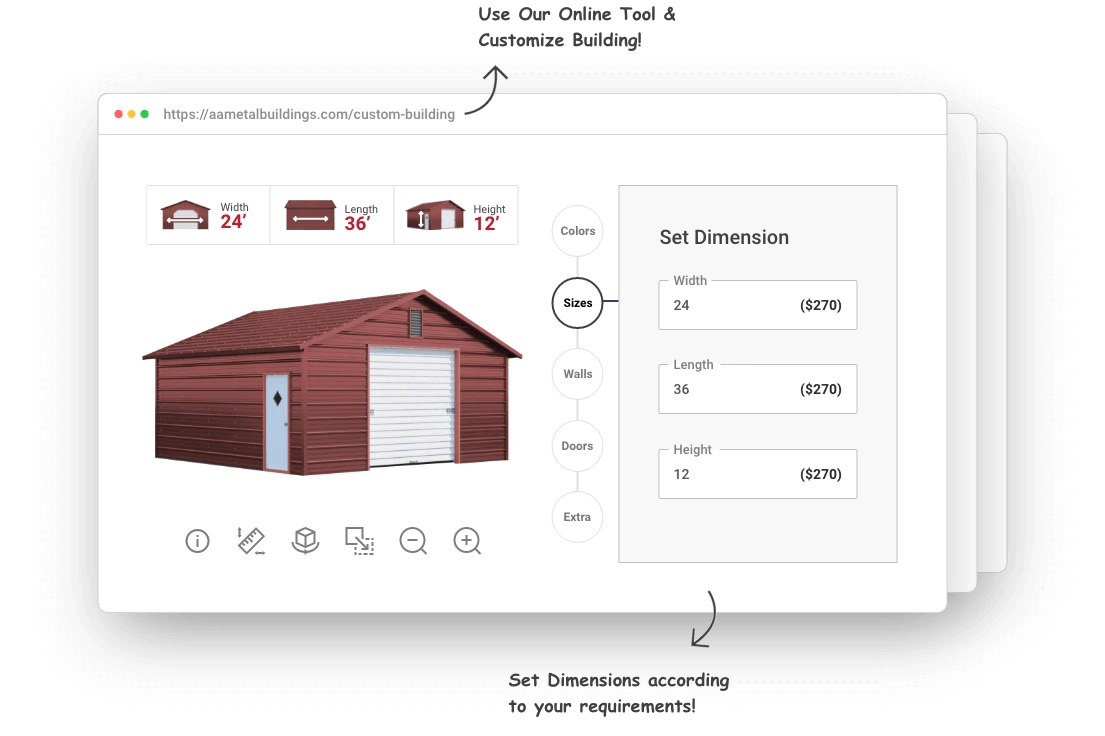
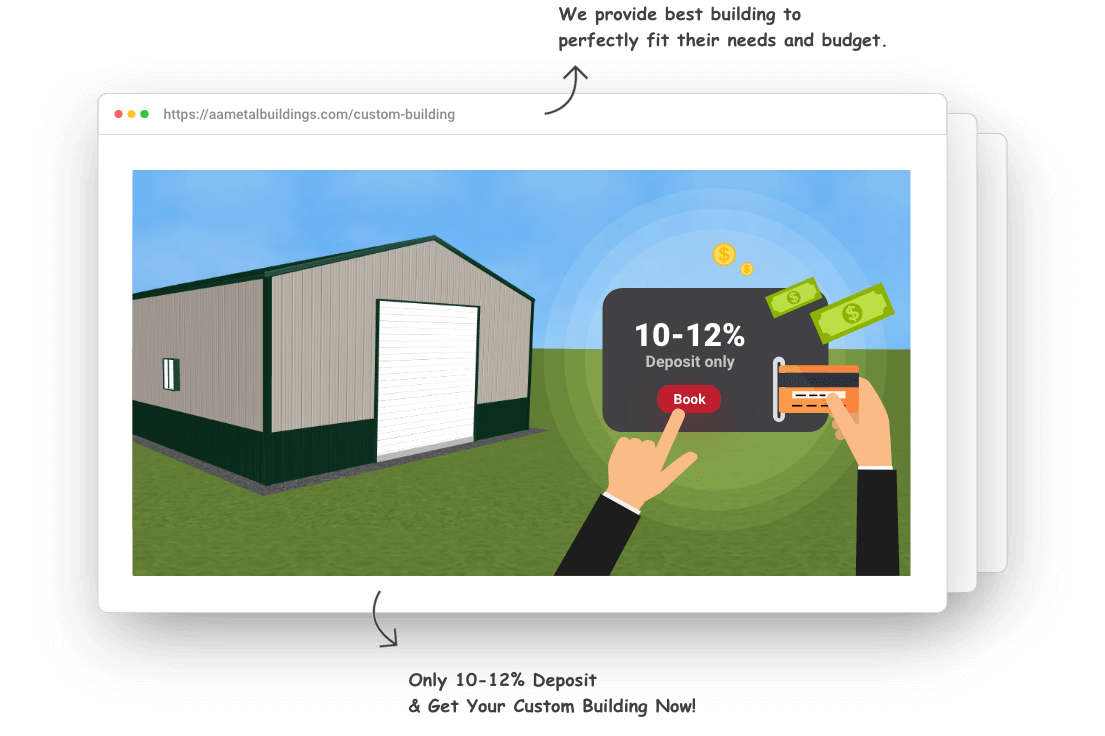
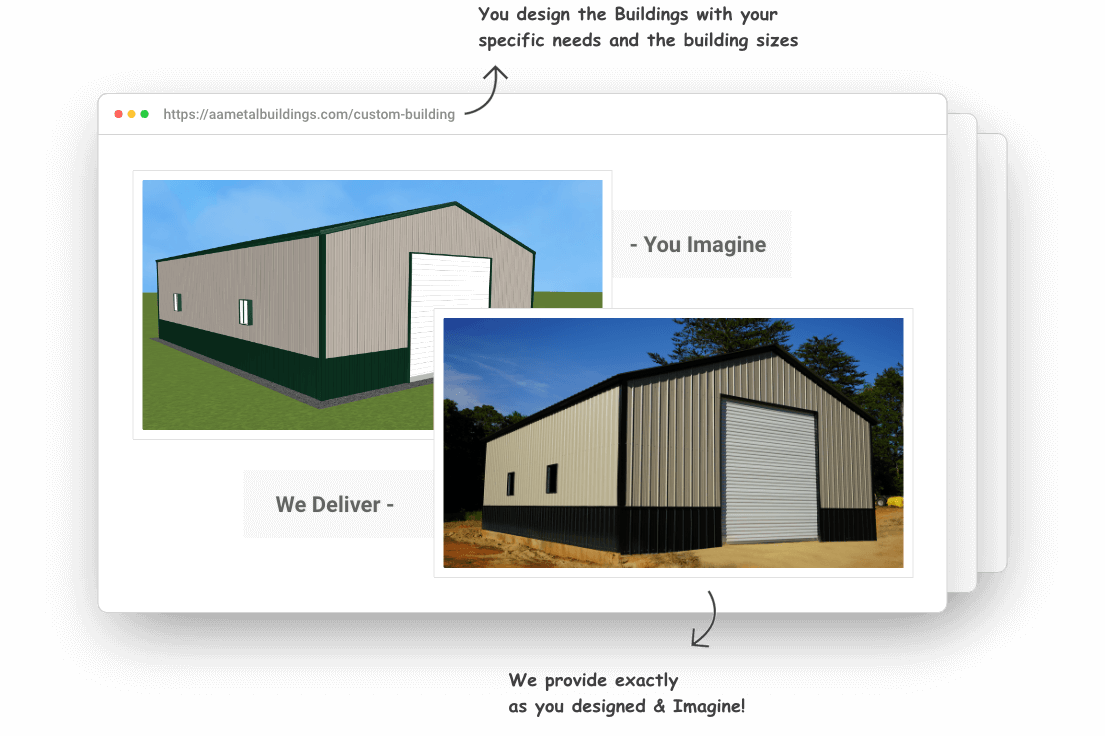
- Design your 30×40 in our 3D Design tool—set size, height, roof, doors, colors—then share it with our team.
- AA Metal Buildings engineers every build for your zip code’s wind/snow, anchoring, and slab so it goes up clean.