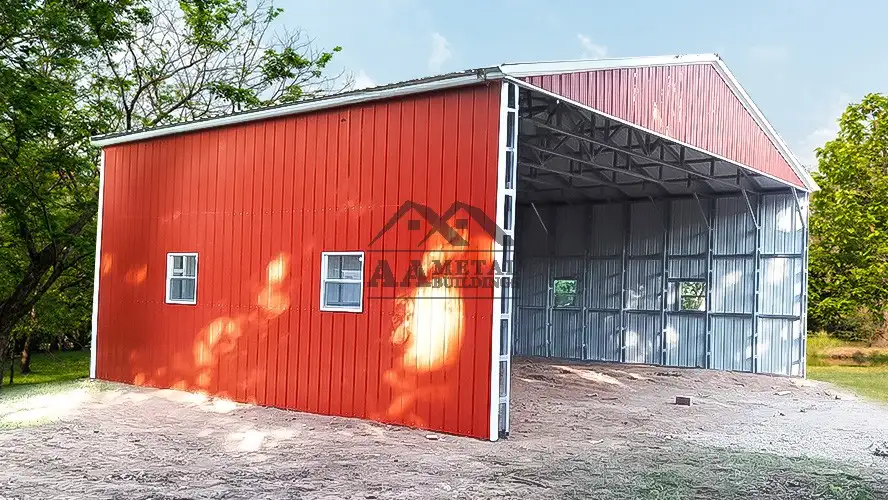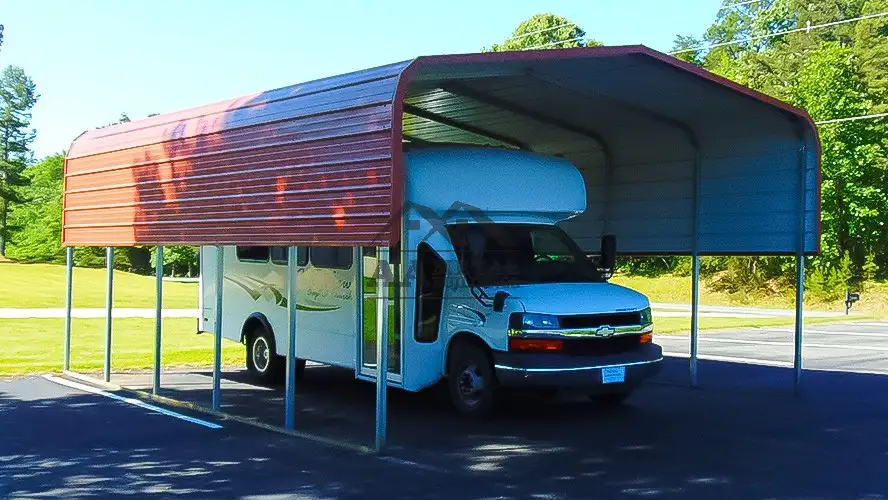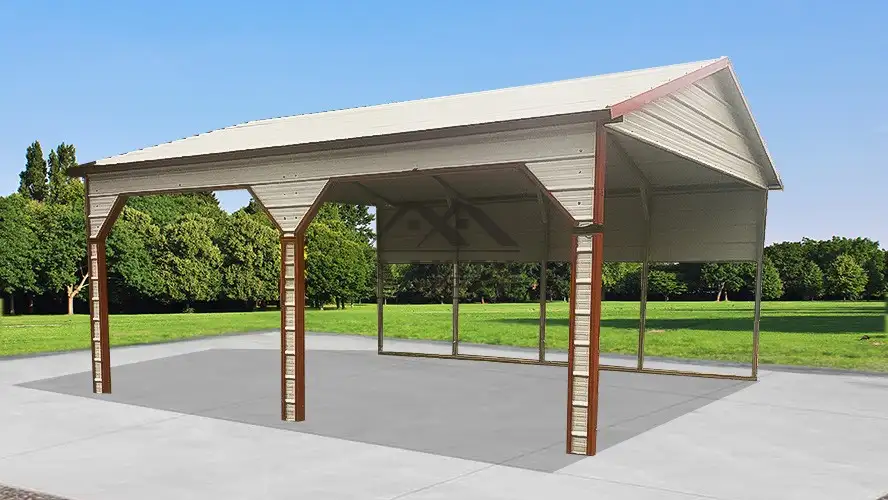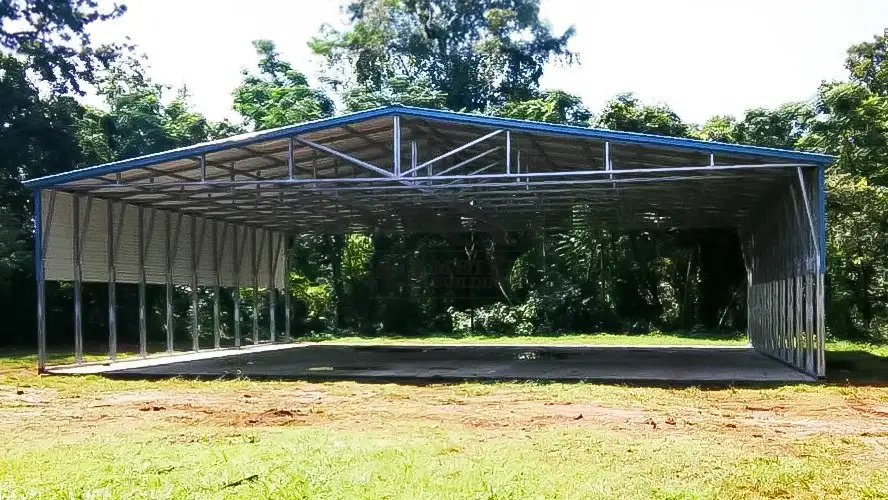





Look it over twice a year, and again after rough weather. Start with the roof, then check screws, posts, anchors, drainage, and rust. Most carport repairs come from little stuff getting ignored: loose fasteners, standing water, small rust spots, or panels moving in the wind. Find those early and the building lasts longer.
What I’d Tell You Standing Next to the Carport
Honestly, most people don’t check this stuff until something is already leaking or making noise. That’s the truth. A carport can look fine from the driveway, but up close you might see screws backing out, washers cracking, trim starting to lift, or rust starting down low where water sits.
What usually happens is, one small thing gets ignored. A screw loosens a little. Not a big deal at first. Then rain gets under that washer. Then the wind hits that same panel over and over. You won’t notice it right away, but over time, that’s where problems start.
The roof is where I’d look first. That’s taking the sun, rain, hail, branches, and whatever else lands on it. If leaves or pine needles sit up there too long, they hold moisture. If a panel seam opens up, water finds it. Water always finds the weak spot. Always.
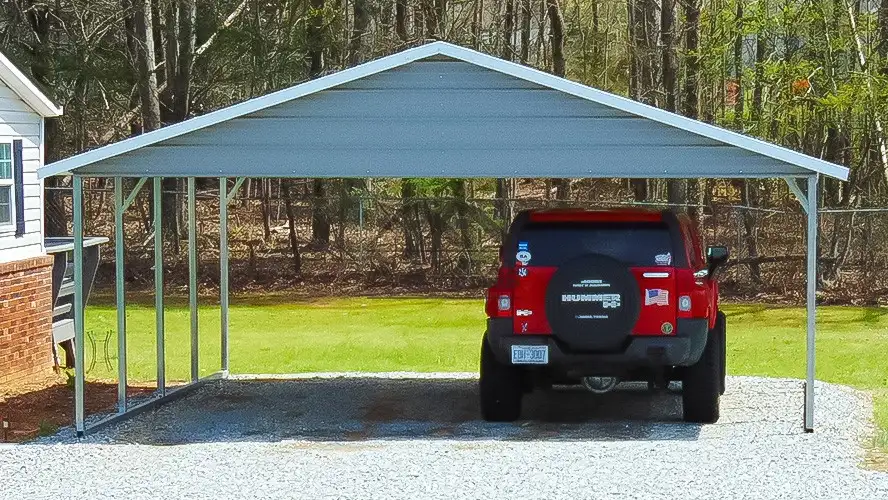
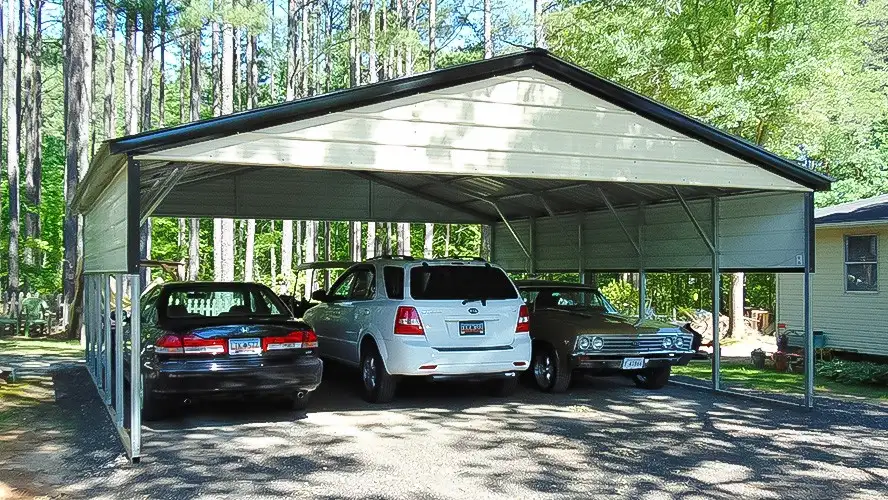
Then I’d walk the frame. Look at the posts, base rails, braces, and anchors. If this thing is sitting on concrete, make sure the anchors still look tight. If it’s on ground or gravel, look for washout around the legs. A carport can flex some in wind, but it shouldn’t feel loose at the base.
Rust is another one people wait too long on. A little surface rust is not the end of the world. But don’t just stare at it for two years. Clean it, treat it, coat it. Rust usually starts where the coating got scratched, around fasteners, or near the bottom where water and mud hang around.
And after a storm, don’t just assume it’s fine because it’s still standing. Walk around it. Look for lifted panels, bent trim, dents, loose anchors, or new rattling. A ten-minute look after a bad storm can save you from a much bigger repair later.
Start With the Roof
If I’m checking a carport, I start at the top.
Look for loose screws, missing screws, old washers, bent roof panels, open seams, and debris sitting where it shouldn’t. You don’t need to climb all over it if it’s not safe. Just get a good look from the ground or use a ladder carefully.
A lot of leaks start around fasteners. That rubber washer is what helps keep water out. Once it dries up, cracks, or lifts, water can sneak in. At first it might just be a small drip. Then it stains things. Then it spreads.
Check the Frame and Anchors
Next, look at the legs and frame.
The posts should be straight. Braces should be tight. Base rails should not be rusting out or sitting in water all the time. If you push lightly on a post and it feels like it’s moving too much, that’s worth checking closer.
Anchors matter more than people think. Wind doesn’t just push on the roof. It tries to lift and twist the whole structure. If anchors loosen, the carport can start moving around more than it should.
Keep Water Moving Away
Water sitting around the bottom of a metal building is bad news.
Clear leaves, mud, grass clippings, mulch, and junk away from the edges. If water keeps pooling near one post every time it rains, fix the grade or drainage. Don’t let the same spot stay wet over and over.
That’s how rust starts. That’s also how ground anchors can loosen if the soil washes out.
Deal With Rust While It’s Small
Small rust is usually manageable.
You clean it up, remove the loose rust, and use the right primer or coating for metal. It’s not fancy work, but it matters.
The places I’d check first are the bottom of posts, panel edges, screw holes, trim corners, and anywhere the finish got scratched. If rust is around a brace, anchor, or structural connection, don’t guess. Have somebody look at it.
Look at Panels, Sides, and Doors
If your carport has side panels, end walls, or doors, check those too.
Loose panels usually tell on themselves. They rattle. They buzz in the wind. They don’t sit flat anymore. That’s not just annoying. It means the panel is moving, and moving metal keeps working screws loose.
Doors should open and close right. If a walk-in door starts dragging or a roll-up door pulls crooked, something may have shifted.
Simple Maintenance Table
| Task | When | Why |
|---|---|---|
| Check roof panels and screws | Twice a year | Stops leaks early |
| Look at posts, braces, and anchors | Once a year | Keeps the frame solid |
| Clear leaves and dirt from edges | Seasonally | Keeps water from sitting |
| Treat small rust spots | As soon as you see them | Stops it from spreading |
| Walk around after storms | After strong wind, hail, snow, or heavy rain | Catches hidden damage |
Quick Checklist
✔ Look at the roof twice a year
✔ Check screws and washers
✔ Make sure posts and anchors are tight
✔ Clear leaves, mud, and debris from the edges
✔ Don’t let water pool around the legs
✔ Treat rust when it’s small
✔ Check panels and trim after storms
✔ Listen for rattling in the wind
Common Things People Ignore
Loose screws. That’s a big one.
Small rust spots. Another big one.
Water pooling around the legs. People ignore that all the time because it doesn’t look urgent.
And rattling. If something rattles every time the wind blows, it’s moving. Maybe it’s just trim. Maybe it’s a panel. Either way, it’s better to fix it before the next hard wind makes it worse.
FAQs
How often should I maintain my carport?
Twice a year is a good habit. Spring and fall works fine. Also check it after bad storms.
Do metal carports rust?
Yes, they can. Usually where the coating is scratched, where water sits, or around fasteners and lower frame areas.
What causes leaks in a carport?
Most leaks come from loose screws, worn washers, open seams, bent panels, or trim that has shifted.
Can I pressure wash my carport?
Yes, but don’t blast it too hard. Stay back from seams, screws, trim, and doors. Too much pressure can push water where it shouldn’t go.
Why is my carport rattling?
Something is probably loose. Could be a panel, trim piece, brace, or fastener. Don’t ignore it if it keeps happening.
How long does a carport last?
A good metal carport can last for decades if it’s installed right and you keep up with small maintenance. Weather, anchors, roof style, and care all make a difference.
Small Checks Now Save Big Repairs Later
A carport doesn’t need constant attention. But you do need to look at it now and then.
Most expensive repairs I’ve seen started as something small. A loose screw. A little rust. Water sitting where it shouldn’t. A panel rattling for months. That’s usually how it goes.
So walk it a couple times a year. Check it after storms. Fix the small stuff while it’s still small. That’s how you get more years out of it without turning maintenance into a big project.