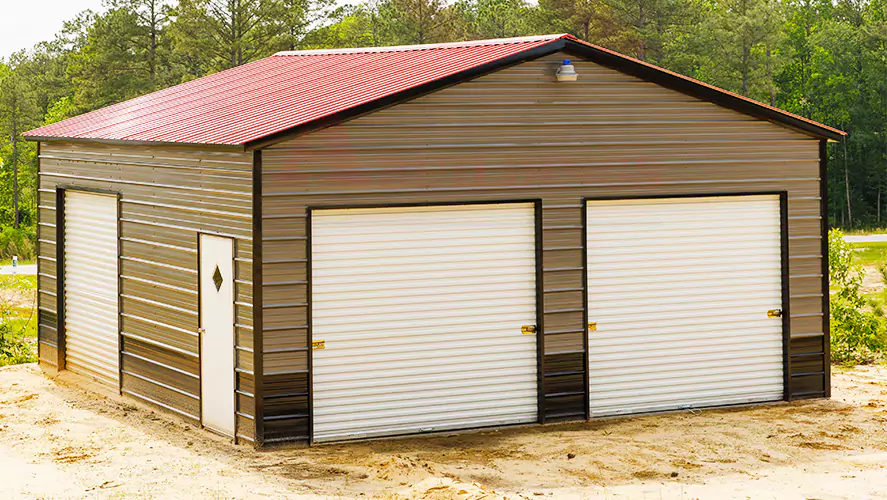
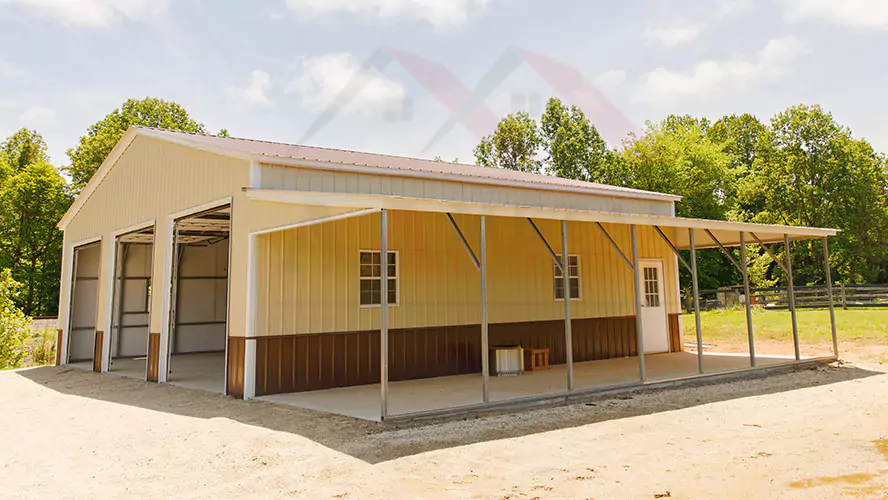
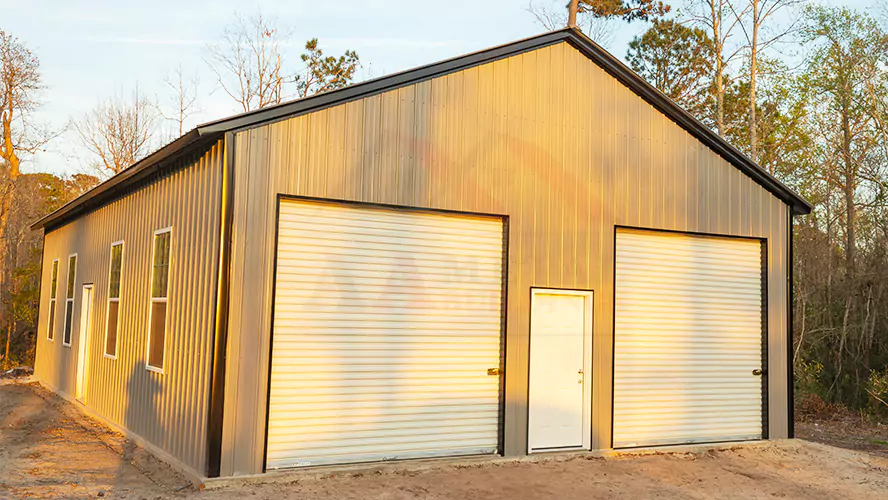
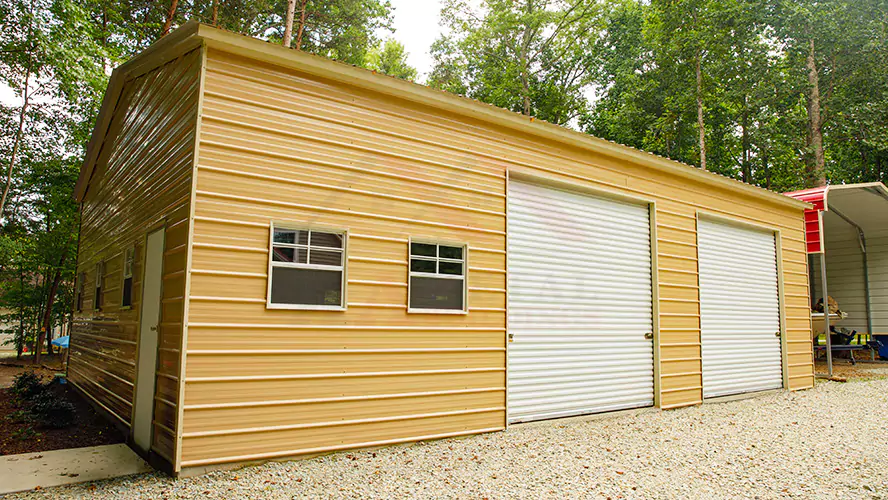
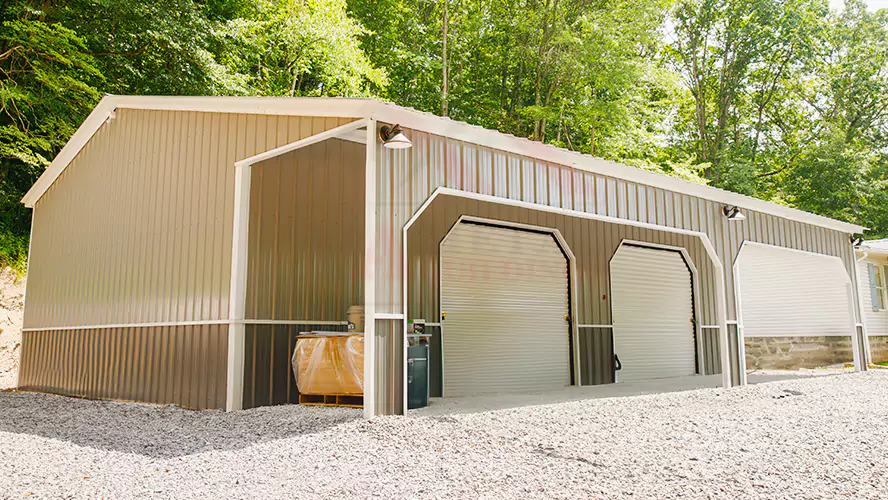
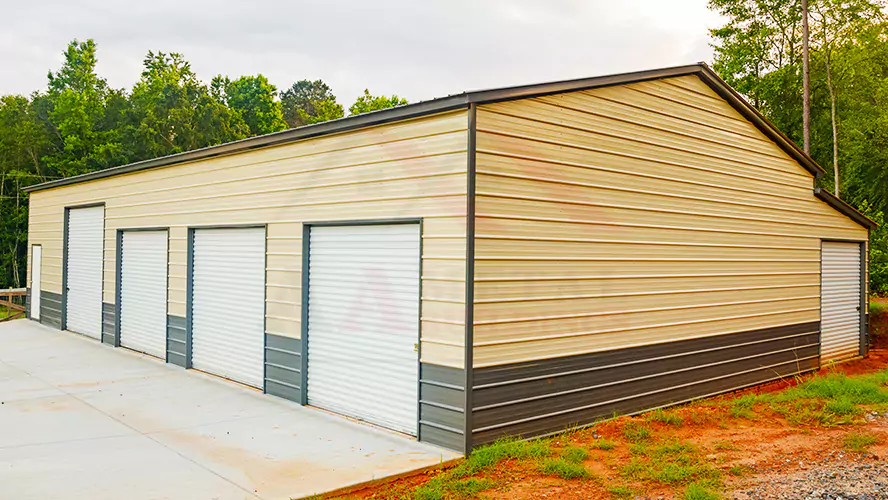
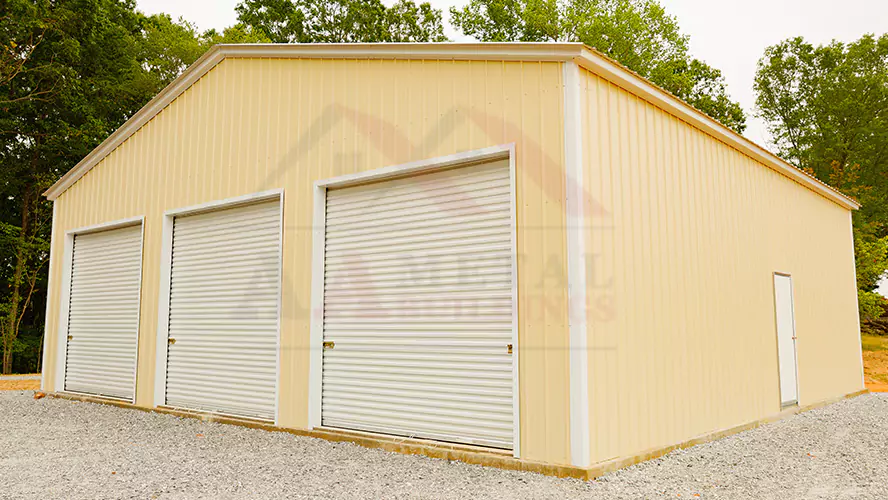
Let’s be honest: most people don’t buy a metal garage twice. So the first time you shop, you’re stuck sorting through a bunch of promises that all sound the same—“heavy-duty,” “built to last,” “premium steel.” Meanwhile, nobody’s explaining what actually makes one building still tight and dry at year 30… and what makes another one start dripping at year 6.
Here’s the thing. Steel doesn’t “go bad” on a schedule. What fails early are the weak links: water sitting at the base, condensation raining from the underside of the roof, screws and washers aging out, and buildings that weren’t designed for the wind/snow where they’re installed.
If you want the real answer, you don’t start with “How many years?” You start with “What will try to wreck it first on my property?”
A well-built, properly installed metal garage typically lasts 25–50+ years, and plenty go longer. The frame usually outlives the “small parts” like fasteners, washers, trim, and seal points, which are often the first causes of leaks. Poor drainage, constant condensation, coastal salt air, and under-rated wind/snow design can cut the usable lifespan fast.
The quick “will this last?” checklist (save this)
- Is water forced to run away from the building on all sides (not toward it)?
- Is the building rated/engineered for your local wind and snow loads?
- Do you have vertical roof panels if your area sees heavy rain, snow, or leaf buildup?
- Are your anchors correct for the foundation and soil type (and spaced right)?
- Are you controlling condensation (vents, insulation, vapor barrier) if you’ll store vehicles/tools?
- Are your door openings sized for real clearance, not just “the hole in the wall”?
- Are panels and trim kept off constant wet dirt/mulch at the base?
What “lasting” actually means (most people mix these up)
When somebody asks me how long a metal garage lasts, I always split it into three lifespans:
- Structural life (the frame): posts, rafters, bracing—this is the skeleton
- Weather-tight life (roof/walls): panels, screws, closures, trim—this is where leaks start
- Cosmetic life: paint fade, chalking, small dents—this is looks, not strength
A good frame can stay solid for decades. A bad roof screw pattern or a wet base can make a “new” building feel old in a hurry.
Bottom line: most “metal garage problems” are really water problems and movement problems.
Frame strength: gauge matters, but design matters more
Yes, steel gauge and tubing size matter. Thicker steel generally handles abuse better. But the bigger deal is whether the frame is designed to resist racking (that side-to-side sway) and whether the loads have a clean path from the roof to the ground.
What I’ve seen over and over:
- Taller walls + wide spans + big doors = you need real bracing and a proper load rating
- Open, flat properties take wind harder than sheltered sites
- Buildings fail early when they’re built for “average weather” and installed in not-average weather
If you’re in a higher wind or snow region, don’t gamble. Ask for the wind/snow rating and whether it needs engineering for permitting. A permit office might not care about your sales brochure—they care about stamped drawings and local requirements.
Roof style: where water goes decides how long it stays dry
People love to debate roof styles like it’s just looks. It’s not. Roof choices decide where water and debris sit—and where leaks tend to start.
- Vertical roof panels: Water sheds straight down. Leaves and pine needles don’t hang up as easily. In wet/snowy areas, this is usually the safer long-term option.
- Boxed eave / A-frame variations: Often shed well, but details matter at edges, ridge, and trim laps.
- Regular/rounded style roofs: Can be fine in mild zones, but with heavy weather you’re more likely to see runoff patterns that keep fasteners and laps wet longer.
If you want a garage that still feels “tight” 15 years from now, you pick the roof that stays cleaner and dries faster.
The base and drainage: the #1 lifespan killer nobody wants to pay for
If I could force every buyer to spend money somewhere, it’d be site prep.
A metal garage can be built perfectly… and still lose years because it sits in the wrong spot or the grade is wrong. Water splashes dirt onto the base panels, dirt holds moisture, moisture leads to corrosion, and the bottom edge turns into the problem area.
Common mistakes I’ve seen:
- Pad slopes toward the garage (even slightly)
- Downspouts dump at corners without extensions
- Mulch piled against the base trim (mulch stays wet)
- Gravel too thin, so you get splash-back and mud at the edges
- Low spots that turn into puddles after every storm
Simple field rule: Keep the bottom edge out of constant wet contact. If the base stays damp, the building ages fast—especially in humid or coastal zones.
Anchoring and movement: tiny shifts turn into leaks
Metal buildings move. They expand and contract. Wind loads flex the frame. Doors slam. That’s normal.
What’s not normal is when a building is under-anchored or anchored into weak material. Then it “works” over time—little shifts you can’t see day-to-day, but they show up as:
- screws backing out along the roof edge
- rubber washers cracking early
- trim joints opening up
- doors going out of square (then they rub, then people blame the door)
Anchoring needs to match the install:
- On concrete: correct anchors, correct embedment, correct spacing
- On ground: anchors that match your soil (clay and sandy fill behave very differently)
If you’re not sure, treat anchors like you treat tires. You don’t buy the cheapest ones and hope.
Condensation: the “it’s leaking but it’s not raining” call
This is a big one. Folks call and swear the roof is leaking—then we show up and it hasn’t rained in a week.
What’s happening: warm air inside hits cold metal panels, and moisture condenses. If you store a wet vehicle inside, wash equipment indoors, or do any work that adds humidity, you’ll see it.
What helps (without turning this into a science class):
- Ventilation: ridge vent, gable vents, or a planned airflow path
- Insulation + vapor barrier: especially under the roof if it’s a shop
- Ground moisture control: if you’re on gravel, a vapor barrier under it is a game changer
If your garage is just “parking,” you can keep it simple. If it’s a workshop, plan for condensation from day one or you’ll fight it forever.
Doors, clearance, and the mistake that costs the most to fix later
Most people measure the vehicle and forget the whole door system: tracks, opener, header space, and how you actually approach the opening with a trailer.
Common door sizes I see people aiming for:
- 8 ft wide x 7 ft tall: basic car/SUV
- 9 ft x 8 ft: comfortable for many trucks
- 10 ft x 8 ft: common “play it safe” choice
- 12 ft x 10 ft: trailers, lifted trucks, small equipment
Here’s my one quick story from real life: A customer ordered a 12 ft wide x 9 ft tall opening for a boat, confident it was plenty. Once the overhead door kit went in, the track and opener setup stole headroom. First pull-in, he stopped dead with the boat bow looking way too close to the header. We didn’t “mess up the opening”—he measured the boat, not the real clearance. We adjusted the door setup, but it’s a headache you can avoid with better planning.
If you’re even slightly unsure on height, go taller. Fixing height after the fact is where budgets go to die.
Maintenance that actually matters (not busywork)
You don’t need to baby a metal garage. But if you want 30+ years out of it, do the boring checks.
Twice a year is enough for most folks:
- Walk the base line and look for spots that stay wet or collect dirt
- Look at roof screws near edges and ridge areas (that’s where movement shows up)
- Wash off salt residue if you’re near the coast or on treated winter roads
- Touch up scratches/cut edges before rust gets a foothold
- Keep vegetation off the sides (plants hold moisture against panels)
Most early issues start small. Catch them small.
Common garage sizes (and what fits without feeling cramped)
| Garage Size (W x L) | Wall Height Most Folks End Up Happy With | Best fit (real-world use) |
|---|---|---|
| 12 ft x 20 ft | 8–9 ft | 1 car + basic storage (tight work space) |
| 18 ft x 25 ft | 9–10 ft | 1 car + bench, or “small two-car” shuffle |
| 20 ft x 30 ft | 10 ft | Comfortable 2-car with walk space |
| 24 ft x 30 ft | 10–12 ft | 2 cars + tools + small trailer |
| 30 ft x 40 ft | 12 ft+ | Workshop, multiple vehicles, equipment |
Real layout logic: if you want to open doors without dinging paint, plan for about 3 feet of side clearance where people will actually walk. If you want a bench, add more. Otherwise the bench becomes a storage shelf, and the storage shelf becomes the reason you can’t open your truck door.
Upgrades that actually buy you years (not just nicer brochures)
| Upgrade / Choice | Usually Adds Cost? | Best for |
|---|---|---|
| Vertical roof panels | Yes | Rain/snow areas, leaf buildup, long-term dryness |
| Taller walls (10–12 ft) | Yes | Trucks, lifts, better airflow, easier door planning |
| Higher wind/snow rating (engineered) | Yes | Open properties, storm zones, code/permit confidence |
| Concrete slab + proper drainage | Yes | Workshops, clean storage, equipment, long-term stability |
| Insulation + vapor barrier | Yes | Humid regions, tool storage, “I hate condensation” setups |
FAQs (real search phrasing)
How long do metal garages last in humid states like Florida or the Gulf Coast?
They can last decades, but humidity exposes weak planning fast. If the base stays wet or you get heavy condensation, the “small parts” age quicker and corrosion starts down low. Ventilation, keeping the base dry, and choosing the right coatings matter more there than almost anywhere.
Do metal garages rust out?
They can, but it’s usually not the whole building at once. Rust almost always starts where water and dirt hang out—base edges, fastener points, scratched areas that never get touched up. Keep the bottom edge dry and clean and you’ll add years.
What fails first on a metal garage?
Most commonly: roof fasteners/washers, trim joints, and any spot where water sits or flows repeatedly. The frame usually isn’t the first to go unless the building is under-rated for wind/snow or anchored poorly.
Is a vertical roof worth it for longevity?
If you deal with heavy rain, snow, or lots of leaves—yes, it’s usually money well spent. The roof stays cleaner and dries faster, and that reduces the little moisture problems that turn into leaks later.
Do I need permits or engineered drawings?
In a lot of areas, yes—especially for garages (fully enclosed), larger footprints, or specific wind/snow zones. Even when permits aren’t required, engineered ratings are still a smart way to avoid “underbuilt” surprises.
How tall should a metal garage be for a truck or trailer?
A lot of people are happiest starting at 10 ft walls if trucks, racks, or taller doors are involved. Don’t forget: door clearance isn’t just the opening height—it’s the whole door system (tracks, opener, header space).
Is a slab required for a metal garage to last?
Not always. Gravel can work for storage if drainage is right. But if you’ll work inside, store valuable tools, or want a clean, stable floor, a slab with good drainage is hard to beat for long-term usefulness.
Will a metal garage add value to my property?
Often it adds practical value—secure storage and usable workspace. The biggest “value boost” usually comes from doing it clean: proper pad/slab, code compliance, good door layout, and a finish that looks intentional.
A real next step (no pressure) — aa metal buildings
If you’re stuck deciding what “lasting” means for your situation, don’t overthink the marketing words. Look at your water, your wind/snow exposure, your door clearance needs, and whether you’ll fight condensation. That’s the real roadmap.
If you want help sorting out size, layout, roof type, and the common “wish we’d done this earlier” mistakes, AA metal buildings can walk you through it without the runaround. A quick conversation upfront usually saves people from ordering the wrong height, the wrong door setup, or a building that’s under-rated for their weather.
And if you’re ready to price a setup that matches your property and how you’ll actually use the space—whether that’s simple parking or a full workshop—reach out to our building experts. Even if it’s just a sanity check on height, door sizing, and the upgrades that truly add lifespan, it’ll save you from paying twice for the same lesson.