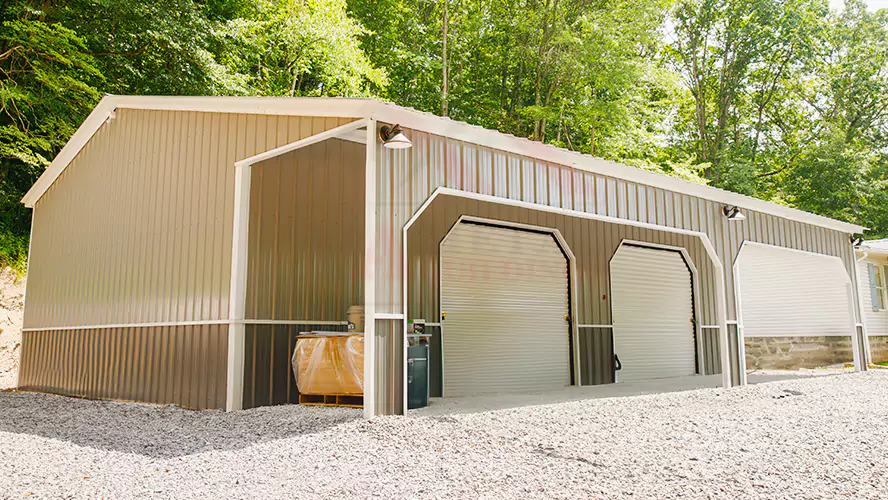
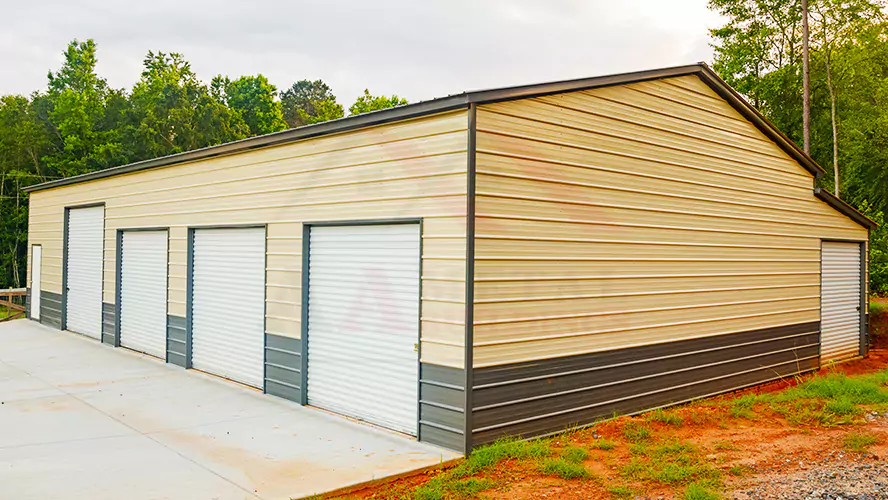
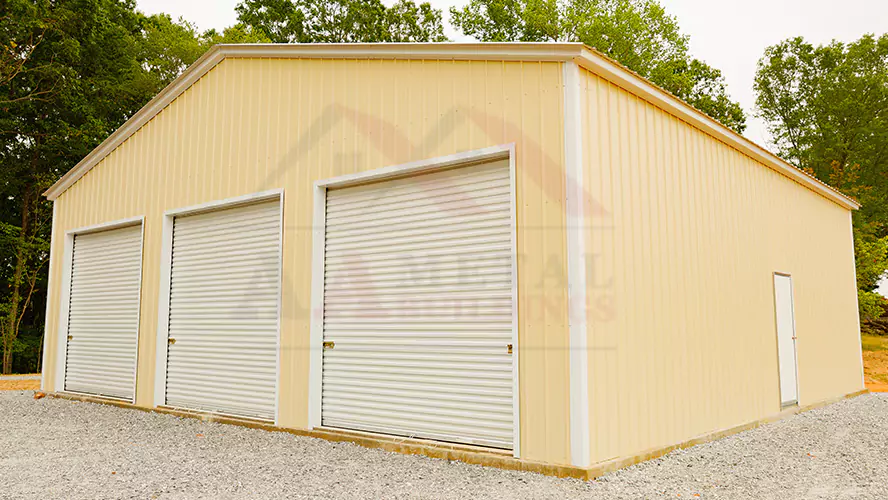
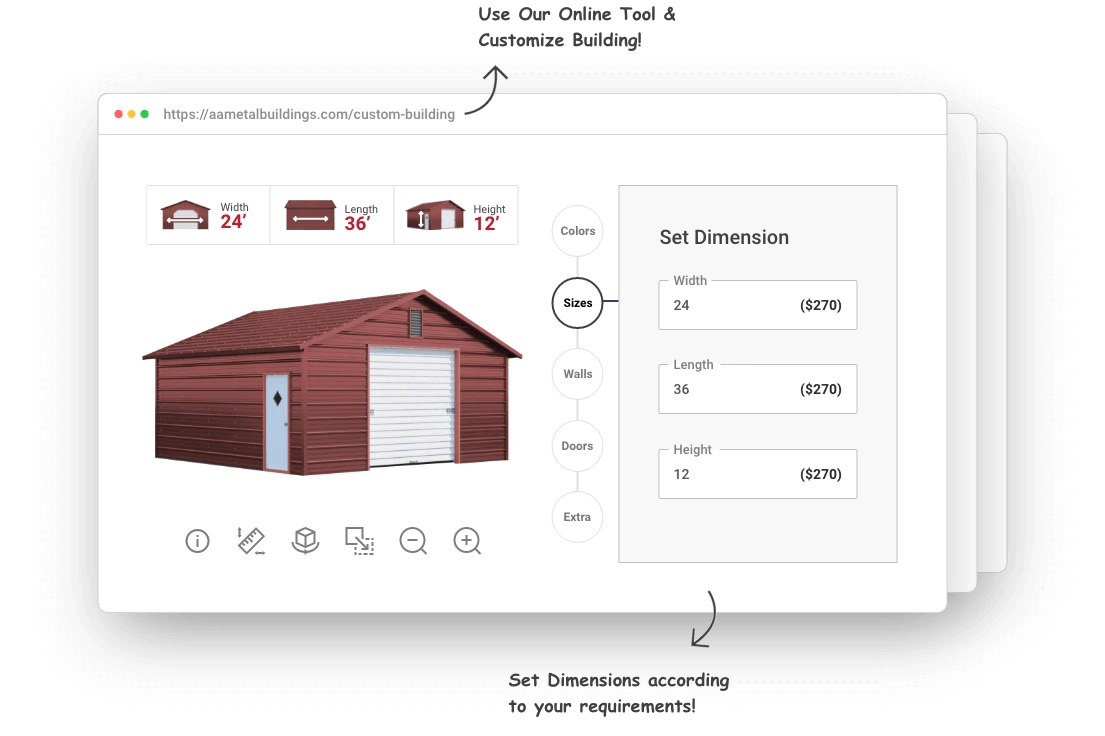
Most folks shop for a metal garage with one thing in mind: “What’s the price?”
I hear it on almost every job. But here’s the thing—what you pay on day one is only part of the story. The real money shows up over the next 10 years in repairs, repainting, energy bills, and what that building does (or doesn’t) add to your property value.
I’ve seen cheap garages start rusting and leaking in five years, and I’ve seen 10–15-year-old metal garages that still look almost new because they were built right. The difference is in the materials, the installation, the foundation, and whether the design fits your climate and use. Metal, wood, and portable units might look similar in a brochure, but they age very differently once they’re sitting on your slab or gravel pad out back.
Let’s walk through what the next decade really looks like for a metal garage—without brochure fluff.
10-Year Metal Garage Snapshot
Over 10 years, a well-built metal garage cost very little to maintain compared to wood or portable units. You’re mainly paying for small tune-ups, door adjustments, and optional upgrades—not major structural repairs. With decent insulation, good corrosion resistance, and proper installation, most owners see a long metal garage lifespan and strong resale appeal with predictable, manageable costs.
Quick Checklist: What Drives Long-Term Cost & Value?
Here’s what really decides whether your metal garage is a money saver or a money pit:
- Material durability and gauge thickness (e.g., 26 vs 29 gauge)
- Roof style durability and drainage (slope, panel orientation)
- Paint quality and fade resistance over time
- Rust prevention and overall corrosion resistance
- Structural fasteners and hardware longevity
- Insulation type and energy efficiency with insulation
- Airflow & condensation control (vents, vapor barriers)
- Maintenance frequency and how hard tasks are to do
- Resale value factors (curb appeal, condition, versatility)
- Climate exposure: snow load, wind exposure, coastal salt, heat
What “Long-Term Cost of Ownership” Really Means for a Metal Garage
When I talk long-term cost with homeowners, I’m not just talking about the day you sign the contract. Over 10 years, your true cost of ownership usually includes:
- Upfront build & installation
Concrete slab or footings, metal frame, roof, walls, insulation, roll-up doors, walk doors, and windows. For a common 24×30 or 24×36 two-car garage, that slab alone is often a 4″ thick pour with rebar or wire mesh, slightly sloped toward the doors. - Minor repairs & adjustments
Door spring tuning, changing out worn weatherstripping, tightening structural fasteners, replacing a damaged panel when a trailer jack-knifes into it—those are typical. - Maintenance supplies
Caulk, touch-up paint for scratches, rust converter for the occasional chip, silicone for penetrations, lubricant for overhead or roll-up doors. - Energy usage & comfort
If you’re using the building as a workshop, hobby space, or small business, insulation and airflow setup can make a big difference in how much you pay to heat or cool it and how comfortable it feels. - Add-ons & upgrades
Gutters, extra insulation, interior framing, electrical, storage lofts, better lighting, extra doors, maybe even converting part of it into conditioned living or office space. - Resale value impact
A straight, dry, well-kept metal garage with good clearance for trucks or an RV can absolutely help your property sell faster and for more. A rusty, sweating box with sticking doors and worn paint does the opposite.
With a decent metal building, the frame and panels themselves usually don’t fail in the first 10–20 years. The long-term maintenance cost is mostly about how well it was installed, how smart the design is for your climate and use case, and whether you keep an eye on the usual wear points.
Why Metal Garages Need Less Maintenance Than Wooden Garages
I’ve repaired a lot of older wooden garages and pole barns. They can look nice on day one, but they’re needy long term. Here’s where metal pulls ahead:
Rot vs. Rust
Wood hates moisture. It swells, rots, splits, and invites termites and carpenter ants. Metal doesn’t rot and doesn’t feed bugs. With good protective coatings and decent corrosion resistance, rust usually only shows up where the finish gets damaged and never fixed.
Paint & Fade Resistance
Quality metal panels use paint systems built to fight UV fading and chalking. Cheaper metal buildings often cut corners here, and you see it quickly in sunny, high-UV climates. Better coatings keep their color and gloss longer, which helps resale and keeps your garage from looking tired at year six.
Roof Style Durability & Drainage
Roof style durability isn’t just about looks. Roof pitch, rib direction, overhangs, and gutter setup all affect how well water and snow shed. In heavy snow load areas, you want an engineered roof with proper purlin spacing and bracing, not something barely rated. Less ponding, fewer leaks, less stress on fasteners and seams.
Pests & Critters
A properly sealed metal garage gives rodents and bugs fewer ways in and nothing soft to chew on. You still need to seal gaps around doors and base rails, but you’re not constantly patching rotten sill plates or bug-damaged framing.
Structural Stability
A welded or properly bolted steel frame holds its shape. If the foundation is done right and you use the correct anchors—wedge anchors into concrete, mobile home anchors into the ground, or base plates with proper hardware—the building stays square. Doors line up, panels stay tight, and you’re not jacking things back into place every few years.
Truth be told, most issues I see with metal garages aren’t because they’re metal. They come from thin materials, poor installation, weak foundations, or designs that don’t match the local weather.
The Real Maintenance You’ll See Over 10 Years
Here’s the real-world punch list, not the fantasy version.
On a typical 24×30 or 30×40 metal garage, you’re looking at:
Yearly or Every 2 Years
- Walk-around inspection of panels, trim, and fasteners
- Check for scratches, chips, bare metal, and touch up paint
- Clean gutters and downspouts if you have them
- Inspect door seals and weatherstripping, especially along the slab
- Look inside for condensation issues—drips, mildew smell, rust spots
Every 3–5 Years
- Re-caulk or reseal joints that flex or move
- Tighten or replace structural fasteners that have backed out
- Lubricate door springs, hinges, rollers, and locksets
- Wash exterior siding if you’re in dusty, salty, or pollen-heavy areas (coastal, farm, or desert regions)
As Needed
- Replace a bent panel after a bump from a truck or tractor
- Adjust door alignment if the slab settles or you see rub marks
- Treat small rust spots: clean, rust convert, prime, and repaint
If you stay on top of that stuff, you rarely face major repairs in the first decade.
Annual Maintenance Tasks & Time Required
| Task | Frequency | Avg. Time | Why It Matters |
|---|---|---|---|
| Exterior walk-around check | 1–2x per year | 20–30 min | Catches small issues before they become big problems |
| Gutters & downspout cleaning | 1–2x per year | 30–60 min | Prevents water backup, staining, and soil erosion |
| Door lubrication & adjustment | 1x per year | 20–40 min | Keeps doors rolling smoothly, protects hardware |
| Sealant/caulk inspection | Every 2–3 yrs | 30–45 min | Maintains a weather-tight envelope |
| Rust spot treatment & repaint | As needed | 15–30 min | Protects metal, preserves appearance & lifespan |
How Installation Shapes Durability, Lifespan & Cost
Two buildings with the same plans on paper can age completely differently depending on how they’re put together.
Foundation, Slab & Leveling
If your slab isn’t level and square, doors will fight you forever. I’ve seen 4″ slabs that are out more than ½” across a 16′ door opening. That doesn’t sound like much, but it’s enough to make a roll-up or overhead door bind, leak air, and wear unevenly. A well-poured slab, or properly leveled gravel or pier foundation, is the base for everything else.
Anchoring & Bracing
Anchors and structural fasteners are what tie your building to the ground. In high wind exposure areas, I want to see proper wedge anchors into concrete or heavy-duty mobile home anchors into the soil. Weak anchoring lets the frame rack and twist, which loosens panels, opens gaps, and can shorten the metal garage lifespan.
Roof Alignment & Panel Overlaps
Roof panels need correct overlap and fastener patterns, especially in snow and rain-heavy regions. If someone rushes and misaligns ribs or skimps on screws, water will find a way in. Good installers think about roof style durability, wind direction, and how snow will sit or slide, not just getting done before lunch.
Airflow & Condensation Control
Metal sweats when warm moist air hits cold steel. Without good airflow & condensation control—ridge vents, soffit vents, vapor barriers, maybe a small fan—you can get drips on tools, vehicles, and stored items. Insulation plus vents makes a huge difference, especially in humid or swing-temperature climates.
Door & Opening Layout
Door options matter: roll-up vs overhead, 9×8 vs 10×10, single vs double doors. If you park a lifted truck or small RV, you want enough clear height at the opening and enough wall height along the sides. Poor planning here causes long-term headaches and expensive retrofits.
When the building is installed right, the next 10 years are usually boring—in a good way. You just use the space.
Why Metal Garages Hold Resale Value (and Why Buyers Like Them)
From a buyer’s standpoint, a good metal garage screams “useful and low-maintenance.”
- Straight, square lines
No sagging rafters, no warped posts. If the building still sits true after 10 years, that tells a buyer a lot. - Clean exterior with decent paint
Panels that still hold color and gloss look cared for. Faded, chalky siding sends the opposite message. - Flexible use cases
Extra storage for vehicles and equipment, workshop, hobby space, small business, home gym—buyers can picture themselves using it immediately. - Low-upkeep story
If you can honestly say, “We spray it off once a year and oil the doors, that’s about it,” buyers feel better about paying more.
Resale value factors like curb appeal, visible condition, structural soundness, and perceived remaining lifespan often put a solid metal garage ahead of an aging wood or flimsy portable unit. A 10-year-old metal garage that’s been cared for can still look close to new, which helps you recoup more of your investment.
The 10-Year Cost Breakdown (Repairs, Upkeep, Add-Ons, Replacements)
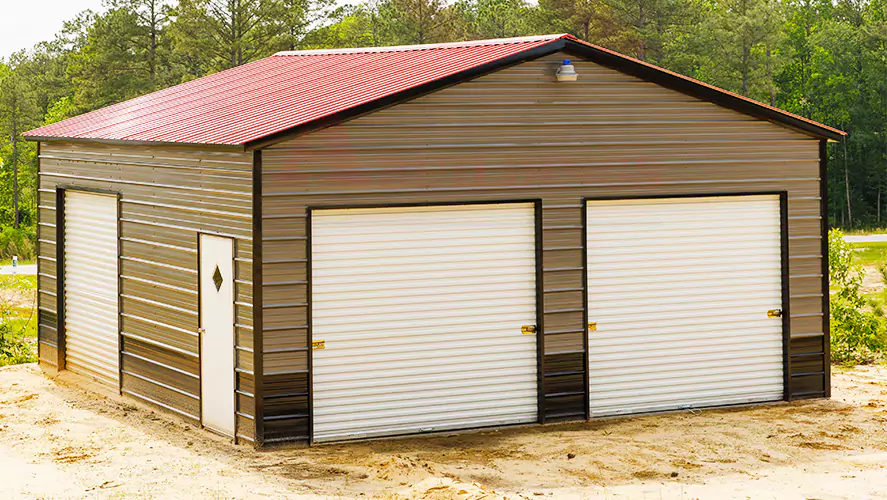
Let’s use a pretty typical setup: a 24×30 or 24×36 metal garage on a 4″ concrete slab, two 9×8 doors, one walk door, 10–12′ eave height, and basic roof insulation.
Here’s what most homeowners actually spend over 10 years after the building goes up:
- Routine maintenance supplies (10 years)
Caulk, touch-up paint, door lube, maybe a tube of sealant for penetrations: usually $20–$50 a year, so roughly $200–$500 over a decade. - Minor repairs & adjustments
Door spring tweaks, replacing seals on a roll-up, swapping a handful of backed-out screws, maybe a service call after a strong storm: roughly $300–$800 over 10 years for most folks. - Optional upgrades as you go
Wall insulation, better lighting, extra walk doors, interior framing for a workshop, or a mini-split for heating/cooling. That can range anywhere from $500 for simple add-ons to $3,000+ if you really finish it out. - Big-ticket issues (less common early on)
If the building was installed right and sized for your snow load & wind exposure, you usually don’t touch the main frame or roof in the first decade. Big repairs usually come from accidents or extreme weather.
So for a typical homeowner who maintains their building, the extra 10-year cost beyond the original purchase usually lands around $1,000–$4,500, depending on your region, how you use the garage, and how fancy you get with upgrades.
10-Year Ownership Cost Comparison
| Structure Type | Maintenance Needs | Common Repairs | Est. 10-Year Cost Range* | Longevity (With Normal Care) |
|---|---|---|---|---|
| Metal Garage | Low to moderate | Door/fastener tweaks, minor panel touch-ups | $$ – $$$ | 30–50+ years |
| Wood Garage | Moderate to high | Rot repair, repainting, pest damage | $$$ – $$$$ | 20–40 years (climate-dependent) |
| Portable Unit | Minimal at first, then frequent | Roof leaks, frame issues, early replacement | $$ – $$$$ (incl. replacement) | 5–15 years, often replaced once |
*More dollar signs = higher typical 10-year spend. Exact numbers depend heavily on size, region, and options.
Where Homeowners Waste Money (Mistakes I See on Job Sites)
Here’s where I see folks burn cash without realizing it:
- Skimping on metal thickness and framing
People pick the lightest 29-gauge panels and bare-bones frames to save a few hundred bucks. It looks fine the first year. A few hailstorms and hot summers later, the roof’s full of dings and the walls oil-can every time the sun hits them. - No real plan for ventilation or insulation
A lot of buyers skip insulation entirely on a 30×40 and then call me a year later asking why their building “sweats” all over their tools and mowers. Once you’ve got condensation, rust, and moldy boxes, adding insulation and vents is more work than planning it from the start. - Skipping gutters on big roofs
On a 24×30 or bigger building, that roof can dump a ton of water right along the sides. Without gutters, you get mud, erosion, and sometimes water sneaking back under the slab at the big doors. Fixing drainage later costs more than putting gutters up front. - Cheap doors and hardware
Overhead and roll-up doors get used constantly. I’ve seen bargain doors start sagging or binding in just a few years, especially on uneven slabs. Once you’re replacing tracks, springs, and panels, the “savings” disappear.
Quick story:
I put up two garages on the same road a few years back. One homeowner went with 26-gauge roof panels, roof and wall insulation, ridge vents, and gutters on a 24×30. The neighbor chose the cheapest 24×30 metal garage: lighter panels, no insulation, no gutters—just big doors to park two trucks.
Five years later, I stopped by. The insulated garage was dry, clean, and still looked almost new inside. Tools were rust-free, and the owner had turned half into a small workshop. The cheaper building? Water stains on the slab, rust on the bottom of the roll-up doors, and the owner asking what it would take to insulate and add gutters now. Same size, same street, same weather—very different 10-year cost paths starting to show.
Real Questions Homeowners Ask About Metal Garages
How long does a metal garage actually last with normal upkeep?
With decent materials and basic maintenance, a metal garage lifespan of 30–50+ years is very realistic. The first 10 years are usually the easiest if it’s built and installed correctly.
What parts wear out first on a metal garage?
Usually, it’s door hardware, seals, and a handful of fasteners—not the main frame. These are normal wear items and fairly inexpensive to fix.
Does a metal garage add resale value to my property?
Most buyers see a solid metal garage as a big plus, especially if it has enough height and clearance for trucks, trailers, or a small RV. A clean, dry building almost always helps your property’s resale value.
Does paint fade on metal garages over time?
All exterior finishes age, but higher-quality metal coatings hold color and gloss longer. Cheaper paint systems fade and chalk faster, especially in sunny, hot states. What you choose up front matters.
Is rust a big issue after 10 years?
Not usually, if you’ve got good corrosion resistance and you touch up scratches before they sit bare. Rust tends to start where the coating gets damaged or where water sits—treat those spots early and it stays minor.
What’s cheaper long-term: metal or wood?
Metal typically wins over 10–20 years. Wood structures often need more painting, rot repair, and pest control. Metal avoids most of that, so the long-term maintenance cost is lower.
How much should I budget for repairs over a decade?
If the building is built right and your weather isn’t extreme, most folks only spend a few hundred bucks over 10 years on small stuff. If you like hiring everything out or live in a rough climate, setting aside up to $2,000 over a decade is a comfortable buffer.
Do I really need insulation in a metal garage?
If it’s just parking and storage in a mild climate, maybe not. If you’re working in there, storing tools, or you live where temps swing hard, insulation plus some airflow & condensation control is absolutely worth it.
Will snow and wind damage a metal garage over time?
If it’s properly engineered for your snow load & wind exposure and anchored right, a metal garage holds up very well. Problems show up when people buy buildings not designed for their region or skimp on anchoring and bracing.
Can I upgrade or modify a metal garage later on?
Yes. You can add insulation, interior walls, electrical, storage lofts, and more. Just plan door locations, height, and basic layout with future use in mind so you’re not undoing work later.
If you want a garage that holds up for the long run—not just something that looks good on day one—AA Metal Buildings can help you design it right. We offer a wide range of custom metal buildings at the best prices, with free delivery and installation across 41+ states. Tell us what you’re working on, and we’ll help you build something that lasts.