Metal Building Site Prep: The Field-Tested Guide
Site prep isn’t just the first step of your metal building project—it’s what makes everything else work. Whether you’re preparing land for a metal garage or a larger steel building, getting the site ready right from the start makes all the difference in a strong foundation for your building.
Whether it’s a small shed or a 5,000-square-foot workshop, one thing is for sure: if your ground’s not right, your building won’t be either. Doing the prep work properly will save you time, money, and headaches—not just during the build but for years to come.
Let’s break down exactly how we handle site prep on the job, so you can avoid common mistakes and get your project off to the right start.
Table of Contents
- First Thing: Check with Your County
- Walk the Site Like a Pro
- Quick Site Prep Checklist
- Clear It Out and Level It Up
- Drainage Is Everything
- Gravel Pad or Concrete Slab?
- Thinking About Power or Plumbing?
- Delivery Day: Be Ready
- Final Thoughts from the Field
First Thing: Check with Your County
Before you start any work, call your local building office. Every area has its own rules. Some require permits; some have regulations about where your building should be. It’s better to find out early if you need permits, inspections, or engineered drawings. A 10-minute phone call now can save you weeks of trouble and delays later.
Walk the Site Like a Pro
Grab some marking flags, a tape measure, and layout stakes, and mark out exactly where your building will go. Don’t just eyeball it—take the time to lay it out right. Consider everything: where the driveway will be, how rainwater will drain, and if a delivery truck will have enough space to unload. Choosing a high area that already drains well saves work later and helps prevent water pooling around your building.
Quick Site Prep Checklist (Don’t Skip These)
- Confirm permit requirements with your county
- Mark your layout with stakes or spray paint
- Make sure delivery trucks can reach the site (40 ft clearance)
- Pick a high, well-drained area
- Clear trees, brush, and loose topsoil
- Decide on gravel or slab foundation
- Schedule grading or excavation help
Clear It Out and Level It Up
Here’s where things get a little messy. Remove anything that doesn’t belong—trees, stumps, brush, rocks, old fence posts—anything. If the ground’s soft or uneven, bring in fill dirt and level it out. For this job, we usually recommend calling in experts. Your land doesn’t need to be perfectly smooth, but you want the area compacted and sloped properly so water runs away from the foundation.
Drainage Is Everything
If water pools around your slab, you’re asking for trouble—rust, deterioration, and shifting foundations all come from bad drainage. Depending on your land, you may need to dig a trench, set up a French drain, or adjust the grading. Even a little gravel around the edges can make a big difference. Get this right before the concrete truck shows up.
Gravel Pad or Concrete Slab?
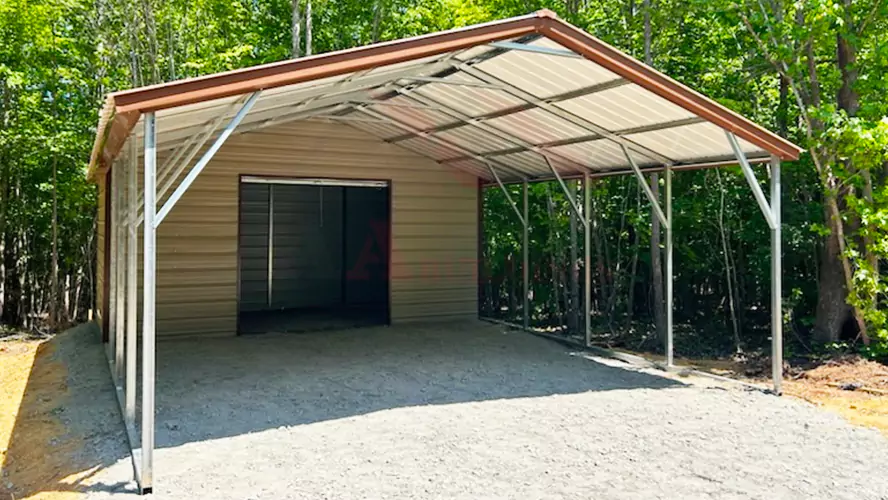
Think long-term. If you’re building a carport or a basic barn, a well-compacted gravel pad will usually do the job. But if you plan on running heavy equipment, installing overhead doors, or finishing the inside with insulation, you’ll need a proper concrete slab.
A 4–6″ thick slab with rebar and anchor bolts is absolutely necessary. This is what guarantees your steel building stays put. For this type of project, we recommend professional foundation experts; they plan and pour slabs to spec and avoid costly mistakes. And don’t forget the anchor bolts—most building kits include bolt layout plans, and bolts must be set before the slab sets.
Gravel Pad vs. Concrete Slab
| Feature | Gravel Pad | Concrete Slab |
|---|---|---|
| Cost | Lower upfront | Higher upfront |
| Best for | Carports, barns | Garages, shops, offices |
| Insulation support | Not ideal | Ideal |
| Heavy equipment use | Not recommended | Yes, suitable |
| Longevity | 10–15 years | 30+ years |
| Surface drainage | Needs grading | Easier to manage |
| DIY friendly | Yes, easier | No, needs pro install |
Thinking About Power or Plumbing?
Planning to run electrical or plumbing lines? Get it sorted now, before you pour the concrete. Running conduit and water lines before the slab goes down is a lot easier than cutting through a slab later. Even if you’re not installing everything immediately, stub in the lines—you’ll thank yourself later.
Delivery Day: Be Ready
Metal building deliveries are a big deal. They come on long flatbed trailers, and the driver’s job is to unload. If your site isn’t ready, or your driveway can’t handle the truck, you’ll face delays, damage, and extra charges.
Have a lift on site, clear a staging area for the steel, and line up your crew. Your foundation should be finished and cured—not “almost done.” Treat delivery day like a streamlined operation: get organized, be ready, and move the building off the truck and onto the ground quickly.
Final Thoughts from the Field
We’ve been on jobs where everything went perfectly because the site was prepped right—and jobs where the building shifted because the site wasn’t ready. When the site’s prepped properly, the building will go up fast and square. Skip the prep, and you’ll be fighting it every step of the way.
If you need help figuring out what type of prep your building needs, just reach out. We’ll help you dial it in based on your building size, soil type, and local regulations.