Picking a roof style is where most people either get a carport they love for 15–25 years… or one they complain about every time it rains.
I’ve had buyers call me mad about “leaks” that weren’t leaks. The roof did exactly what that roof does. They just didn’t know what they were buying. So I’m going to say it plain and save you the headache.
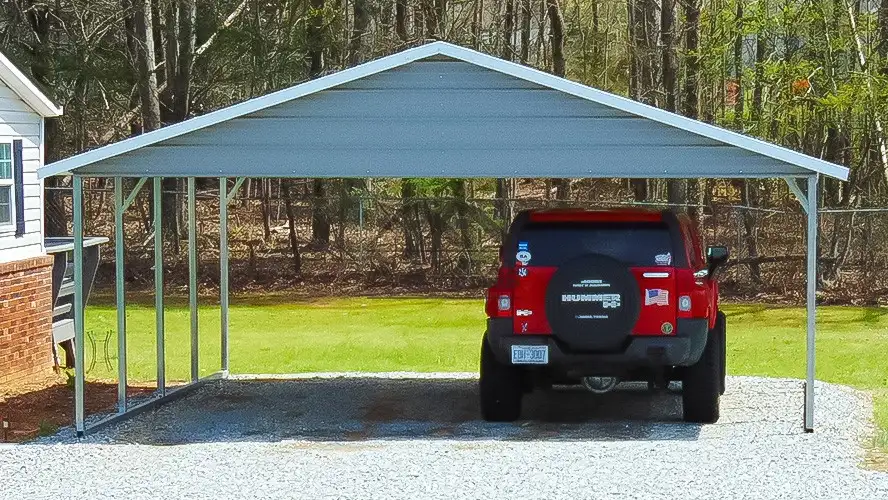
Regular roofs have rounded corners and horizontal panels—cheapest, fine in mild weather. Boxed eave roofs look more like a house roof but still use horizontal panels—better curb appeal, same drainage limits. Vertical roofs run panels from ridge to eave—best for heavy rain/snow and long buildings, costs more because it needs extra framing.
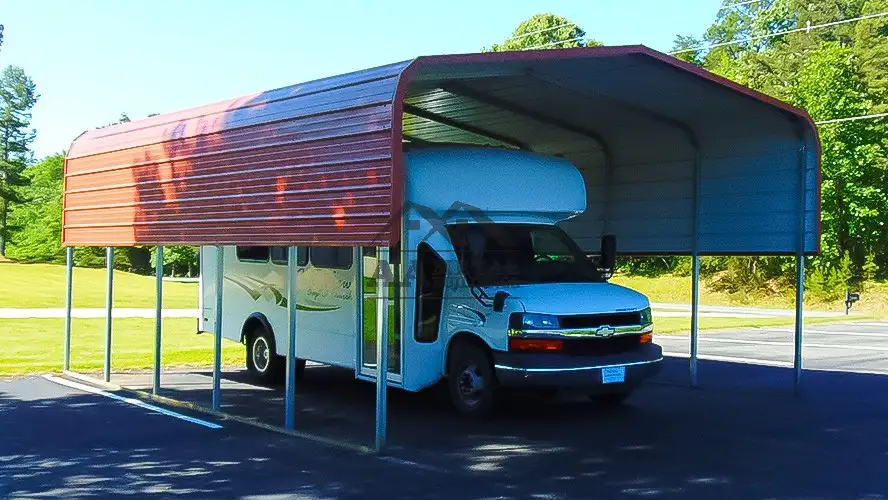
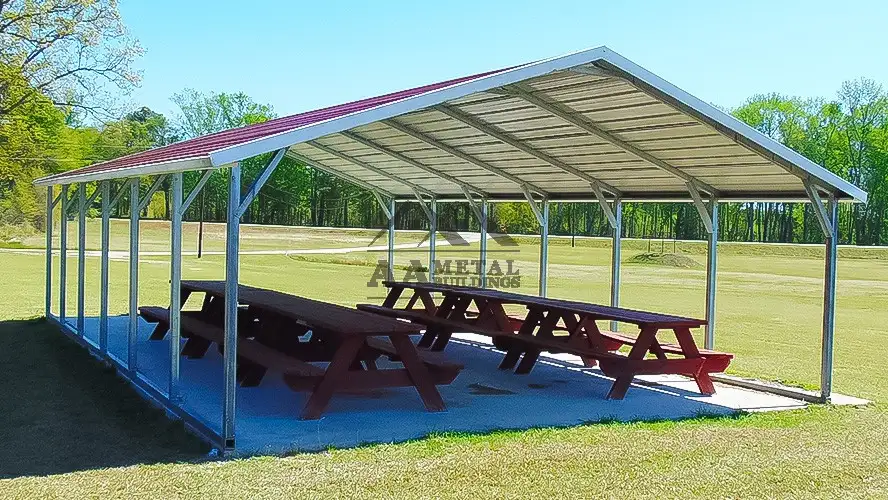
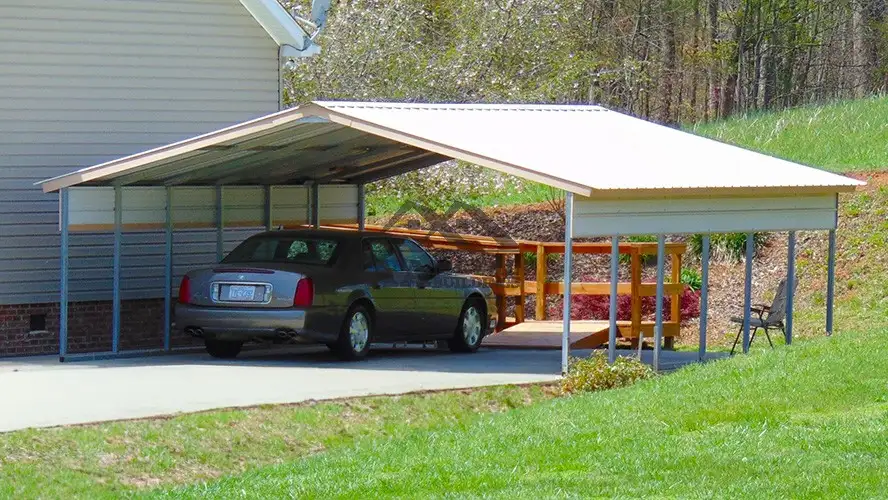
Regular roof (rounded)
What it actually is
This is the “classic” carport roof with the rounded shoulders. The sheet metal runs side-to-side (horizontal), and the roof frame bends to make that curve. Fewer trim pieces. Fewer parts. Faster install.
When it works
- You’re in a mild area and you mainly want shade and basic rain cover.
- The carport isn’t super long.
- You’re trying to keep cost down and you’re not picky about matching a home’s roofline.
When it causes problems
- Heavy rain + wind: water can push sideways and find seams and fasteners.
- Leaves/pine needles: they sit on horizontal ribs and build up faster.
- Long runs: the longer it gets, the more chances you have for seam issues and “drip lines” at overlaps.
- If you park something that can’t get wet (classic car, tools, furniture), this roof makes people nervous in a hard storm.
Who usually regrets choosing it
- RV owners who travel and come home to wet spots along the edge after a storm.
- Anyone in snow country who thought “a roof is a roof.”
- People building next to a newer home who hate how the rounded profile looks once it’s up.
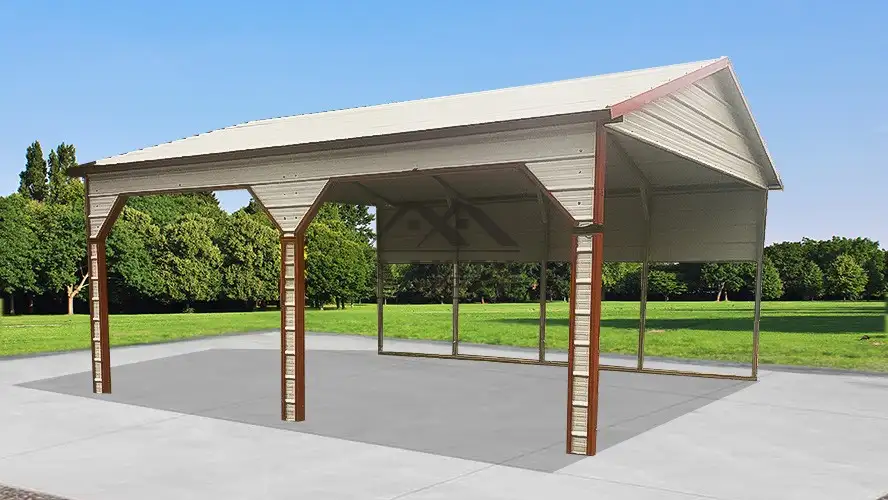
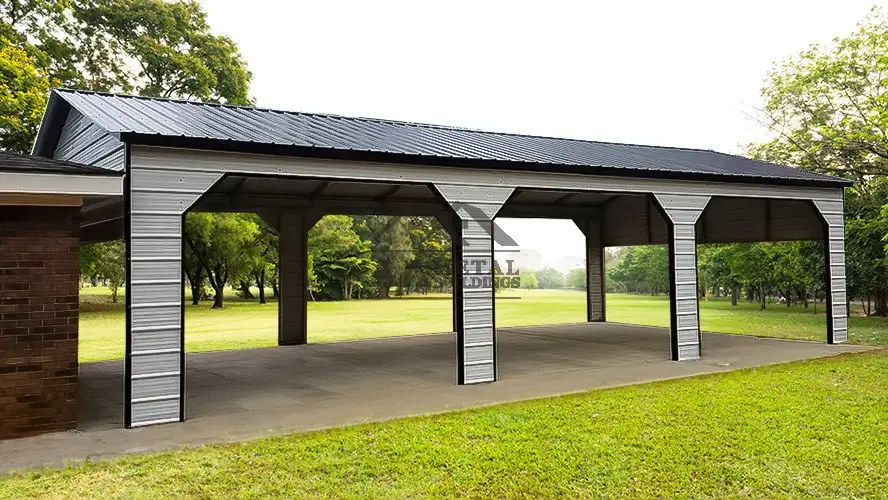
Boxed eave roof (A-frame look, horizontal panels)
What it actually is
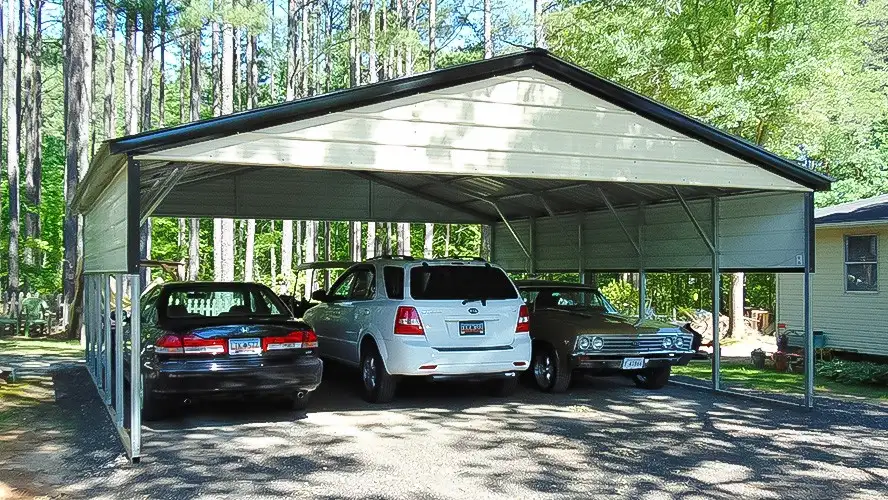
This roof has straight roof sides like a basic house roof, plus boxed trim along the eaves. But the metal panels still run horizontal across the roof in most builds. So it looks like a traditional roofline, while the water behavior stays closer to a regular roof than people expect.
When it works
- You care about looks and want it to blend with a house or garage.
- You want the “clean edge” of trim instead of the rounded shoulder.
- You’re in moderate weather and you’re not pushing extreme length.
When it causes problems
- People assume “A-frame” automatically means better for rain and snow. It’s the panel direction that changes drainage, not the shape.
- In nasty weather, horizontal panels still mean more places for water to slow down, back up, and carry debris.
- If you’re going longer, those horizontal overlaps become the weak link.
Who usually regrets choosing it
- Folks in high-rain or mixed snow areas who picked it for looks and later wish they paid for vertical.
- Contractors who spec it on a long run and then spend time explaining why the owner sees drips at overlaps during sideways rain.
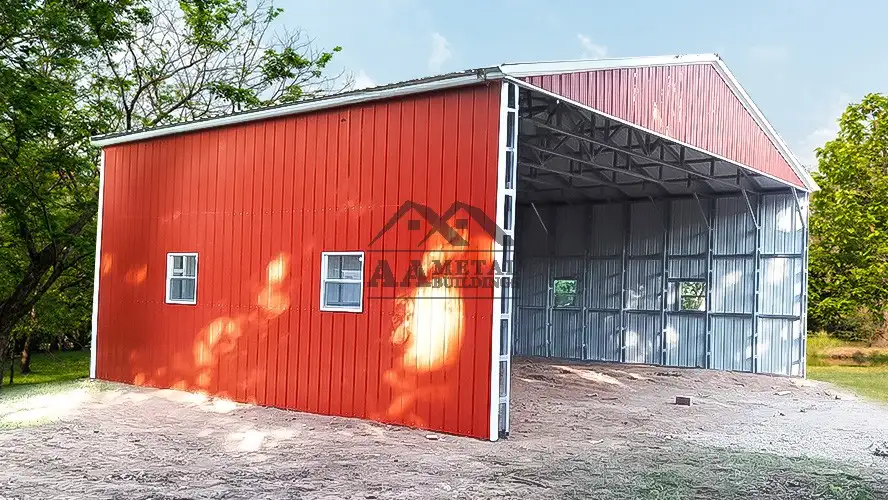
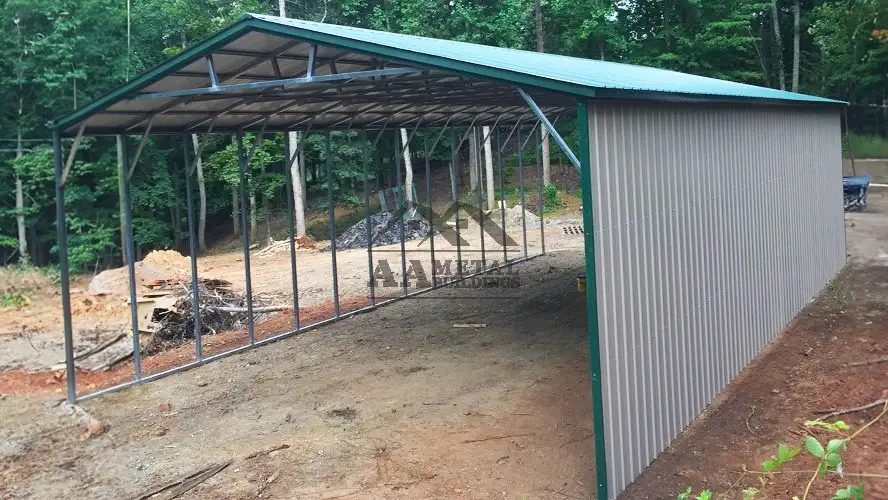
Vertical roof (vertical panels, extra framing)
What it actually is
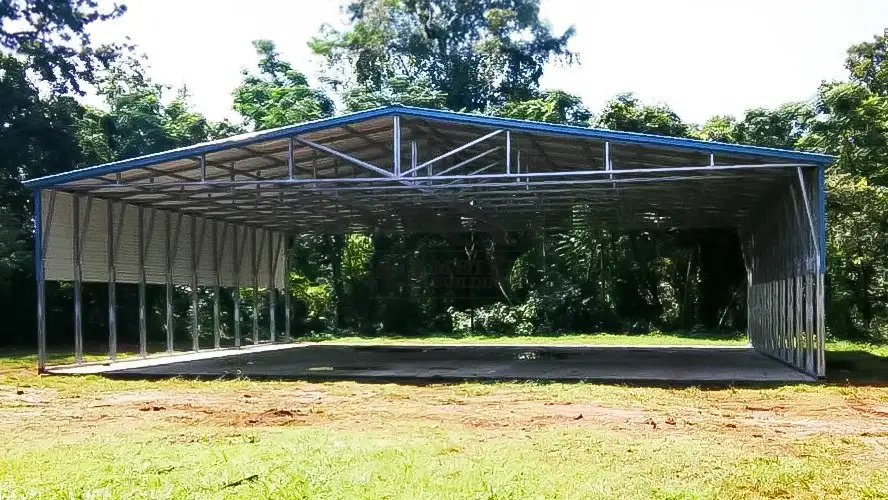
This is the one where the panels run top-to-bottom (ridge to eave). To do that, the installer adds extra framing under the roof so the panels have something to fasten to the right way. That’s why it costs more.
When it works
- Heavy rain, snow, or lots of wind-driven weather.
- Long carports, RV covers, and bigger footprints where you want fewer “seam drama” calls later.
- Places with lots of trees because debris slides off easier and cleans up faster.
When it causes problems
- If you’re chasing the lowest price, you’ll feel the upcharge.
- If the builder cheapens out on bracing or anchoring, people blame the roof style when the real issue is the build spec. (That’s not a roof-style problem. That’s a “don’t underbuild” problem.)
Who usually regrets choosing it
Honestly, not many. The regret I hear is usually, “I should’ve done vertical the first time.” The only real regret is paying for it when you live somewhere calm and you didn’t need it.
Simple comparison table
| Roof type | Cost (typical) | Best use |
|---|---|---|
| Regular | $ (lowest) | Budget cover in mild weather, shorter lengths |
| Boxed eave | $$ | Better looks near a home, moderate weather |
| Vertical | $$$ (highest) | Heavy rain/snow, windy zones, long RV covers, lowest hassle |
(Exact pricing depends on width, length, leg height, gauge, and your local wind/snow rating.)
Buyer mistakes I see all the time
1) Thinking roof “shape” controls leaks.
Panel direction and overlaps matter more than the silhouette. A boxed eave can still act like a horizontal roof because it is a horizontal roof in how it’s skinned.
2) Buying for today’s budget, then paying later in annoyance.
If you live where storms hit sideways, the money you “save” on regular often turns into years of drip paranoia and weekend cleaning.
3) Going long without thinking about seams.
Longer buildings mean more panel joints and more opportunities for water to show up where you don’t want it.
4) Ignoring where water is supposed to go.
I’ve seen carports installed so runoff dumps right at a doorway, a sidewalk, or along a slab edge. Then the owner blames the roof. Plan the runoff.
5) RV owners underestimating what they’re protecting.
An RV is basically a rolling house full of seams. If you’re sheltering something with seals, slides, and roof penetrations, pick the roof style that sheds water the cleanest.
FAQs
Is boxed eave the same as vertical?
No. Boxed eave describes the edge and shape. Vertical describes the panel direction. You can have a boxed eave look with horizontal panels.
Do regular roofs always leak?
No. Most don’t “leak” in the normal sense. What happens is wind-driven rain finds an overlap and you get drips in a line. People call that a leak.
I’m in snow country. Do I need vertical?
Usually, yes. Snow load and freeze/thaw cycles punish horizontal overlaps. Vertical sheds better and stays cleaner.
If I want it to match my house, what do I pick?
Boxed eave looks the most “home-like” for most properties. If you also get rough weather, go vertical and keep the traditional look.
Why does vertical cost more?
Extra framing under the roof and more trim work. More steel, more labor.
What roof do RV owners pick when they’ve owned RVs a while?
Vertical. The “been burned before” crowd almost always chooses it.
I’m in a calm area. Am I wasting money on vertical?
Maybe. If you rarely see heavy rain, you don’t have trees dumping debris, and you’re not going super long, boxed eave or regular can be totally fine.
Can I add gutters to any of these?
Yes, but gutters don’t fix panel-direction issues. Gutters help with runoff placement. They don’t stop wind-driven water from finding overlaps.
You want the decision to feel simple because it is.
If you get real storms, snow, or you’re covering an RV, go vertical and be done with it. That’s the choice people thank themselves for later.
If you care about looks beside a home and your weather stays reasonable, boxed eave makes people happiest day-to-day.
If price is the driver and your weather is mild, regular works—just don’t act surprised when you see drip lines during a nasty sideways rain.
The most common regret I hear is picking regular or boxed eave to save money, then wishing they’d gone vertical after the first hard season. Roof style doesn’t just change how it looks. It changes how water, snow, and debris behave every single week you own it.
And if you want expert guidance on this before you order your custom steel carports, AA Metal Buildings can walk through your location, length, and use case and steer you away from the “I should’ve…” choice without turning it into a sales speech.