




A “Two-Car Garage” Doesn’t Mean the Same Thing for Everyone
Most people hear “two-car garage” and assume it’s one size. Like there’s some universal standard that fits every driveway in America.
But a two-car metal garage that works for a pair of compact sedans is not the same building you need for two newer SUVs, or a truck that’s got wide mirrors and steps hanging off the side.
SUVs have gotten bigger. Trucks are wider. And storage always creeps in — bins, bikes, trash cans, a mower, that one ladder you swear you’ll hang up someday.
Then there’s the day-to-day stuff nobody thinks about until it’s built: doors needing space to swing open, room to walk between vehicles, and enough wall space for shelves without making parking a headache.
Here’s the thing — “fits” and “works” are two different outcomes.
Typical 2-Car Metal Garage Dimensions
Typical 2-car metal garage / steel garage sizes are 20×20, 22×22, 24×24, and 24×30. A 20×20 steel garage can fit two vehicles but feels tight for door swing and storage. 24×24 is the most common “comfortable” size for two SUVs. If you want a workbench or real storage room, 24×30 is the practical step up.
What Actually Fits in Common Sizes
| Size | What Fits Comfortably | Where It Feels Tight |
|---|---|---|
| 20×20 | Two sedans or small SUVs | Door opening space, walking room, wall shelves |
| 22×22 | Two mid-size SUVs | Still tight once you add storage or a freezer |
| 24×24 | Two full-size SUVs or truck + SUV | Usually fine unless you’re loading it with gear |
| 24×30 | Vehicles + storage + workbench | Only tight if you’re adding big toys or a full shop |
20×20: Yes, two vehicles can go in. But it’s the classic “you can park, but you can’t live in it” garage.
24×24: This is the sweet spot for most homeowners buying a two-car steel garage. You can open doors without doing that sideways squeeze.
24×30: If you want a workbench, shelves, bikes, and you don’t want to move a car every time you need something — this size fixes that.
Width Matters More Than People Think
Most people focus on depth because they’re worried about bumping the front bumper into the wall.
But width is what determines whether your garage feels like a usable space or just a parking box.
You need room for:
- Door swing clearance (especially on SUVs)
- Mirror clearance (mirrors eat space fast)
- Walking room between vehicles
- Wall storage without rubbing doors and fenders
Most people don’t realize a basic wall shelf is often 16–24 inches deep. Put that on both side walls in a narrow garage and suddenly you’re parking on hard mode every day.
And in a metal building garage, you want to plan door openings early. If you frame for a 16′ wide door and later wish you went 18′, that’s not always a quick swap.
Jobsite reality: I’ve literally watched homeowners step into a taped-out 20×20 layout, “open” their driver door, and immediately go quiet. Because they can already feel the daily annoyance.
Height Considerations That Get Overlooked
Height is where a lot of regret comes from, especially with steel garages.
Typical wall heights you’ll see:
- 8 ft walls – basic, but limiting
- 9 ft walls – better all-around usability
- 10 ft walls – future-friendly (especially for trucks/storage)
And the garage door matters as much as the wall:
- A lot of standard doors are 7 ft tall
- Upgrading to 8 ft tall solves a ton of real-life problems
If you have (or might have):
- A taller truck later
- A roof rack
- Overhead storage
- A lift someday
…you’ll be happier with 9 ft walls at minimum, and 10 ft walls if the budget allows.
Here’s the thing: people rarely regret going a foot taller. They regret going short and having to work around it forever.
Also, door tracks and openers need space. In a metal garage, wall height affects where tracks sit and whether you can add storage overhead without hitting hardware.
Layout Options for a Smarter 2-Car Steel Garage
Layout is where you make the garage feel bigger without adding square footage.
One wide door vs two doors
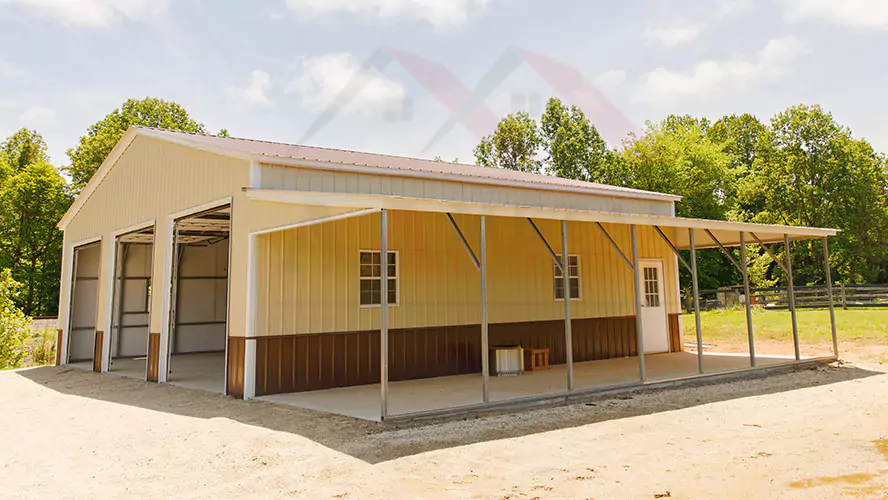
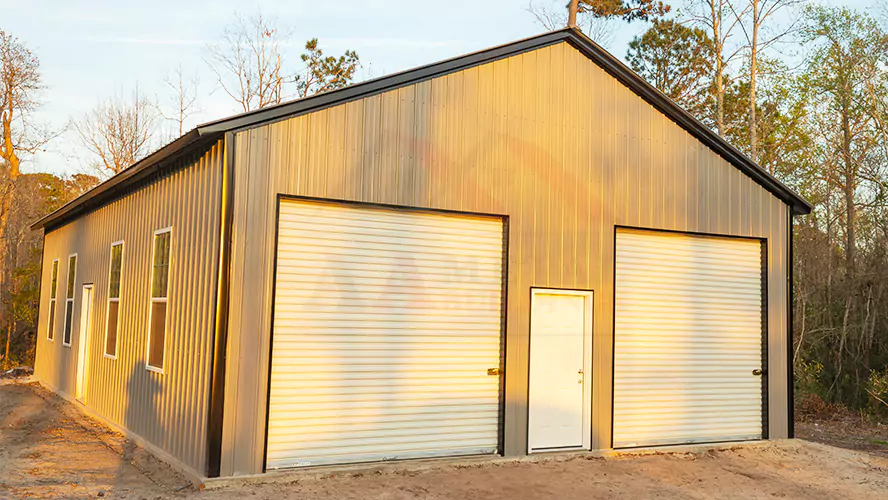
- One wide door (16’–18′): easier to park larger vehicles, better sight line
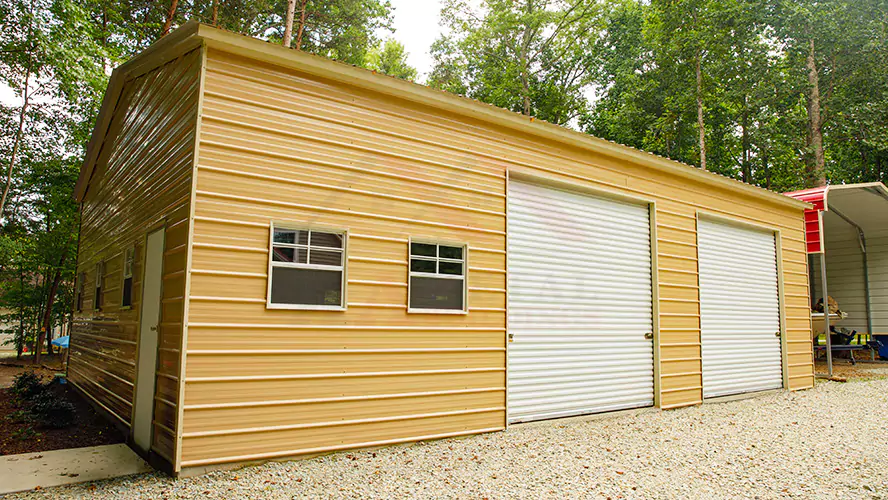
- Two doors (typically 8’–10′ each): nice if one side is storage-heavy or you want flexibility
But here’s a practical note: two doors mean more framing, more tracks, and more places overhead gets “busy.” If you want a clean ceiling for storage, that matters.
Front entry vs side entry
- Front entry is simplest and common
- Side entry can be a game-changer on corner lots or tight driveways
Workshop corner
Even a small dedicated corner helps. A 4–6 ft work zone for a bench and tools can keep the rest of the garage from turning into clutter.
Storage loft possibility
A loft can work great in a metal garage, but it’s much easier when you’ve got the wall height for it. Low ceilings make loft storage awkward fast.
Real-World Example
Family of four. Two SUVs. Lots of kid gear.
They started with a 20×20 steel garage plan because it sounded “standard” and the price looked nicer.
We talked through daily use:
- Two SUVs parked
- Driver doors opening
- Bikes along a wall
- Trash cans somewhere that isn’t blocking a vehicle
They didn’t even need a full mock-up to get it — door clearance was the pain point.
They moved to 24×24.
And they went with a taller door setup because they wanted the option of a truck later without reworking the whole front.
No drama. Just better planning up front so the building works the way they actually live.
Common Mistakes When Designing a Two-Car Metal Garage
I’ll be blunt because it saves people money and frustration.
- Building too small to “save money” and paying for it in daily annoyance
- Forgetting storage (it always shows up after the garage is built)
- Ignoring height and getting stuck with short doors
- Not planning door openings early (especially on steel building layouts)
- Ignoring driveway clearance — if you can’t swing wide and line up easily, you’ll hate parking in it
And one more: people design around the vehicle they have today, not the one they’ll have in five years.
Cost Reality
Metal Garage cost tracks pretty closely with square footage. Bigger footprint = more steel, more framing, more roof, more labor.
A few real takeaways:
- Going from 20×20 to 24×24 is a meaningful jump because you’re adding area, not just “a little space.”
- Going from 9 ft walls to 10 ft walls usually hurts less than adding extra width/depth, but it depends on the door setup and structure.
- Bigger/taller doors are an upgrade that can move the number quickly, especially if you’re stepping up to wider openings.
So yeah, size affects price. But so do “smart” upgrades like door height that keep you from rebuilding later.
FAQs
What is the ideal size for a two-car metal garage?
For most homeowners, 24×24 is the best mix of cost and daily comfort.
Is 20×20 big enough for two SUVs?
They’ll fit inside. But opening doors and adding storage is where it gets tight fast.
Should I choose one large door or two smaller ones?
If you’ve got larger vehicles, one wide door can make parking easier. Two doors are nice if one side becomes storage or a workshop zone.
How tall should a 2-car steel garage be?
I like 9 ft walls minimum. If there’s any chance of a taller truck, overhead storage, or future upgrades, 10 ft is the safer call.
Can I fit a lift in a two-car garage?
Yes, but plan for it early. You’ll typically want taller walls and the right door track setup so you’re not fighting headroom later.
What’s the best layout for storage?
Extra depth solves more problems than people expect. That’s why 24×30 works so well if storage matters.
Do I need wider than 24 ft?
Only if you want big storage on both side walls, a workshop area, or you’re dealing with very wide vehicles.
What garage door size works best for a metal garage?
A lot of regret disappears when people choose taller doors. If you’re on the fence, look hard at 8 ft tall doors, especially for SUVs and trucks.
Build It Once, Build It Right
If you’re parking two sedans and keeping storage light, you can get by with smaller.
But if you’re like most homeowners — two SUVs, kids, bins, bikes, tools — 24×24 is usually where the garage starts feeling “easy” instead of cramped.
And if you want a workbench or you know storage is coming, 24×30 keeps you from constantly rearranging the space.
The biggest wins come from getting width, door openings, and height right the first time. Those are the things people complain about later — not the color of the siding.
If You Want Help Dialing It In
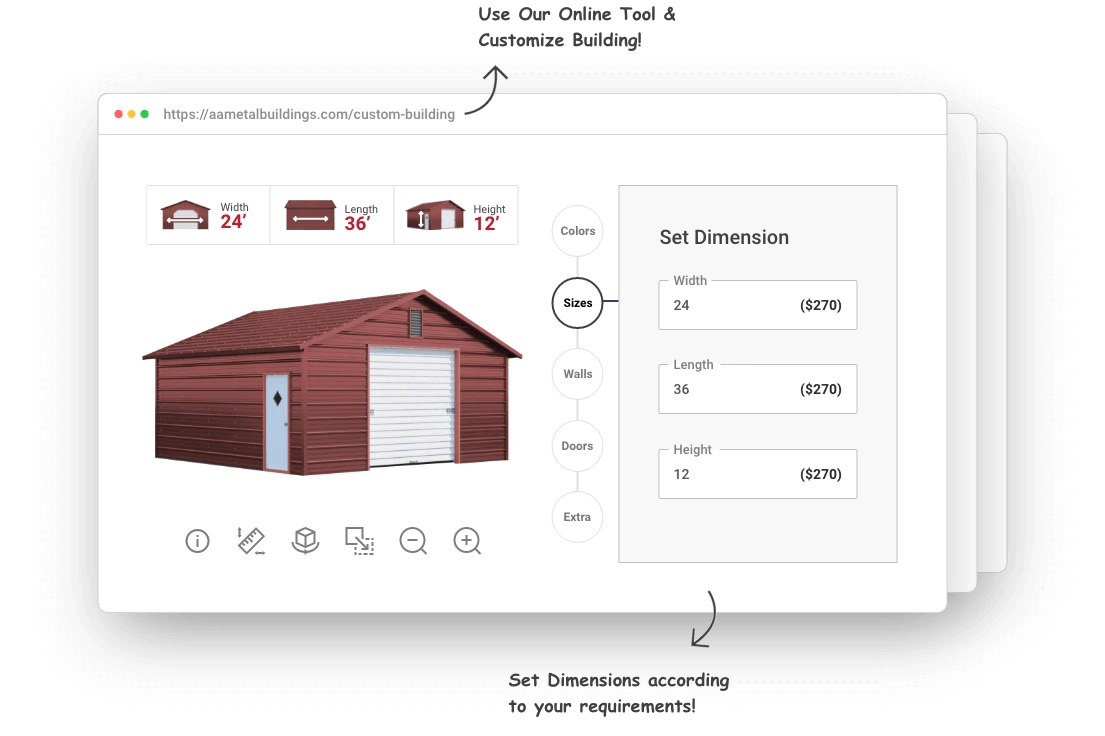
If you’re mapping out a metal garage or steel garage and want to make sure it fits how you actually live, the team at AA Metal Buildings (nationwide service) can walk through sizing, door options, and layout choices with you before anything gets ordered. They offer custom garage options, and include free delivery and installation — without turning it into a sales pitch.