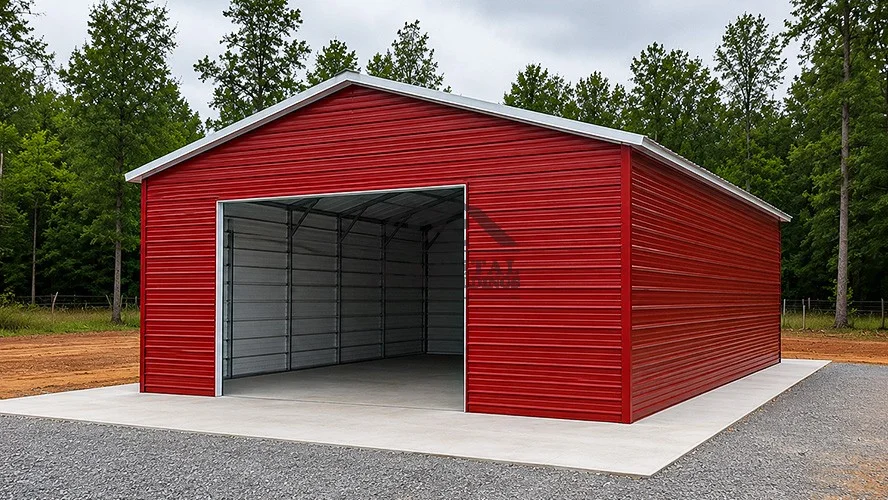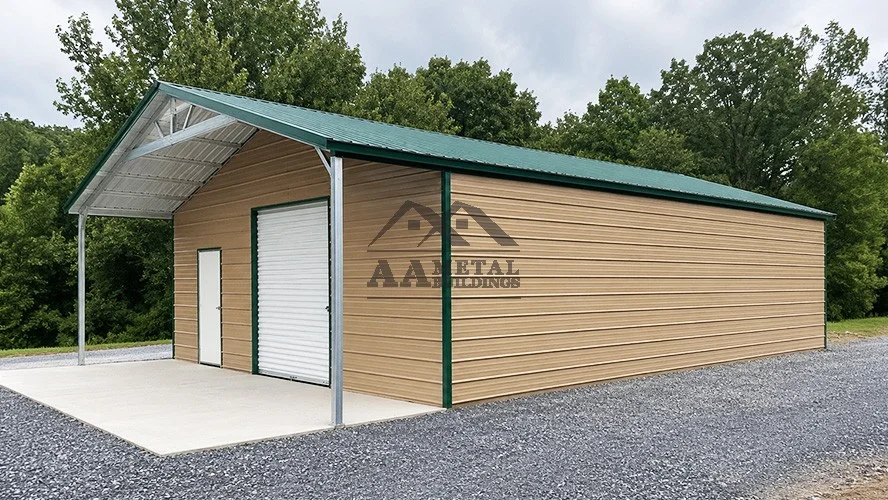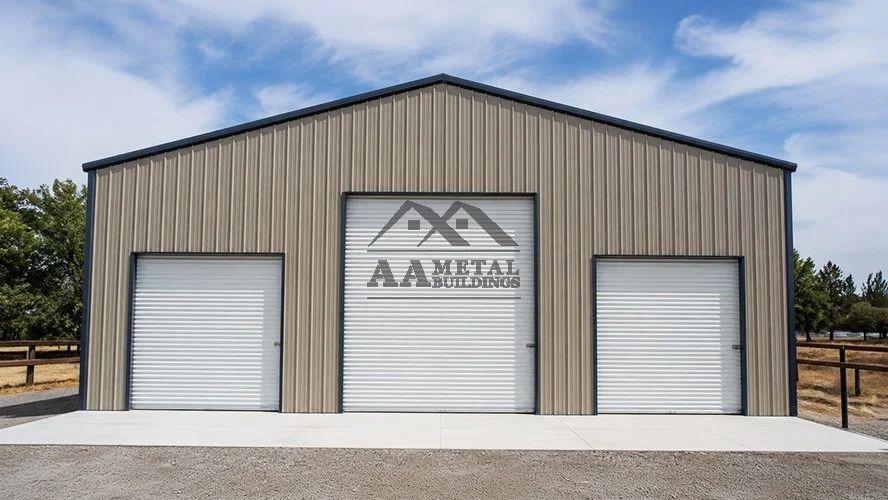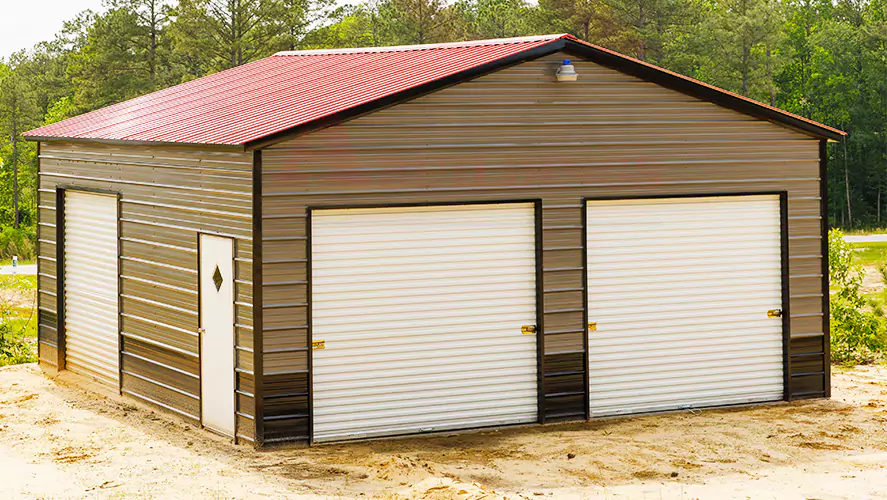





You’d be surprised how often the “perfect” metal garage gets ruined by one decision: the door height. The common story goes like this. Your truck fits the driveway fine, the RV clears the roofline on paper, and the building looks tall enough standing in the yard. Then the day comes to pull in… and you stop short because the door opening is the choke point. Or you buy a lift a couple years later and realize your ceiling height is useless because the door track and header sit right where you need space.
Door height mistakes are expensive because they’re baked into the structure. You can swap a door. You can’t easily move the header, reframe the endwall, and redo siding and trim without paying real money. And once a building is set, you’re working around steel, bracing, and whatever your local inspector will actually sign off on.
Garage door height depends on what you’re parking, the roof style and framing above the opening, and what you might do later (lift, RV, taller truck). Common door heights are 8’, 9’, 10’, 12’, and 14’. The “right” pick is the one that gives you real clearance without forcing an awkward wall height, roof layout, or overpriced door package.
How Metal Garage Door Heights Actually Work
Door opening height vs wall height
The door height is the clear opening you drive through. The wall height (eave height) is what your building is framed at. Those two numbers are not the same thing.
You need space above the opening for a header and structure that carries wind loads around that big hole in your wall. In a metal building, that usually means heavier jambs, stronger framing, and sometimes portal bracing at the door bay. Taller door = less “solid wall” left = more structure required.
Why roof pitch and framing matter
A tall opening has to live under whatever roof system you picked. If you’re doing a gable roof with trusses, the truss design and webs can land right where you want a tall header. With some layouts, you can’t get a 12’ or 14’ door cleanly without bumping the wall height or changing the framing package.
Lean-tos and asymmetrical roofs can be even trickier if the door ends up on the low side. Plenty of folks have great roof clearance in the middle and still can’t clear the door because the low eave is the limiting point.
Why “I’ll just get the tallest door” is often a mistake
A taller door sounds safe… until it forces a taller building, heavier framing, and a door type that needs more headroom than you planned for. Then you’re paying for height you don’t use, fighting inspection details, or ending up with a door that’s a pain to live with.
Common Garage Door Heights & What They’re Really For
8’ doors — when they work, when they don’t
When they work:
- Most stock pickups and SUVs (without roof racks, light bars, or tall antennas)
- Basic workshop use where you’re not towing tall trailers inside
- You want a clean, cost-controlled build
When they don’t:
- Lifted trucks with big tires and roof add-ons
- Enclosed trailers with tall front caps
- Anything where you want breathing room for sloppy approaches or uneven driveways
If you’re trying to squeeze, 8’ doors are where people regret not adding “just a little extra.”
9’–10’ doors — the real sweet spot for most homeowners
Who this fits best:
- Full-size trucks with mild lifts
- Work vans
- Most toy haulers and standard trailers (height varies, so measure)
- Buyers who want flexibility without turning the building into a barn
A 9’ or 10’ opening usually buys you comfort. It’s often the difference between “barely fits” and “never think about it again.” In most garages I’ve built, this range is the best balance of usability, framing sanity, and cost.
12’–14’ doors — RVs, lifts, and commercial-style use
This is where RV garage clearance becomes the whole game. Class A rigs, tall fifth wheels, and anything with rooftop AC units push you here fast.
12’ doors:
- Works for many RVs and taller trailers
- Makes future lifts more realistic
- Still manageable if the building is designed around it
14’ doors:
- For tall RVs, commercial vehicles, or serious shop setups
- More likely to require upgraded framing, bracing, and careful roof design
- More door weight and more “moving parts” to maintain
If you truly need 14’, build the whole endwall for it. If you might need it someday, be honest about how likely that is, because the jump in structure and door package is real.
Garage Door Types That Actually Make Sense in Metal Buildings
Roll-up doors (sheet door / coiling door)
People call these roll-up garage doors and they’re common on metal buildings for a reason.
- Headroom needs: Usually less than a sectional door because the curtain coils above the opening. Great when space above the opening is tight.
- Maintenance reality: Springs and tension components still wear. Slats can dent. They’re tough, but not magic.
- Cost: Often a solid value for larger openings, especially in wind-rated setups.
- Best use: Workshops, storage, RV bays where you want simple and durable.
Sectional overhead doors
This is the “typical neighborhood garage door,” just scaled up.
- Headroom needs: More headroom for tracks, drums, and the door to lay back. If you add an opener, plan for even more interference overhead.
- Maintenance reality: Rollers, hinges, cables, springs… more components. Quiet and smooth when installed right, annoying when it’s not.
- Cost: Can climb fast as you go taller/wider, and wind ratings matter.
- Best use: Finished garages where you care about insulation, look, and smoother operation.
Overhead door vs roll-up: If you need insulation and a “house garage” feel, sectional wins. If you want fewer headaches and easier fit-up in a steel endwall, roll-up is usually the cleaner choice.
Framed openings with manual doors (and when they matter)
This isn’t a substitute for a vehicle door, but it’s part of a smart layout.
- Headroom needs: Minimal.
- Maintenance reality: Low.
- Cost: Cheap compared to big overhead doors.
- Best use: Give yourself a walk-in door so you’re not cycling the big door 10 times a day.
Table — Door Height vs Best Use
| Door height | Typical vehicles/equipment | Minimum wall height needed (typical) | Common buyer regret |
|---|---|---|---|
| 8’ | Stock trucks/SUVs, small boats | 9’–10’ | “My truck fits… until I add racks/tires.” |
| 9’ | Full-size trucks, work vans | 10’–12’ | “Should’ve gone 10’ for stress-free clearance.” |
| 10’ | Most trucks, taller trailers, shop flexibility | 12’ | “I didn’t plan for opener/track headroom.” |
| 12’ | Many RVs, lifts (depending on ceiling plan) | 14’ | “I wish I’d matched the roof framing to the door.” |
| 14’ | Tall RVs, commercial vehicles, serious shop bays | 16’+ | “The door package and bracing cost more than I expected.” |
Those wall heights assume you’re building it correctly with proper framing and headroom. Door type and roof design can push the minimum higher.
Pricing Reality (No Fake Numbers)
Taller doors cost more for a few reasons that catch buyers off guard:
- Bigger hole, more structure. The endwall has to resist wind with less “solid wall” left. That means heavier jambs, stronger headers, and sometimes portal frames.
- Hardware scales up. Springs, drums, tracks, wind locks, and openers get more expensive as the door gets taller and wider.
- Wind ratings matter. A tall door in a windy area can move you into a different class of door and bracing. That’s not optional if you want it to pass inspection and survive storms.
Door choices can swing a building price more than people expect. And changing door height later usually means reframing the endwall, reworking metal panels, and replacing trim. It’s rarely a simple swap.
Common Buyer Mistakes
- Measuring vehicle height without the real stuff on it. Roof racks, light bars, antennas, AC units, ladders, even a different set of tires. Measure the vehicle as it actually sits.
- Ignoring the driveway approach. A steep or uneven apron changes your effective height when you pull in. That’s how people scrape even when the tape measure said they’d clear.
- Planning the door first and the building second. Door height has to match wall height, roof style, and the framing package. Backwards planning creates ugly compromises.
- Forgetting future upgrades. Lift kits, a taller RV, adding a lift inside, switching to a work van… these are the regrets that show up 18 months later.
- Assuming “door height” equals usable clearance. Tracks, openers, and headers steal space. If you’re tight, you’re not actually tight—you’re stuck.
FAQs Buyers Actually Ask
What size garage door do I need for a lifted truck?
In most cases, 9’ works for mild lifts, and 10’ is the stress-free choice if you’ve got bigger tires, a roof rack, or you don’t want to think about it every time you pull in. Measure the truck at its tallest point, then add margin for approach angle.
Is a 12-foot garage door overkill?
It depends on what you’re storing. If you’ve got an RV now, plan to buy one, or want a lift later, 12’ can be a smart move. If you’re parking regular trucks and using it as a shop, you might be paying for height you won’t use.
Can I install a taller door later?
Sometimes, but it’s rarely cheap. You’re usually changing framing, panels, trim, and sometimes the whole endwall structure. If you’re on the fence, it’s better to solve it in the design stage than “upgrade later.”
Do roll-up doors seal as well as sectional doors?
Most roll-ups seal fine for storage and workshops. Sectional doors usually win on insulation and tightness when installed right. If you’re heating/cooling the space a lot, sectional is often the better fit.
How much headroom do I need above the opening?
Enough for the header and the door system. Roll-ups typically need less headroom than sectional doors. Sectionals also need track space and room for an opener if you’re using one. This is where people get surprised, so don’t guess—design it.
What wall height should I pick if I want a 10’ door?
A lot of builds land at a 12’ wall for a 10’ door because it leaves room for structure and headroom without getting weird. Roof style and door type can change that, so treat it as a starting point, not a rule.
Will a taller door make my building fail inspection?
The door itself won’t. The issue is whether the endwall framing and wind bracing are engineered correctly for that big opening. Tall, wide doors need the right structure around them. Inspectors look for that.
Pick door height like you’re buying future options. Too short is daily frustration. Too tall can force a building design you don’t need and a door package you’ll pay for forever. Measure the real vehicle height, think about the driveway approach, and decide whether you’re truly building for an RV or a lift—or just “maybe someday.”
At AA Metal Buildings, we help customers size doors based on how they’ll actually use the garage—not just what looks good on paper. If you’re unsure, it’s worth talking it through before anything gets ordered.