Every fall I see the same setup.
An RV parked on the side of the driveway. A tarp strapped over it like a bad haircut. Maybe the tarp’s already ripped and flapping. Maybe the house gutters dump right onto the RV’s roof edge. Then the first real wind shows up and that tarp starts sanding the finish like it’s getting paid to do it.
Most people don’t think about this part: winter damage usually isn’t one big event. It’s 100 little hits. Wet, freeze, thaw, wind, sun, repeat.
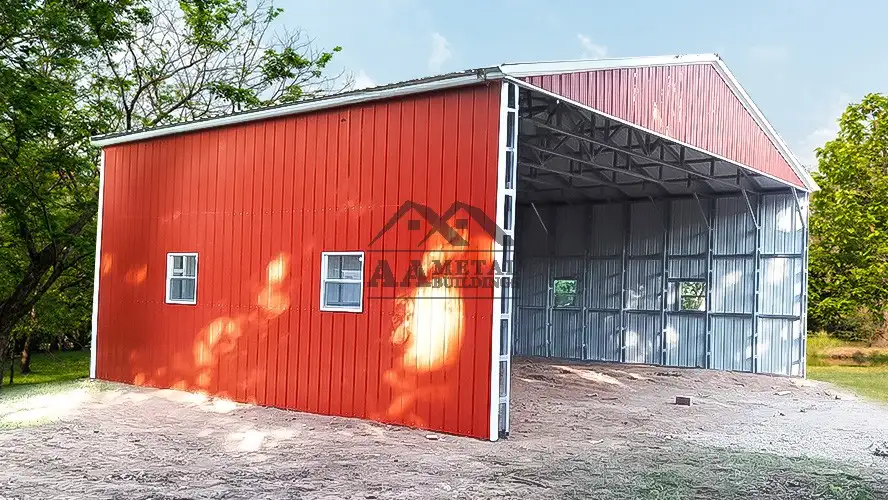
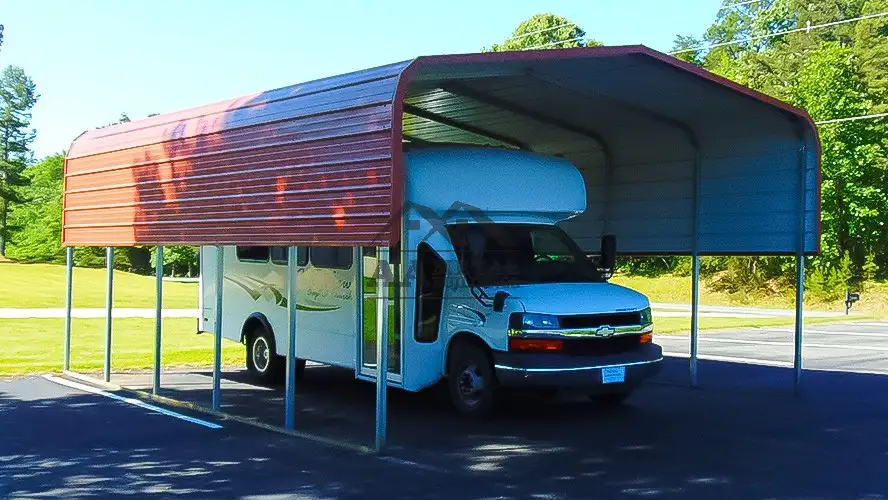
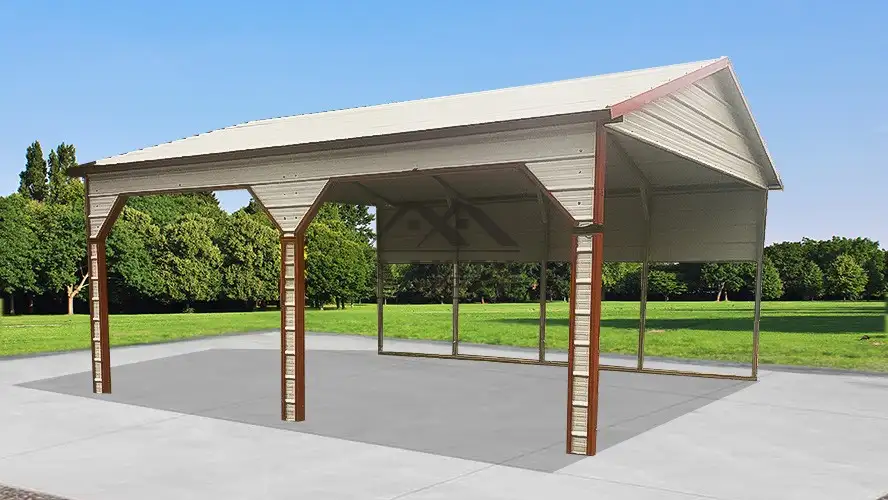
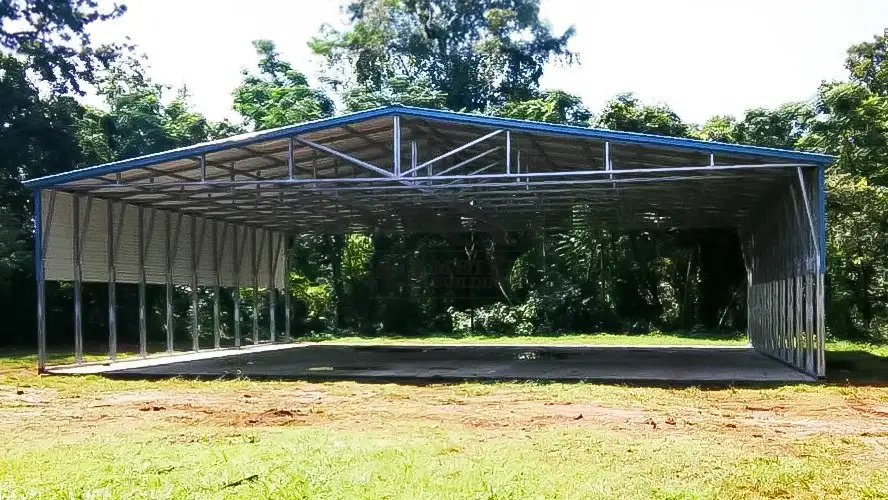
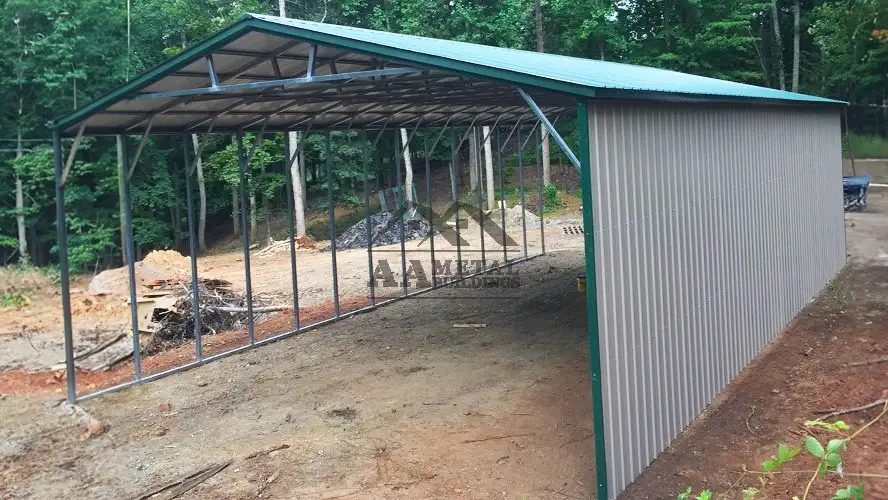
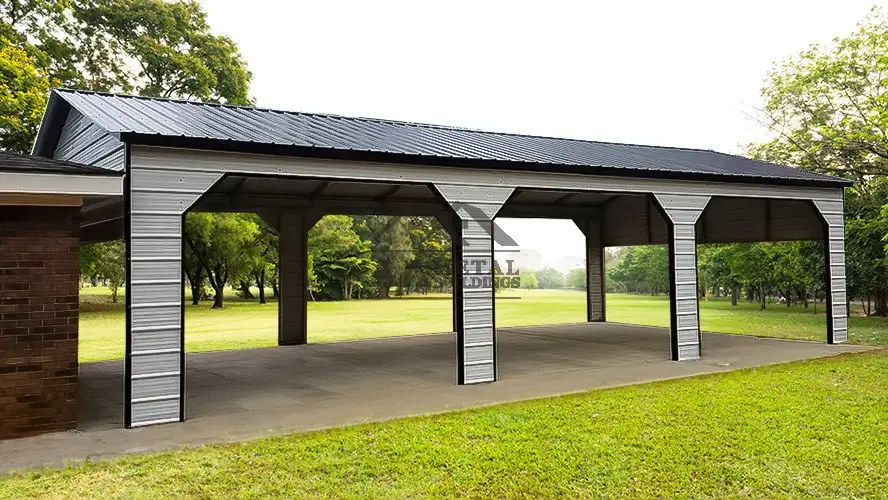
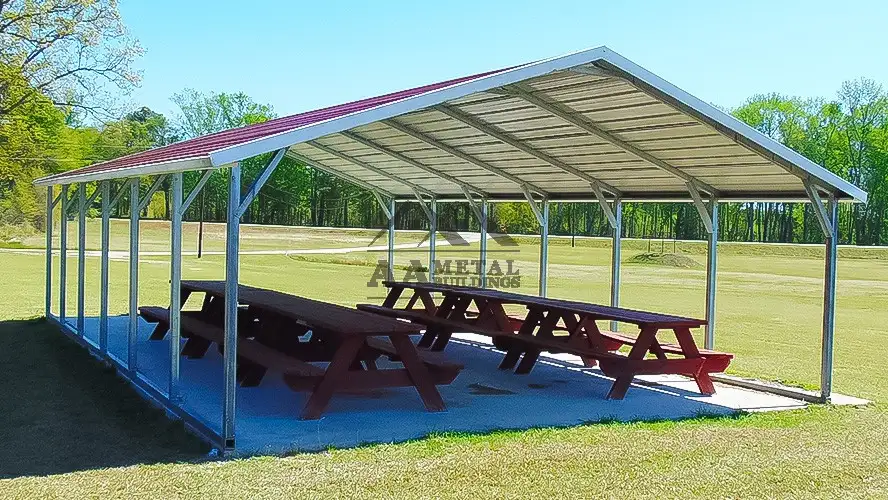
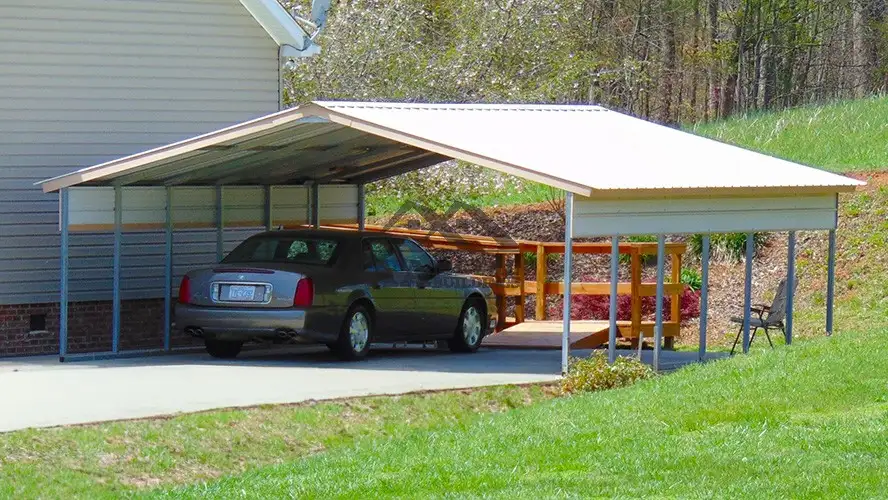
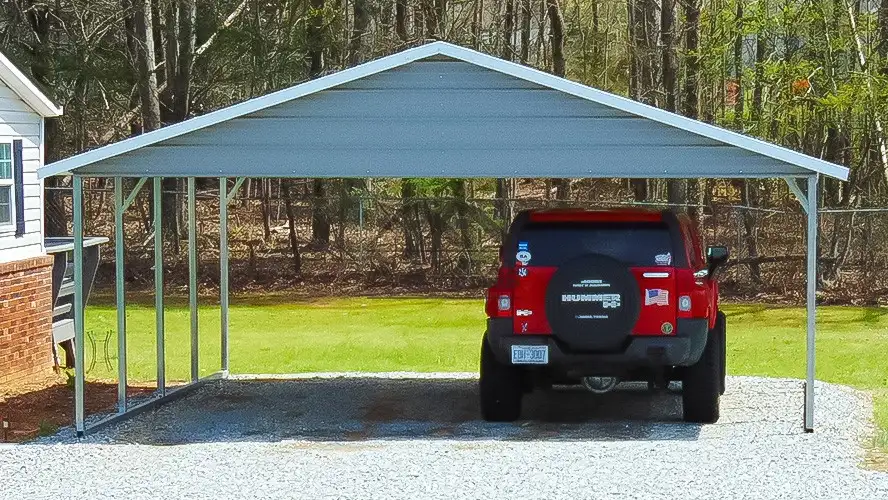
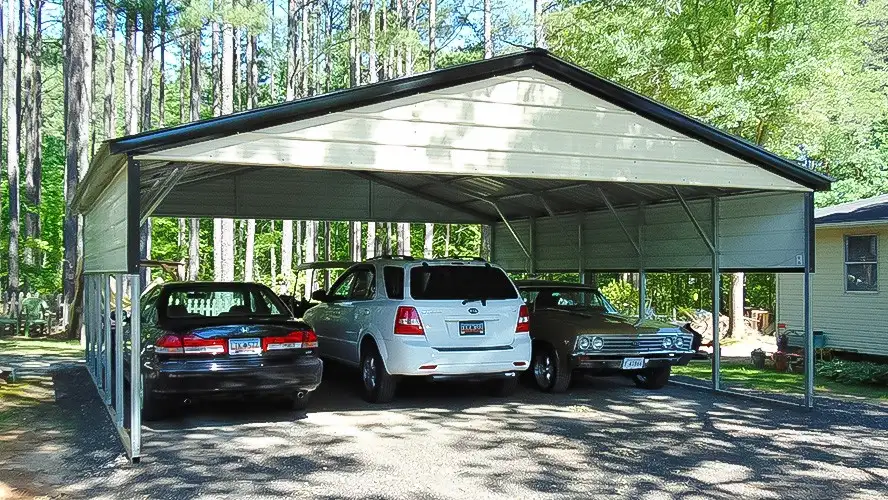
If your RV sits outside in winter, a metal RV carport (RV shelter / RV cover) is one of the best bang-for-your-buck ways to protect it. It keeps snow and ice off the roof, cuts UV, and reduces the freeze/thaw beating that wrecks seals and trim.
Is it worth it? Usually, yes — if it’s sized right and rated for your wind/snow. If you cheap out on structure or anchoring, that’s when people end up calling me after a storm.
What an RV carport really does for winter storage
A good RV carport protects the stuff that costs money and time to fix:
- Roof penetrations and seams (vents, skylights, A/C units, lap sealant)
- Slide toppers and slide seals
- Decals and gelcoat (UV still works in winter, especially at elevation or in bright climates)
- Constant wetting from snow melt and wind-driven rain
Here’s what usually happens without cover: the roof stays wet, then freezes, then thaws, then water finds the smallest crack and grows it for months. By spring you’re not “touching up.” You’re chasing leaks.
Roof style matters more in winter than people expect
This is where I take a stance: in real snow country, I usually recommend a vertical roof.
Why? Because it sheds snow and water better. Rounded/regular roofs can be fine in mild winters, but when snow piles up and refreezes, you want gravity working for you—not against you.
If you get heavy snow, drifting, or repeated freeze/thaw:
- Vertical roof is safe.
- More bracing and more trusses are not “extras.” They’re survival.
If you’re in a mild winter area with light snow and you’re watching budget:
- A regular roof can work, as long as wind rating and anchoring aren’t ignored.
Size: #1 Thing buyers get wrong
The most common mistake buyers make is simple: they measure the RV body, then buy a carport that “matches.”
That ignores A/C units, antennas, ladders, rear bump-outs, tongue length, and the fact you need room to back in without clipping posts.
What I usually see work well for winter storage:
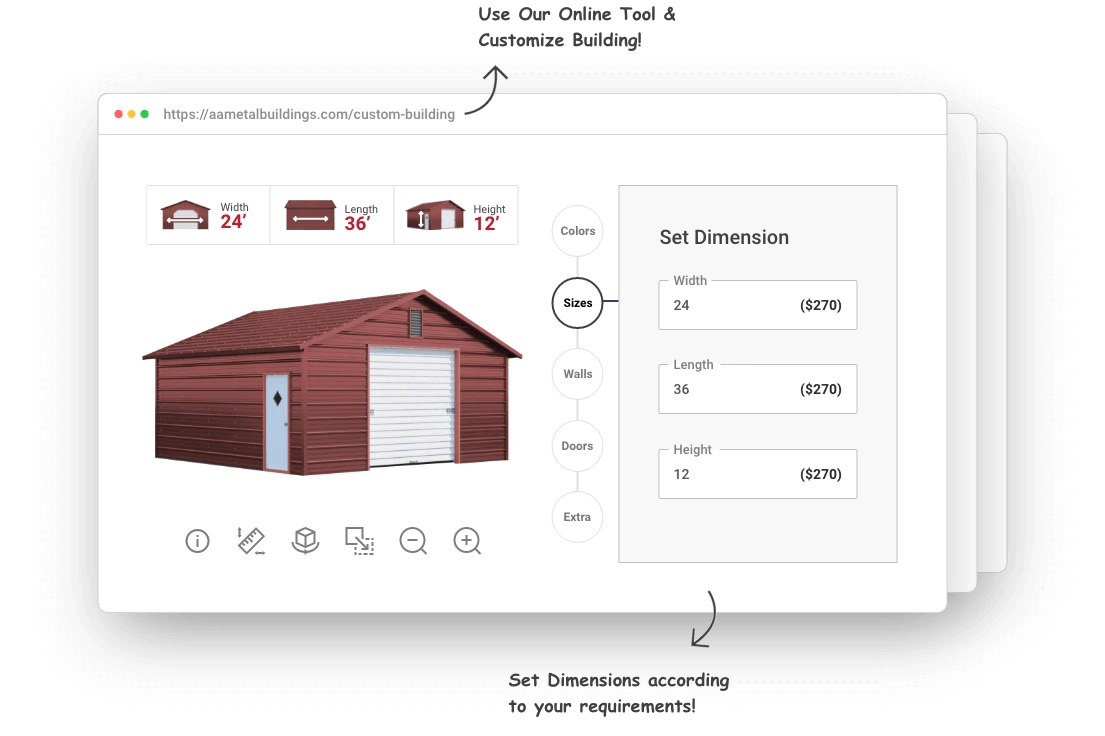
- Width:
12′ is tight for many RVs. You’ll fit, but you won’t love it.
18’–24′ wide feels normal if you want to move around, access bays, or work on it under cover. - Length:
If your RV is 30′, don’t buy a 30′ shelter.
Go 36′ or 40′ so you’re not parked bumper-to-post and fighting clearance all winter. - Height:
This is the big one. Many rigs land in the 12’–14′ leg height range, sometimes more.
Measure your tallest point (A/C included) and give yourself breathing room. Winter is not the season for “close enough.”
Cost ranges (real numbers, real reasons they change)
Prices vary by steel cost, region, delivery distance, and what your county requires for wind/snow. But for a typical U.S. buyer, here’s the range I see most often:
- Smaller / lighter RV carport: ~$3,000–$7,000
- Mid-range (bigger, vertical roof, better bracing): ~$7,000–$15,000
- Heavy-duty (high wind or high snow rated): ~$12,000–$25,000+
- Fully enclosed metal RV garage: ~$25,000–$60,000+ (and it can climb fast)
What drives the price up fast:
- Going wider (clear-span steel costs more)
- Going taller (more leverage = more structure needed)
- Vertical roof upgrade
- Adding sides/ends (wind load increases, bracing and anchors need to match)
- Certified/engineered packages for local code
Quick reality check: height and width move the price faster than most people expect.
Permits, wind ratings, and “certified” builds (the U.S. reality)
Some counties don’t care until you hit a certain size. Others want drawings for anything with a roof. And a lot of places will ask for a structure rated to your local conditions.
If your area has:
- Hurricanes / coastal wind
- Mountain snow
- Open farmland wind exposure
…don’t play games. Get a unit that’s properly rated for your location. “It’ll probably be fine” is how buildings end up twisted.
Site prep: Where installs go right or wrong
This is where problems start.
If your site isn’t level, isn’t compacted, or drains poorly, you can install a great carport and still end up with shifting posts.
Things I look at first:
- Where does water go when it rains?
- Where does snow melt run?
- Does the house roof dump water right where the posts will sit?
- Is the soil soft or prone to frost heave?
I’ve seen a “deal” carport walk out of square after one winter because it was staked into loose gravel that never got compacted. Owner thought it was anchored. It was… kind of.
Concrete vs gravel (the practical take)
- Concrete is best for long-term stability and anchoring.
- Compacted gravel can work if it’s done correctly and you use the right anchors for the soil.
- Soft ground and “a few bags of rock” is not a base. That’s optimism.
If you pour concrete, many folks do 4″, but depending on RV weight, soil, and anchoring plan, thicker edges or a thicker slab can make sense. This depends on your site and local practices. The point is: don’t treat the pad as an afterthought.
Simple table: What to choose for winter RV storage
| Setup | Best for | What can go wrong |
|---|---|---|
| Open RV carport (vertical roof) | Snow shedding, general winter cover | Still open to wind-driven snow/cold |
| Open RV carport (regular/rounded roof) | Mild winters, tighter budget | Snow/ice can hang around longer |
| RV carport with one/both side panels | Cuts wind-driven snow, better comfort | Wind loads rise; needs stronger anchoring/bracing |
| RV shelter with partial end panels | Reduces blowing rain/snow at entry | Can create drifting if placed wrong |
| Enclosed metal RV garage | Rodents, security, best protection | Higher cost; door/height planning matters |
Winter storage checklist (the stuff that saves you headaches)
Not a fancy “system.” Just what works.
- Wash it and let it dry before you park it for the season. Trapped moisture turns into mold.
- Inspect and touch up roof sealant before the first hard freeze. Cold makes small cracks worse.
- Ventilation matters. Don’t seal the RV like a freezer. Moisture needs a way out.
- Batteries: Maintain them or remove them. Dead batteries are a spring tradition.
- Rodents: Block entry points and don’t store anything inside that smells like food.
- Tires: Inflate properly and park on a stable surface (concrete or well-compacted base).
One thing I personally would not recommend: a tight tarp directly on the RV all winter, especially in windy areas. I’ve seen tarps rub through gelcoat, shred trim edges, and trap moisture like a greenhouse. If you must use a cover, use a proper RV cover and support it so it’s not grinding into the finish. But honestly, a steel roof overhead beats all of that.
When my advice changes (because conditions change)
If you’re in heavy snow country, I push hard toward:
- Vertical roof
- Stronger frame / more trusses
- Proper snow-load rating
- Placement that avoids drifting piles against one side
If you’re in high wind or coastal zones, I care more about:
- Wind-rated certified options
- Anchoring to concrete or properly engineered ground anchors
- Avoiding tall, wide, open structures without the right bracing
And if you’ve got serious rodent pressure or you keep tools/gear in the RV, sometimes the right answer is: skip the open carport and go enclosed. Not because it’s trendy—because mice don’t care how nice your roof is.
“Should I go bigger?”
This is the regret scenario I hear all the time:
They buy the exact length of the RV. It technically fits. But they can’t open compartments without squeezing sideways. They can’t get a ladder up safely. They can’t park it straight without a 10-point turn. Snow piles up where they need to walk. It becomes annoying fast.
A year later, they usually call and say, “Can we extend it?”
Sometimes you can. Sometimes it turns into a rebuild.
If you think you might:
- Upgrade to a longer rig
- Add a truck beside it
- Want storage room for totes, ladders, or a workbench
- Want to service the RV under cover
…go longer or wider now. That’s the cheapest time to do it.
A real-world example I’ve seen more than once
Customer had a fifth wheel parked beside the house. The gutter line dumped water right onto the slide side all winter. Slide seals stayed wet, froze, cracked. They didn’t notice until spring because the snow hid the damage.
We put up a 24′ wide vertical-roof RV carport and positioned it so runoff went away from the RV instead of toward it. Nothing fancy. Next winter they weren’t chopping ice off slides, and they weren’t re-caulking half the rig in April.
Common mistakes that cause problems later
- Buying too short / too narrow
It turns into a parking problem, not a storage solution. You’ll hate using it. - Ignoring drainage
Water around posts leads to shifting, sinking, and frost heave. Even a strong structure suffers on a bad site. - Trying to save money on anchoring
People try to save money here, and it backfires. Wind doesn’t care what you paid. If it’s not anchored for the surface and conditions, you’re gambling. - Choosing the wrong roof style for your winter
Regular roofs can be fine in mild areas. In real snow zones, I’ve seen snow hang up and drift harder. Vertical roof usually behaves better. - Bad placement (wind funnels and roof runoff)
Between buildings, at the end of a wind tunnel driveway, or under rooflines that dump water—those spots punish structures and RVs.
FAQs
1) Do I need a permit for a metal RV carport?
Often, yes. It depends on your county/city and the size. Some areas also require certified drawings tied to wind/snow ratings.
2) Can I install an RV carport on gravel?
Yes, if it’s level, properly compacted, and anchored correctly for that base. Loose gravel is not a plan.
3) What’s the best roof style for winter RV storage?
If snow is a real factor where you live, I usually recommend a vertical roof. In mild winters, other styles can work.
4) Will a carport actually extend the life of my RV?
It helps a lot. Less UV, less roof exposure, less freeze/thaw, fewer leaks. It won’t prevent everything, but it reduces the daily beating that ages RVs fast.
5) Should I add side panels for winter?
If you get wind-driven snow, side panels help. Just remember they increase wind load, so the frame and anchors need to match.
6) Is an enclosed RV garage always better than a carport?
Protection-wise, yes. Cost-wise, not always. If security and rodents matter, enclosed is worth a look. If you mainly want weather protection, a carport is often the better value.
7) How much taller should the carport be than my RV?
Enough that you’re not sweating clearance. Measure your tallest point and build in room for backing in and future upgrades.
If you’re tired of tarps, winter leaks, and springtime surprises, a metal RV carport is usually the simplest upgrade that actually pays you back. The key is sizing it like you’ll own it for a while, and making sure it’s rated and anchored for your weather—not somebody else’s.
If you’re at the stage where you’re considering options, AA Metal Buildings can walk you through RV carports, metal carports, RV shelters, and enclosed metal building setups. They offer nationwide service, along with free delivery and installation. No pressure—just practical help getting something that fits your RV, your property, and your winter.