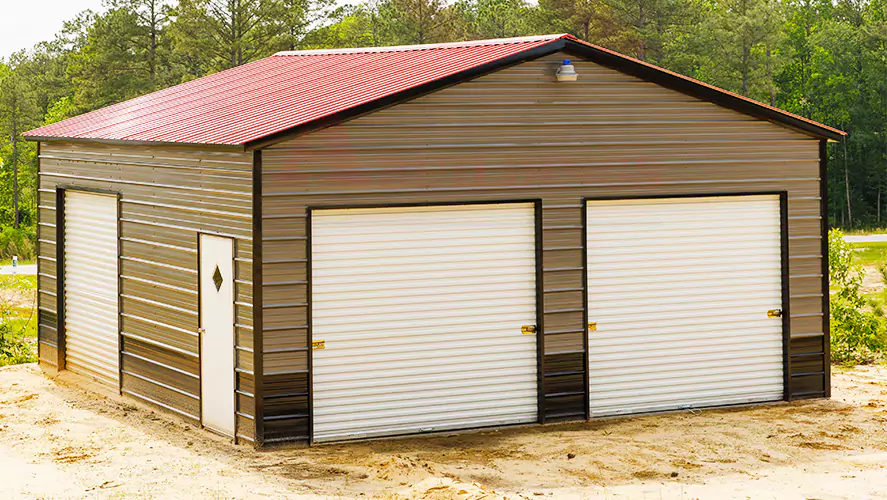
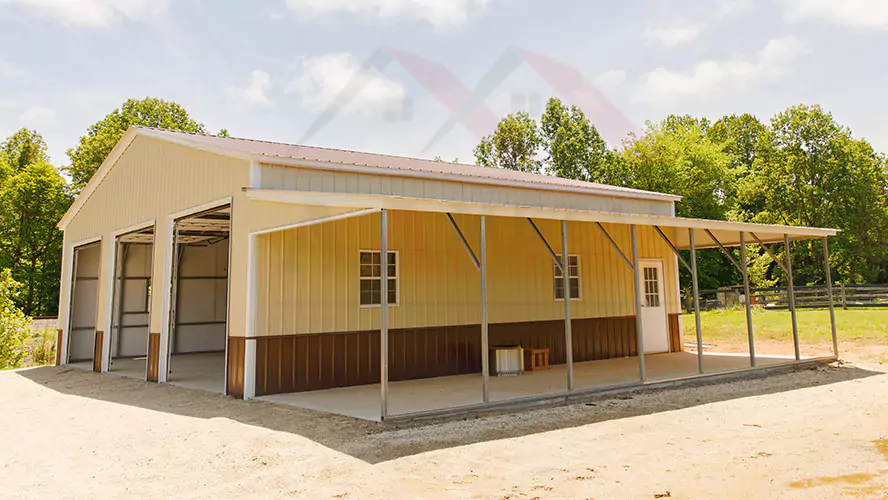
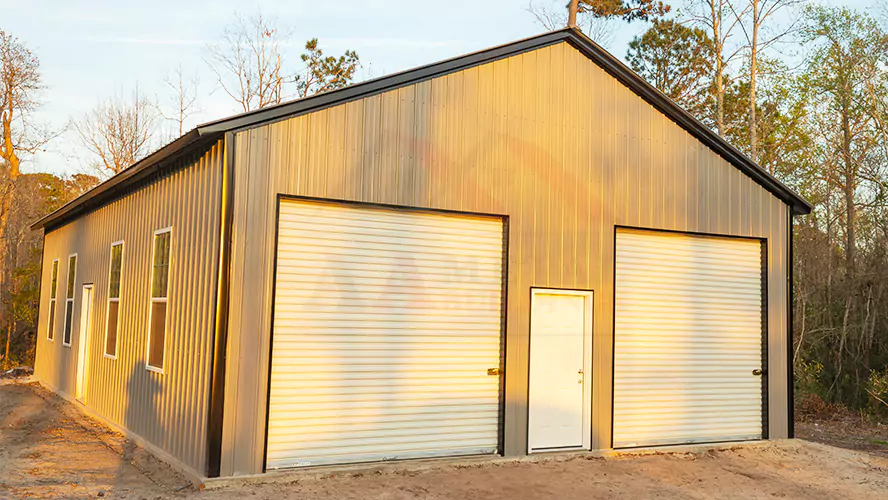
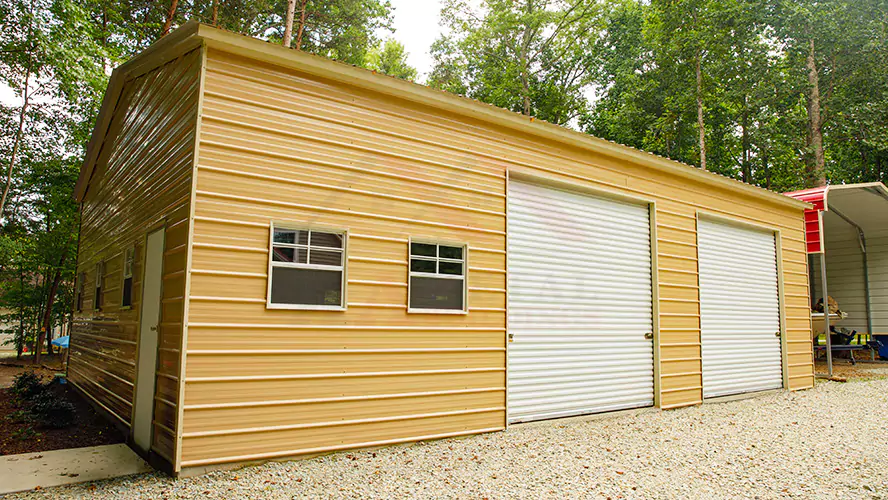
Look — people ask “metal or wood?” like it’s just a vibe thing. It’s not. It’s a lifetime-cost thing. It’s a “what’s gonna rot, sag, rust, or get eaten” thing. And it’s a resale thing, even if you swear you’re never moving (most folks move).
Truth is, either one can work. Depends on what you’re building, where you live, how picky your inspector is, and whether you’re the kind of person who actually maintains stuff… or the kind who says they will.
I’ve built metal buildings for a long time. I’ve also torn out plenty of wood garages that looked “fine” until you start poking around the bottom plate and it turns to oatmeal. I’ve fixed metal buildings too — usually because somebody cheaped out on thickness, skipped proper bracing, or thought a tarp-style “kit” counts as a building.
So yeah. We’ll talk real-world cost, durability, and what buyers actually care about.
Quick answer you can rip out
Most of the time, a properly-built metal garage costs more up front than a basic wood one, but it holds up better with less babysitting — especially in wind, termites, and wet climates. Wood can be cheaper and easier to finish like a “real” garage, but it usually needs more maintenance and it’s easier to screw up at the slab and bottom plates. Resale depends on finish quality and permits more than material.
Jobsite checklist (short and rough)
- Permits + inspections — don’t wing it
- Slab: 4″ vs 5–6″ where the trucks sit
- Door height: 8′ is “fine,” 10′ is freedom
- Clear span vs posts — posts always end up in your way
- Framing gauge / thickness — don’t go paper-thin
- Roof style: steeper = sheds snow better, costs more
- Condensation control — metal sweats if you let it
- Rust/rot line: keep structure off wet concrete
Here’s the problem: people compare “material,” not the whole assembly
A garage isn’t “wood vs metal.” It’s:
- Foundation and anchoring
- Structure (posts/frames/trusses)
- Skin (siding/roof)
- Doors + openings
- Insulation + ventilation
- Drainage around it
- Interior finish (or not)
And the failure usually starts where water and air meet the building, not because “wood is bad” or “metal is perfect.”
I’ve seen a gorgeous wood garage fail because the slab was poured sloppy and the bottom plate sat in a wet sponge for six years. I’ve also seen metal buildings get racked out of square because somebody didn’t tighten the anchor bolts right, or they built on fill that settled, or they skipped diagonal bracing because it “looked strong.”
So let’s talk lifetime cost like a grown-up.
Up-front cost: metal usually hits harder… until you count the “extras”
Rough numbers. These swing a lot by region, access, site prep, and how honest your local market is.
Most folks shopping garages are in these sizes:
- 24×24 (2-car, tight shop)
- 24×30 (2-car + storage, decent)
- 30×40 (real shop, lifts, toys, whatever)
Here’s ballpark installed pricing I see a lot — assuming you’re not building in a swamp and you’re not trying to match a $900k house with fancy trim.
Table 1 — Rough installed cost ranges (permits/site prep can swing this)
| Size | Basic wood garage (stick built) | Metal building garage (steel package + build) |
|---|---|---|
| 24×24 | ~$35k–$65k | ~$45k–$85k |
| 24×30 | ~$45k–$80k | ~$55k–$100k |
| 30×40 | ~$75k–$140k | ~$85k–$170k |
What’s “basic” mean?
- Wood: 2x framing (usually 2×4 or 2×6 walls), OSB sheathing, shingles or metal roof, vinyl/LP/wood siding, drywall maybe.
- Metal: steel frame or tube/post system, metal siding/roof like 29ga (thin) up to 26ga (better), typical ribbed roof profile, trims, gutters maybe.
Now, here’s where guys get surprised:
Metal garages look cheap when it’s just “building kit price.” Then you add:
- slab
- erection labor
- Insulation package
- Framed openings for real doors/windows
- Liner panel, interior finish
- Electrical rough-in realities
Wood garages look “done” faster because they’re easy to finish like a house. Metal can too, but it depends on how it’s designed from the start.
Lifetime cost: wood bleeds you slowly, metal punches you early (usually)
This is the part people don’t want to hear.
Wood garages:
- Usually cheaper to build if you keep it plain.
- Easy to modify later: add a window, move a door, hang cabinets, whatever.
- But they love to rot at the bottom if the slab/drainage/flashing is half-assed.
- Termites, carpenter ants, moisture. It’s a whole thing in some areas.
Metal garages:
- Typically cheaper to keep square and straight long-term (structure-wise).
- But you have to handle condensation and corrosion right.
- Cheap metal packages can be flimsy. Thin gauge panels oil-can, screws back out, trim flaps in wind. Works fine until it doesn’t.
Real-life lifetime costs I’ve watched:
- A wood garage that sits 2–3 inches too low at the apron and catches water? You’ll be replacing bottom plates, siding, and probably sheathing at some point. Not fun. Not cheap.
- A metal garage with no condensation plan? You’ll “rain” inside in spring/fall, rust your tools, and grow that science experiment on the underside of the roof. Then you’ll pay again to fix it.
Table 2 — Common long-haul issues & what they cost (rough)
| Issue | Wood garage | Metal garage |
|---|---|---|
| Rot/soft bottom plate + lower wall repair | ~$2k–$12k+ depending on spread | Not typical (unless wood trim/base was used) |
| Termite/bug damage | ~$500–$8k+ | Usually minimal (still can hit wood parts) |
| Roof replacement | Shingles: ~$6k–$18k | Metal roof panels: varies; often less frequent but not free |
| Condensation fix after the fact | Less common | ~$1.5k–$10k+ (insulation/venting/liner) |
| Panel/screw maintenance | N/A | Small but annoying — ~$200–$1k over time |
That’s not a perfect spreadsheet answer. It’s jobsite reality.
Durability: wind, snow, water, bugs… pick your enemy
Wind
In my experience, properly engineered steel frames do great in wind. Big “properly,” though.
I’ve seen guys buy the lightest package they can, then they’re shocked when a 50–60 mph gust starts making the walls flex like a soda can. That’s usually:
- Thin panels (29ga)
- Too wide spacing
- Weak bracing plan
- Bad anchoring into the slab
Wood can do fine too — but it’s only as good as the fastening and shear walls. A wood garage with lazy nailing, no proper sheathing, and giant door openings with no real headers? That thing is basically a drum.
Snow
Snow load is design. Metal roofs shed snow better if they’re slick, but they also dump it. You don’t want that avalanche landing right where your side door is. Ask me how I know.
Roof pitch matters:
- 3:12-ish is common on metal buildings (cheap, easy).
- 4:12 to 6:12 sheds better and looks more “house-like,” costs more.
Water
Water is the real killer. Always.
For wood builds, I’m watching:
- Slab height relative to grade
- Gutter/downspout discharge
- Splash-back at the base
- Bottom plate separation from concrete (capillary break, sill seal, treated lumber, etc.)
For metal builds, I’m watching:
- Base trim details
- Keeping dirt and mulch from piling against panels
- Dissimilar metal contact (it can accelerate corrosion)
- Condensation and interior humidity
Bugs
If you’re in termite territory… look, wood is wood. Treated helps, but it’s not magic.
Steel doesn’t feed bugs. But don’t get cocky — you’ll still have wood elements: door bucks, interior framing, maybe purlins depending on system. Bugs find what they find.
Condensation (metal folks hate talking about this, so let’s just do it)
Metal sweats. It’s not a flaw. It’s physics.
Warm moist air hits a cold metal roof panel = water. That’s it.
If you store:
- Tools
- Classic cars
- Seed/fertilizer
- Anything that hates moisture
…you need a plan. Options you’ll see:
- Roof insulation blanket (fiberglass + vapor retarder): common, works decent if installed right.
- Spray foam: works great, costs more, and you better trust your sprayer.
- Drip-stop / anti-condensation felt: helps for basic storage, not a cure-all.
- Ventilation: ridge vents, soffit, gable vents. Helps a lot if the building breathes.
I’ve been on calls where the owner thought their roof was leaking. Nope. Condensation. The “leak” was everywhere.
You don’t want to deal with this later. Fixing it after the wiring, lights, and interior are done is it’s own special hell.
Framing gauge & panel thickness: Where metal gets cheap and ugly fast
People shop metal buildings like they shop TVs. Bigger number, lower price, cool.
Then they get a building that feels like it’s made out of HVAC duct.
Basic reality:
- 29ga panels: common budget option. Dents easy. Oil-cans. Screws can work loose more often.
- 26ga panels: typically stiffer, better feel, holds up nicer over time.
- Structure members vary a ton by system. “14ga” “12ga” “red iron” — marketing words get tossed around. The engineering matters.
If you’re in a windy area, or you want it to feel solid when you slam a door, don’t cheap out on thickness. You’ll hate yourself later.
Wood has its own version of this:
- 24″ on center walls when they should be 16″
- Undersized headers
- Bargain trusses without proper bracing
- Cheap housewrap job
Same movie, different actors.
Concrete: This is where both garages win or lose
I don’t care what the walls are made of if the slab is junk.
Typical slab stuff (rough, depends on soil and loads):
- 4″ slab is common for a basic car garage.
- If you’re parking heavier trucks, trailers, tractors, or using a lift, 5″–6″ in critical areas is smarter.
- Thickened edge / grade beam details matter. Anchors need real bite.
- Vapor barrier under slab is cheap compared to what moisture does later.
And for doors:
- A 16’x7′ door fits two cars, sure. But mirrors and door dings happen.
- A 16’x8′ gives you a little more forgiveness.
- If you’ve got a 3/4 ton truck with a rack, 8′ door height can get tight fast.
- 10′ overhead is where life gets easier if you’re doing anything “shop-ish.”
Sizing logic: A 24×24 technically fits two cars. You can park two trucks, but not comfortably. If you want benches, toolboxes, or a freezer, bump to 24×30 and you’ll thank yourself.
Resale: buyers care about “does it feel legit,” not the material label
Resale is scary. Buyers will pay for:
- Permitted build
- Clean look
- Good doors/windows
- Electrical done right
- Dry interior
- Decent driveway approach
- Matches the house style (sometimes)
They will not pay extra just because you say “steel is forever.”
A metal garage can add strong value if it looks finished and it’s not a glorified shed. Liner panels, proper trim, good doors, neat slab edges, gutters that dump away from the building — that stuff sells.
A wood garage can add great value if it’s framed right and finished like an extension of the home. Drywall, insulation, storage, attic truss, nice siding. Also sells.
What kills resale:
- “Unpermitted outbuilding”
- Wavy metal panels
- Water stains and rust
- Rotten bottom corners
- Doors that rub because it’s out of square
- Sketchy electric
What I’ve watched homeowners screw up (more than once)
- They build too small. Then they fill it in 6 months and start parking outside again. Happens constantly.
- They cheap out on the slab. Then cracks, settling, and water issues show up. Concrete isn’t “where you save money.”
- They ignore drainage. Downspouts dumping at the corners. Grade sloping toward the building. Mulch piled against the wall. That’s how you buy rot and rust.
- They pick door sizes last. Big mistake. Door openings drive structure and layout. Plan doors first.
- They assume metal doesn’t need insulation. Then they call somebody like me later because everything is damp and the building “leaks.”
- They buy a “kit” with no real engineering for their location. Wind/snow loads aren’t optional. Inspectors love rejecting these, and then you’re paying twice.
FAQs (Real questions We hear)
- Is metal always cheaper than wood?
Usually not once it’s apples-to-apples finished. A bare metal shell can be cheaper than a fully finished stick-built garage, sure. But once you add slab, doors, insulation, and electrical, it can climb fast. - Will a metal garage rust out?
Depends on the coating, the environment, and how you treat the bottom edges. Coastal air, fertilizer storage, constant condensation… yeah, rust happens. Most normal setups are fine if you keep water handled. - Will a wood garage rot out?
If water’s managed and it’s built right, it can last a long time. If the slab is low, splash-back happens, or the bottom stays wet… it’ll rot, usually at the corners first. - Which one’s better for a workshop with heat?
Both can work. Wood is generally easier to insulate and finish inside. Metal can be great too, but you need a real insulation/condensation plan from day one. - What about fire?
Steel doesn’t burn, but stuff inside still does. Wood burns, obviously. Local code, setbacks, and your insurer matter more than what arguments people have online. - Can I put drywall in a metal building?
Yep. You’ll frame an interior wall system, or use liner panels, or a mix. Just plan for wiring, insulation, and fastening points. Don’t assume you can screw drywall anywhere. - What size do I actually need for two cars and storage?
Most folks are happier at 24×30 than 24×24. If you want a workbench and cabinets without hating life, bigger wins. - Do metal buildings lower property value?
Not automatically. A clean, permitted, good-looking metal garage can add value. A cheap-looking wavy shed with no permits can spook buyers. - How long does a build take?
Roughly: a wood garage might be a few weeks depending on crew and weather. Metal shell erection can be fast once slab is cured — sometimes days — but finishing still takes time. Permits and inspections can drag it out more than the actual build. - What’s the biggest ‘don’t do it’ mistake?
Ignoring water. Build it high enough, slope the grade away, handle gutters, and keep the base dry. Everything else is easier than fixing water damage.
Bottom line
If you want minimum fuss long-term, and you’re in a place with wind/termites/wet, metal usually makes sense — if it’s not a bargain-bin package and you address condensation.
If you want easy finishing, easy modification, and “house-like” look, wood is hard to beat — if you build it right and keep water off it.
Either one can be a money pit when done sloppy.
If you want to talk through your layout — door sizes, slab thickness, roof pitch, where the water’s gonna go — experts at AA Metal Buildings can do that. No pressure. Just straight answers before you spend a pile of money and end up cussing at it for the next 20 years.