Why this decision turns into a headache for a lot of buyers
Most folks aren’t shopping metal carports for fun. They’re reacting to something: sun beating the life out of paint, hail dents that keep piling up, a boat cover that never really dries, or tools that stay gritty no matter how often you wipe them down. Then you hit the decision point—open or enclosed—and it’s easy to treat it like a straight price comparison. This is where people mess up. They size it around the vehicle they own today, ignore how they actually pull in, and forget the “stuff creep” that always happens once there’s a roof. I’ve helped customers who were sure they wanted open until the first sideways storm showed them what “covered” really means. I’ve also seen enclosed builds that looked great on paper but became annoying fast because the door layout fought the driveway. The right choice is the one that works on a normal Tuesday, not just in a perfect drawing.
Open vs. enclosed metal carports
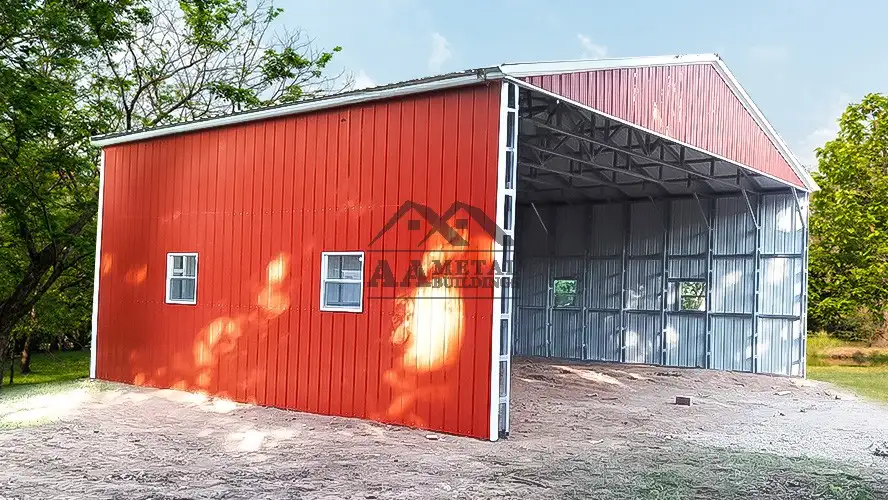
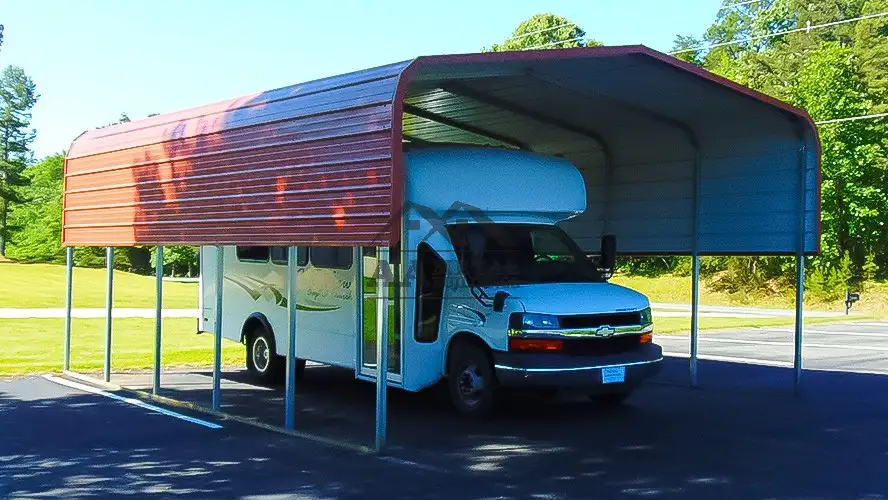
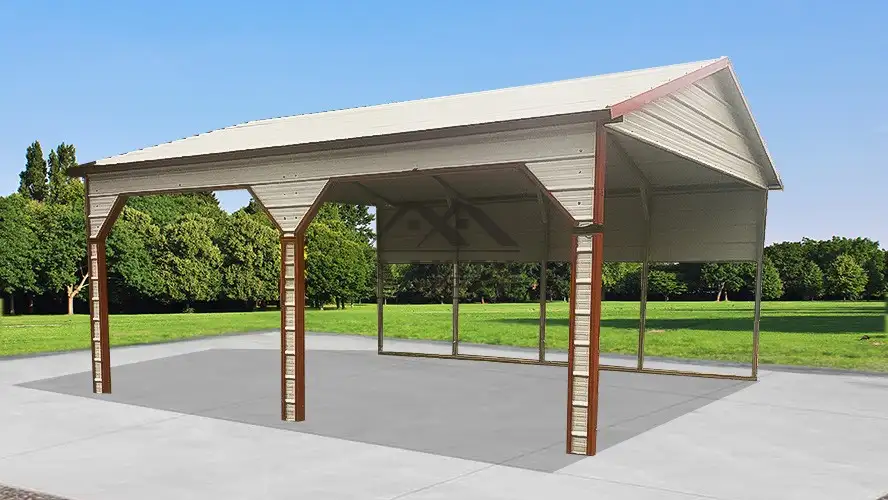
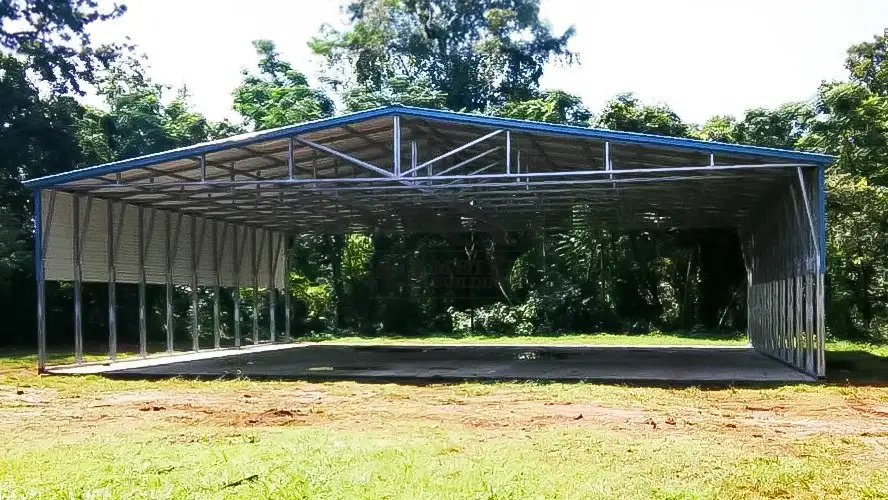
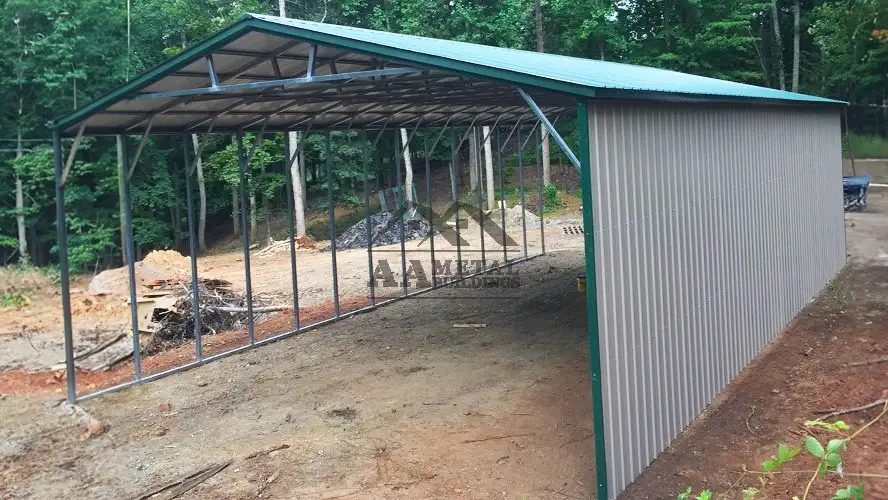
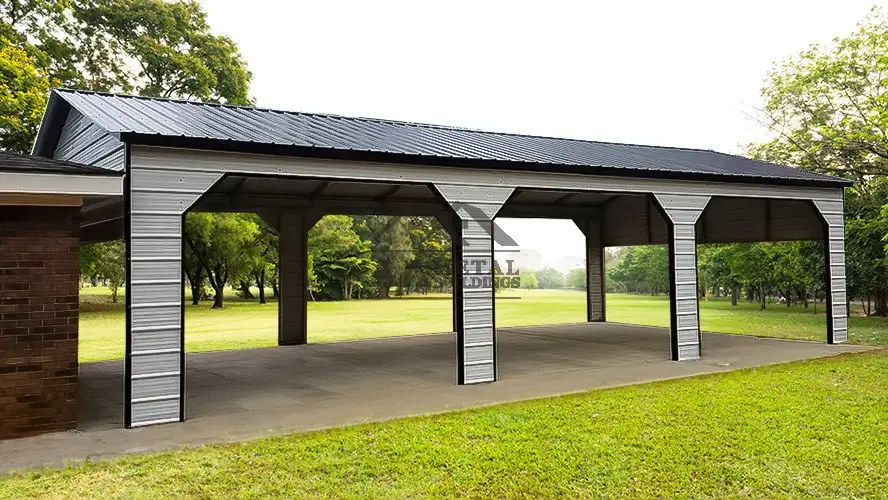
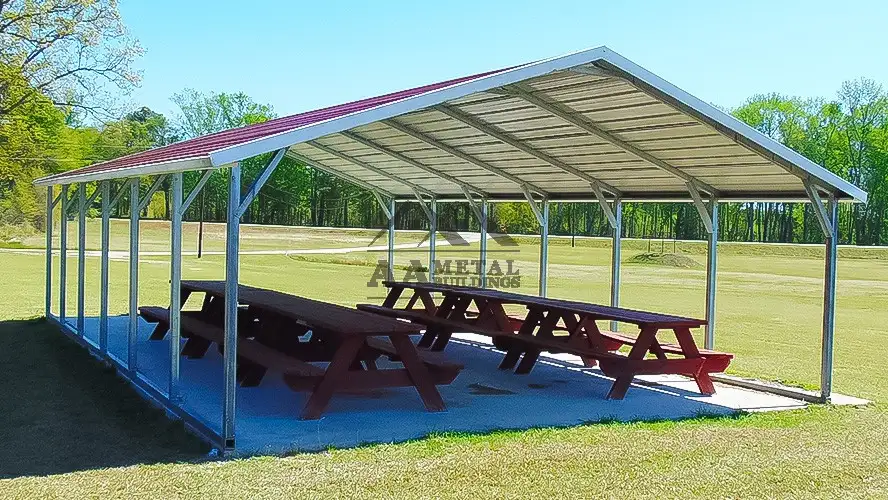
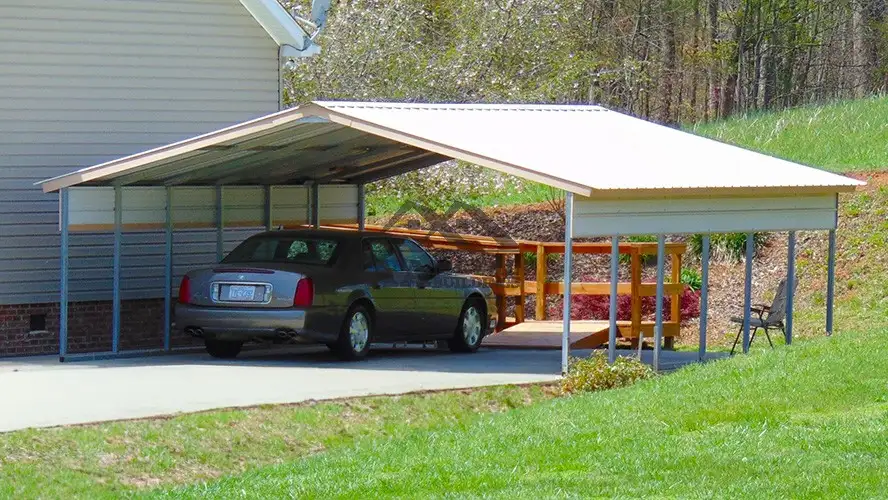
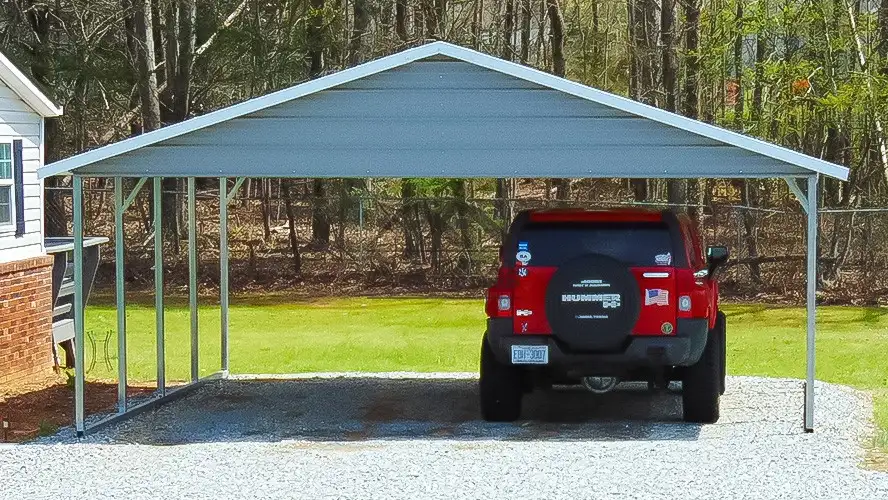
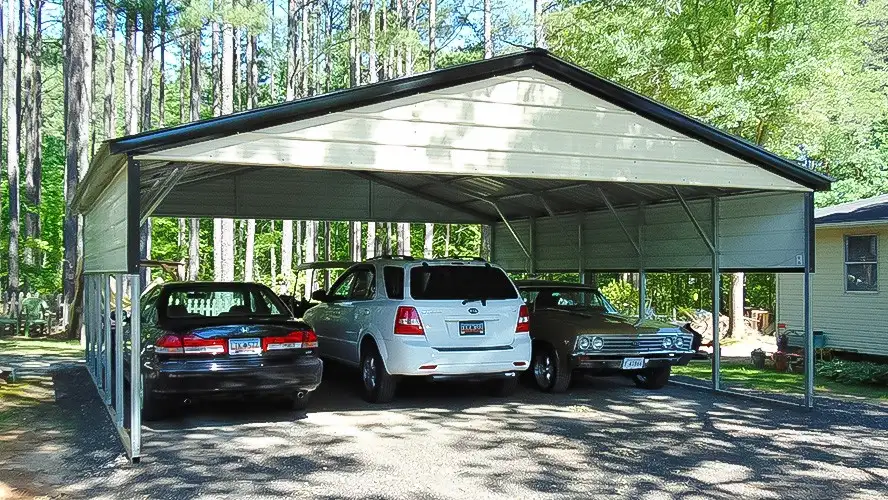
Open vs. enclosed metal carports comes down to access versus protection. Open carports are typically the more affordable way to get overhead cover and easy pull-through use for daily parking, trailers, and equipment you move often. Enclosed carports cost more because you’re adding wall panels, framing, and usually doors, but you gain security, cleaner storage, and better defense against wind-driven rain, drifting snow, dust, and unwanted attention.
Before you choose: a quick reality checklist
- Doors: Do you need a roll-up/overhead door, a walk-in door, both, or just open bays?
- Wall height (eave height): Will your tallest item still fit comfortably a year from now?
- Clearance: What’s the true tallest point—roof rack, light bar, trailer nose, boat tower, tractor stack?
- Workflow: Are you unloading gear and moving tools around, or just parking and walking away?
- Storage: Where will shelves, bins, fuel cans, and lawn gear live once the space starts filling?
- Future growth: Bigger trailer, second vehicle, side-by-side, small camper—any of that on the horizon?
- Approach angle: Can you line up easily with the opening, especially with a trailer, on your driveway?
Open metal carports: best uses and the real trade-offs
Open carports do one thing really well: they give you quick cover without slowing you down. If you’re in and out all day, a wide open bay feels effortless. Pull in, hop out, grab what you need, and go.
Where open carports make the most sense
- Daily parking: Shade and basic weather protection without dealing with doors.
- Frequent trailer use: No tracks, no door timing, no “hold on while I open it” moments.
- Equipment storage with airflow: Mowers, compact tractors, pallets, firewood—air movement helps.
- Hot climates: Open sides shed heat better than a closed box.
What people don’t realize until after install
“Covered” doesn’t always mean “dry.” If storms blow sideways where you live, wind can push rain right into an open bay. Dust is another one. If you’ve got a gravel drive, a nearby road, or open fields, the bay becomes a magnet for grime. For a work truck, that might not matter. For tools and stored gear, it does.
One quick story from the field: I had a customer with a fishing boat under an open unit. The roof was fine, but after storms the seats stayed damp and he couldn’t figure out why. The wind always hit from the same direction and drove water right into the bay. We added a panel on the weather side and the problem basically stopped. He didn’t need a fully enclosed structure—he needed protection aimed at the conditions on his lot.
Enclosed metal carports: when walls and doors are worth the extra cost
Once you close a carport in, you’re not just buying a roof. You’re buying control: cleaner storage, less exposure, and a place you can lock up. That matters if you keep tools, parts, motorcycles, or anything that you don’t want sitting out in the open.
Best uses for enclosed space
- Tool and equipment storage: Less dust, less weather, less “I have to wipe everything down.”
- Vehicles with interiors: Upholstery and electronics do better with fewer temperature swings and less moisture.
- Security concerns: A lockable door changes the conversation fast.
- Snow drift trouble spots: Walls help stop wind from loading snow into the bay.
The catch: enclosure changes how you use the building
Truth be told, once there are walls, people start leaning stuff against them. Then shelves show up. Then a bench. Then it becomes “half storage, half workspace” without anyone ever planning for it. That’s not a bad thing—just don’t size an enclosed unit like it’s only a parking stall.
Partial enclosure: the sweet spot many buyers overlook
A lot of properties don’t need wide open or fully closed. They need the weather side blocked. Wind walls, partial side panels, or a closed gable can cut down on sideways rain and drifting snow without the cost of a full wrap.
Here’s the thing: panel placement should follow the weather and your approach, not whatever “looks balanced.” Put protection where storms hit, keep access where you drive.
What actually drives cost on open vs. enclosed carports
People want one number, but pricing moves based on the build choices. Two carports with the same footprint can price very differently once you factor in strength requirements, height, and openings.
Main cost drivers for open carports
- Footprint: Width and length are the biggest levers.
- Clear-span and framing strength: Wider spans generally need heavier structure.
- Roof style and pitch: Some roof types require more steel and trim work than others.
- Eave height: Taller legs and bracing add material.
- Local wind/snow requirements: Higher-rated designs often require additional reinforcement.
Main cost drivers for enclosed carports
- How many sides are closed: Three sides vs. four sides is a meaningful jump.
- Door packages: Roll-up/overhead doors and framed openings add up quickly.
- Large openings: Bigger cutouts can require extra framing to meet load needs.
- Ventilation choices: If you want it to stay drier inside, airflow planning matters.
Door size, door placement, and approach angle: the “feel” factor
Most folks don’t measure door clearance until it’s too late. They’ll check the vehicle width and forget mirrors, trailer fenders, and the fact that nobody enjoys squeezing through a tight opening in the rain.
Door layout mistakes I see all the time
- Tight openings: A door that’s “technically enough” becomes a daily annoyance.
- Bad driveway alignment: The opening is fine, but the approach forces a hard turn.
- No walk-in access: People end up opening the main door just to grab a rake.
Now, most folks don’t think about this: a sloped driveway can change clearance while you’re moving a trailer. The nose rises, the rear drops, and suddenly that “safe” height feels a lot tighter. If you’ve got slope, measure with the trailer on the actual approach, not on flat ground.
Eave height and clearance: plan for the tallest day, not the average day
Height is one of the hardest things to fix later. If you’re close on clearance, you’ll feel it every time you pull in. Measure your tallest point in real life—roof rack, light bar, enclosed trailer roofline, boat tower, whatever it is. Then give yourself breathing room.
If you’re adding a vehicle door, remember the opening is what matters. The building can be tall, but the door still needs to clear comfortably.
Layout and workflow lanes: where your square footage disappears
A carport isn’t just a parking footprint. It’s where you walk, unload, store, and sometimes wrench on things. Storage always expands. Shelves start small and then spread. The bench gets deeper. Bins hang over the edge.
- Bench depth: Around 24 inches is comfortable for actual work.
- Shelf depth: 16–20 inches is common once totes show up.
- Walking lane: A usable lane often feels like 36 inches or more.
If you’re enclosing and planning even a basic workspace, don’t size it like it’s only for parking. That’s how you end up doing the sideways shuffle around a fender while trying not to bang your door edge on a post.
Two tables that make the decision easier
| Option | Best for | Watch-outs |
|---|---|---|
| Open carport | Daily parking, frequent trailer moves, quick equipment access | Wind-driven rain, dust, visibility/security |
| Partial enclosure | Blocking the weather side, reducing drift, hiding stored items | Poor panel placement can hurt access and airflow |
| Fully enclosed | Lockable storage, cleaner interior, strongest weather protection | Door layout, ventilation planning, condensation management |
| Use case | Width that feels usable | Length target | Common eave height range | Notes |
|---|---|---|---|---|
| 1 car / small SUV | 18–20 ft | 20–25 ft | 7–9 ft | Allows door swing and walk-around space |
| Full-size pickup | 20–24 ft | 25–30 ft | 8–10 ft | Mirrors and gear take space fast |
| Boat + trailer | 24+ ft | Trailer length + 3–5 ft | 9–12 ft | Tongue length and turning room surprise people |
| Enclosed cargo trailer | 24+ ft | Trailer length + 5 ft | 10–12+ ft | Slope changes clearance during entry |
| RV / camper | 26–30+ ft | RV length + 5 ft | 12–14+ ft (often more) | Door height is usually the limiting factor |
Condensation and ventilation: what to expect with enclosure
A closed structure can trap moisture. Warm air hits cool metal and you can get condensation. Tools can rust. Upholstery can hold dampness. Cardboard boxes can turn soft. That’s not scare talk—it’s just what happens when moisture has nowhere to go.
If you’re enclosing space for storage, plan some form of airflow. Also, avoid packing fabric or cardboard tight against metal walls in humid climates. Little habits like that make a difference over time.
Where buyers go wrong (and what I recommend instead)
- They size to the vehicle only: If you want shelves, a bench, or room to walk, size for that now.
- They ignore the approach: Door placement should match how you actually drive in, especially with trailers.
- They go tight on height: Measure the tallest real-world point and leave margin.
- They fight the weather: If storms come from one direction, block that side first.
- They don’t plan for growth: Trailers get bigger and projects multiply. Build like you know that’s coming.
FAQs buyers ask before ordering
Is an open metal carport enough protection for my car or truck?
It does a solid job against sun and direct weather from above. If you get sideways storms, you can still end up with wet areas under the roof. In that case, a weather-side panel is often the most practical upgrade.
Is an enclosed metal carport basically a garage?
Functionally it can be, especially with a vehicle door and a walk-in door. The big difference is how you plan access and airflow so it stays usable and doesn’t trap moisture.
What’s better for a trailer: open or enclosed?
If you hook up often, open access is usually easier. If it’s long-term storage or you want theft protection, enclosure (or at least partial walls on the problem side) tends to work better. The deciding piece is often the approach and opening comfort.
How do I pick the right eave height?
Measure the tallest real-world point, not the brochure spec. Roof racks, light bars, trailer noses, and boat towers change the number. Then add margin so you’re not sweating it every time you pull in.
Do I need a walk-in door if I’m enclosing the space?
I strongly prefer it for convenience. It lets you grab tools or supplies without opening the main vehicle door. If you use the space often, that small door gets used more than people expect.
Will an enclosed unit have condensation problems?
It can, especially in humid areas or if you park wet vehicles inside and keep it sealed up. Airflow planning and smart storage habits go a long way toward keeping the interior drier and friendlier for tools and gear.
Can I start with an open carport and close it in later?
Sometimes, depending on the original design and how it’s framed. If you already know you’ll want walls and doors, planning for that up front usually keeps the build cleaner and avoids paying twice for rework.
How wide should a carport be so it doesn’t feel tight?
If you want comfortable door swing and room to move around, don’t size it like a parking stall. Extra width is what makes it feel easy instead of cramped. Tight spaces turn normal tasks into small daily frustrations.
Wrapping it up
Open works best for quick access and lower cost. Enclosed works best for security and cleaner storage. The deciding details are clearance, door layout, and weather exposure. If you want help choosing a setup that fits how you actually use the space, AA Metal Buildings can walk you through it. We provide free delivery and installation nationwide, and you’ll coordinate local site prep, permits, and your foundation.