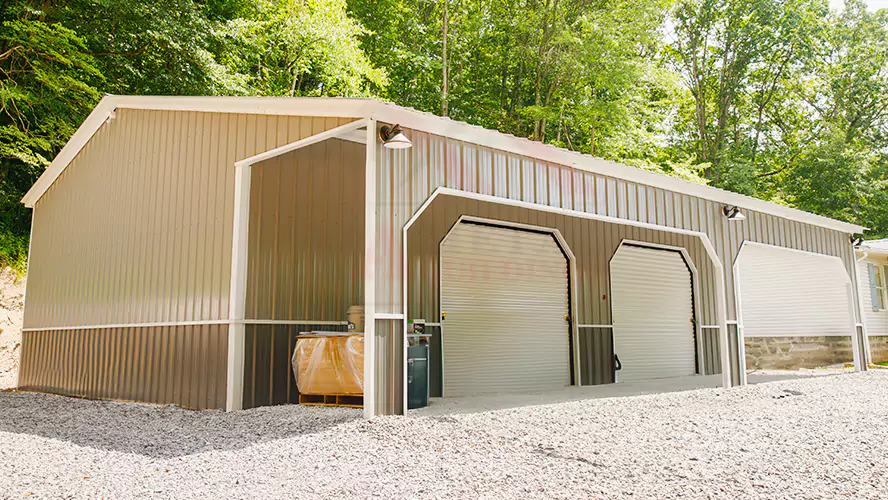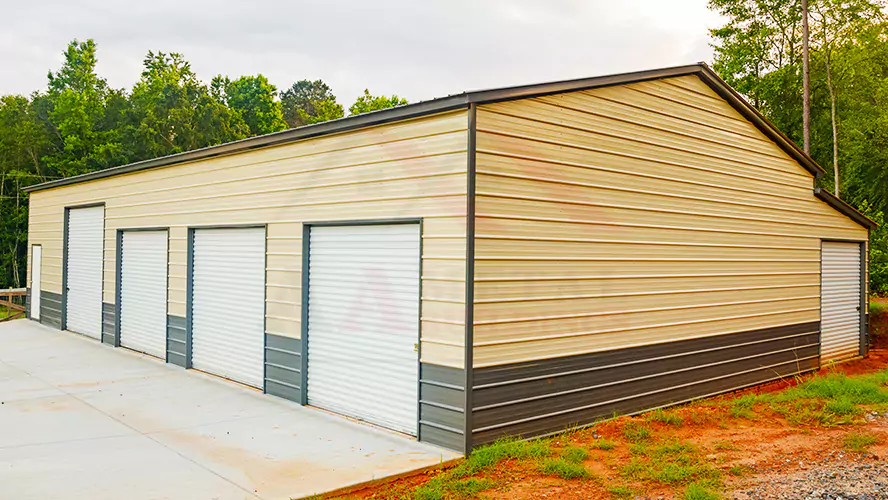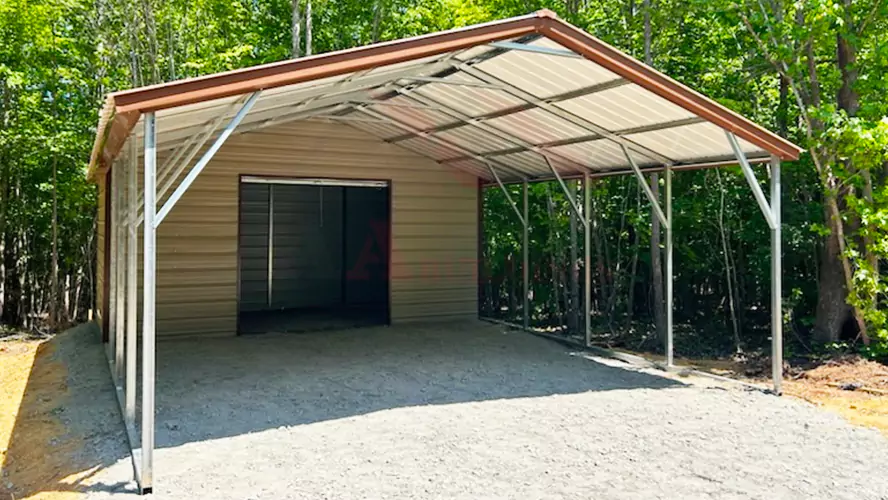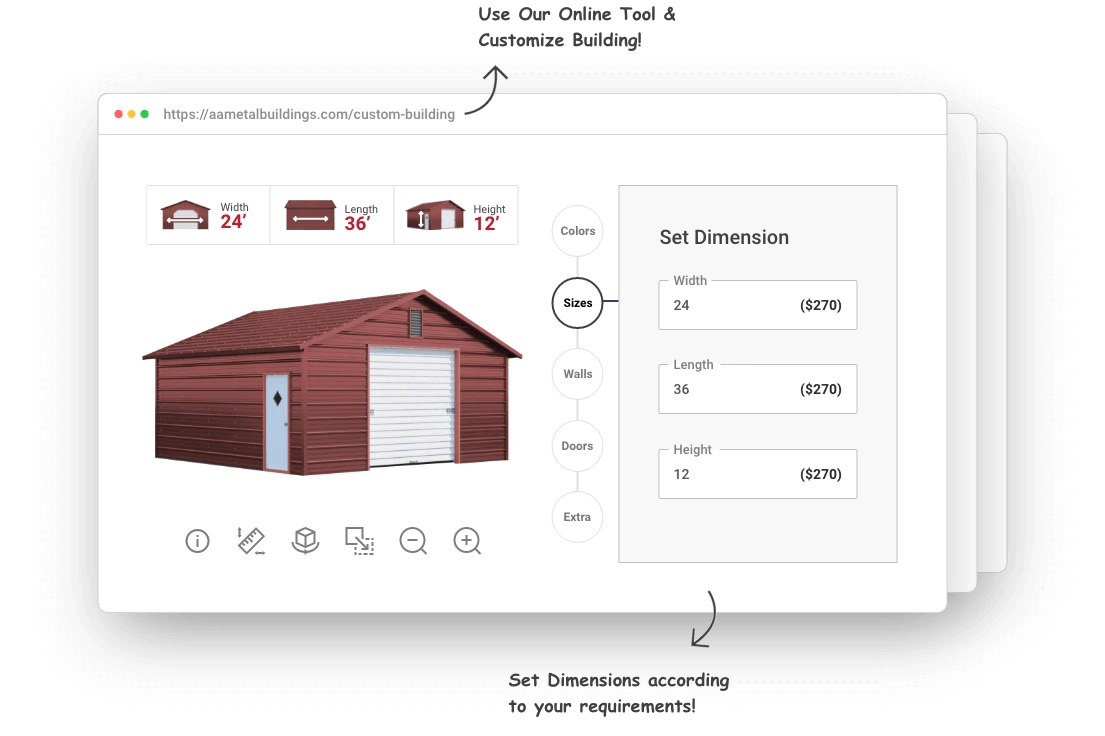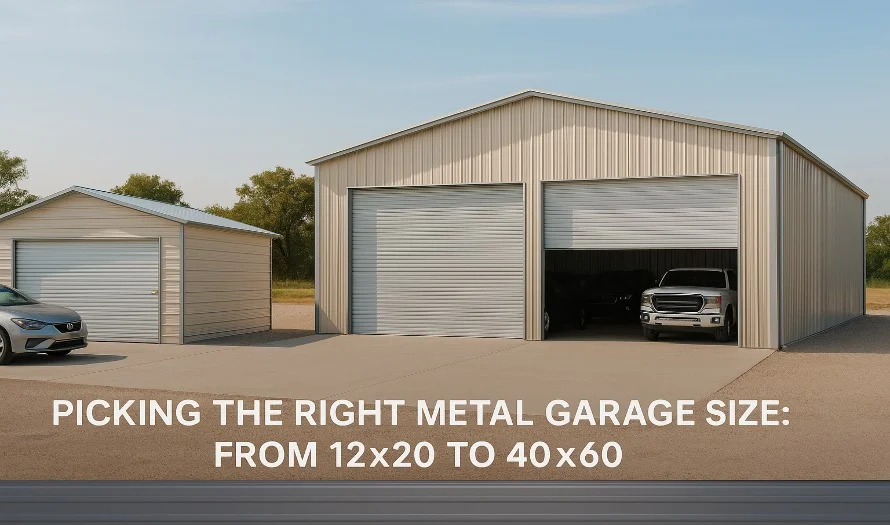
You’re not just buying steel — you’re buying elbow room. Room to park, swing doors without cussing, stash the mower, and have a real place to work. Pick the size based on what you park now, how you move around it, and what you might add later. Here’s the no-nonsense guide.
Note: If you’re torn between two sizes, go one bay bigger. No one complains about extra space.
Quick Size Selector (start here)
Use these as a guide for a basic enclosed garage. Real-world price changes with code requirements, wind/snow loads, steel pricing, and the options you pick.
| Scenario | Recommended Size | Doors (roll-up) | Eave Height | Layout Notes | Approx. Prices |
|---|---|---|---|---|---|
| 1 compact/mid car + shelves | 12×20 | 1× 8×7 or 9×8 | 8’–9′ | Keep a 24–36 in. walkway on the driver side | ~$4k–$8k |
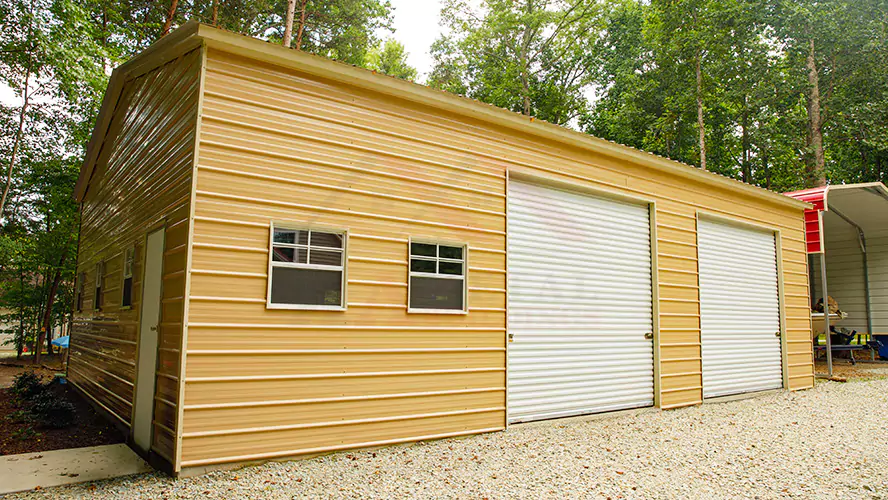
| 2 small cars / 1 truck + bench | 18×20 or 20×25 | 1–2× 9×8 or 10×10 | 9’–10′ | Extra depth buys door swing space | ~$7k–$12k |
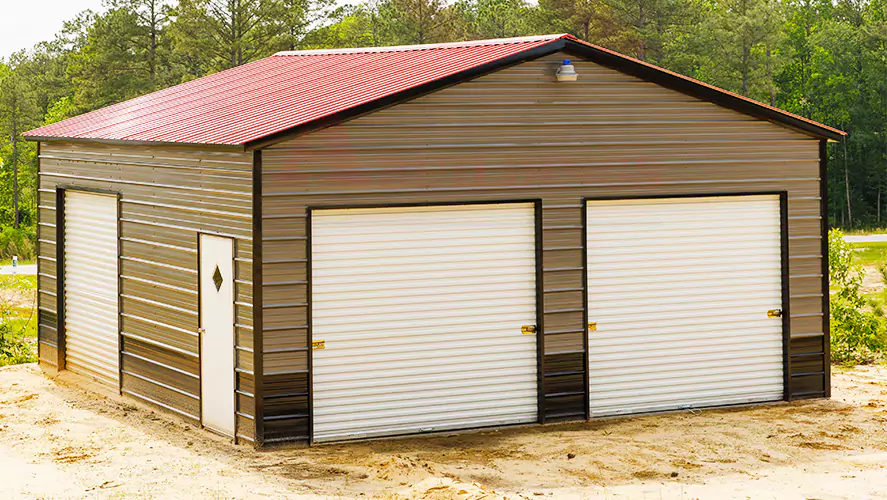
| True two-car + storage | 24×30 | 2× 9×8 or 10×10 | 9’–10′ | Suburban sweet spot; easy aisles | ~$12k–$20k |
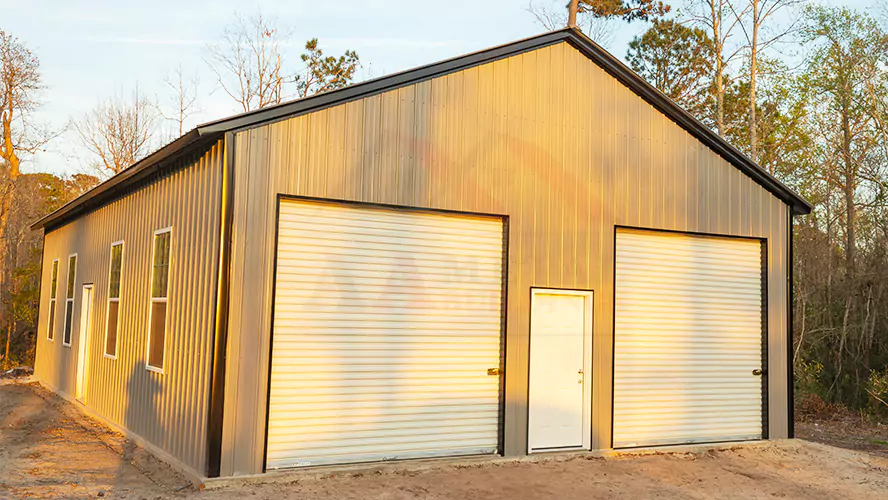
| 2 trucks + tools / hobby shop | 30×40 | 2–3× 10×10 | 10’–12′ | Leave one bay open for projects | ~$20k–$35k |
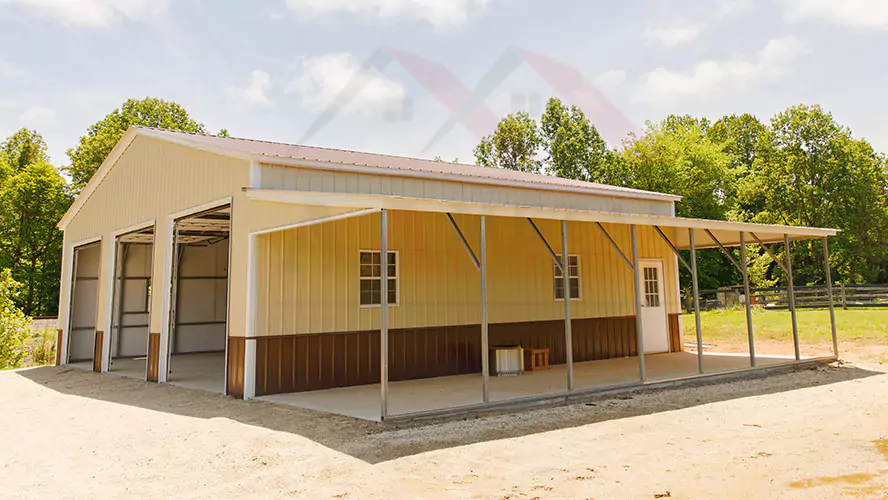
| Light business shop / lift bay | 30×50 | 2–3× 10×10 or 12×12 | 12’–14′ | Plan compressor closet + parts racks | ~$28k–$48k |
| Boats/trailers/multi-bay shop | 40×60 | 3–4× 10×10–12×12 | 12’–16′ | Engineer-stamped drawings & certified loads | ~$40k–$80k+ |
*Not a quote. These are ballparks to help you compare options.
Bottom line: start from your tallest and longest item, then add working room. If you’re close, size up.
How to size it right (real numbers that work)
- Walkway clearance: Leave 24–36 in. of clear space on at least one side so you can swing doors without smacking the wall.
- Depth (real-world lengths): Compacts run ~14 ft. Full-size trucks are ~19 ft. Add 3–4 ft for bumpers, shelves, or a 24-in. bench.
- Height & door sizing: Cars do fine with a 9×8 door. Trucks are happier with 10×10. Boats or lifted rigs: 12×12 door with 12–14 ft eaves.
- Future-proofing: If you’re eyeing a bigger vehicle or a lift later, buy the height and depth now. It’s cheap insurance compared to re-doing anything later.
Bottom line: measure the actual vehicle (mirrors, hitch, racks), then add a buffer you won’t regret.
Popular sizes, real use cases (12×20 → 40×60)
12×20
Best for: one car + shelves, mower, bikes.
Fits: compact or mid-size car. Tight for a full-size truck.
Layout tips: park nose-in; run a 24-in. shelf along one wall; put the walk door opposite the roll-up so you’re not lifting the big door just to grab a socket.
Watch-outs: door swing eats space fast; be honest about vehicle length.
Bottom line: good starter size — just know it’s the minimum footprint.
18×20 or 20×25
Best for: two small cars, or one truck with a real workspace.
Fits: two compacts (18×20) or a truck plus bench (20×25).
Layout tips: if a truck’s involved, spec a 10×10 door. For weekend wrenching, depth matters more than width.
Bottom line: solid “daily driver + hobby” sizes without stretching budget.
24×30
Best for: true two-car with breathing room and storage.
Fits: two cars or two mid-size SUVs with aisles you won’t curse at.
Layout tips: two 9×8 or 10×10 doors, centered walk door, overhead storage above the bench line.
Bottom line: the suburban sweet spot we install most — parks two and still lets you move.
30×40
Best for: two full-size trucks, ATV/UTV, tool chests, and a project bay.
Fits: two trucks plus gear without playing Tetris.
Layout tips: 2–3 roll-ups; keep one bay open for projects. 10’–12′ eaves allow tall racks.
Bottom line: real shop feel without going full commercial.
30×50
Best for: light business shop, detailing/woodworking, or a lift bay.
Fits: two to three vehicles and a dedicated work zone.
Layout tips: if a lift’s in your future, go 12’–14′ eaves and keep lights/fans out of the lift footprint.
Bottom line: flexible footprint that grows with you.
40×60
Best for: multi-bay shop, boats, multiple trailers, small fleet.
Fits: four vehicles plus storage, or two bays + boat + equipment.
Layout tips: engineer-stamped drawings, certified wind/snow loads, vertical roof, ridge vent, and stout bracing. Check delivery access and turning radius.
Bottom line: if you’re running real operations, this is your canvas.
Height, framing, and roof choices that actually matter
- Framing gauge (what actually changes): 12-ga framing is heavier than 14-ga and is often required for taller buildings or higher wind/snow loads.
- Panel thickness (why it matters): 26-ga panels are stiffer than 29-ga and resist dents better when the weather turns rough.
- Roof orientation: Horizontal panels are fine in mild climates. Vertical panels shed water and snow better; we spec vertical a lot in the Midwest and mountain regions.
Field note: if you plow in winter, the extra eave height also keeps the roll-up from grinding into your snow bank.
Bottom line: lock in height, door plan, and roof orientation first — those three drive how the garage works and what it costs.
Door & layout planning (don’t box yourself in)
- Door sizing that saves headaches: Cars: 9×8. Trucks/SUVs: 10×10. Boats/lifts/UTV on trailer: 12×12.
- Two-car openings: One 16-ft door or two 8-ft doors — pick based on how you park and seal. Two doors give flexibility if one opener fails; a single wide door can be simpler.
- Placement that makes life easier: One roll-up per bay when you can. Put the walk door near the aisle you use most. Mount windows higher for daylight without advertising your tools.
Bottom line: place and size doors for how you move — parking, wrenching, loading.
Site prep, permits & anchoring (get this right first)
- Slab basics: Pour a 4-in. slab as a baseline; thicken edges or add footers where loads call for it.
- Cracking, moisture, and water shed: Cut control joints, lay a vapor barrier, and grade the site so water runs away from the building.
- Pad footprint: Aim for 6–12 in. larger than the building footprint to keep siding off the edge and give installers clean lines.
- Permits & setbacks: Call the building department early. Many areas want engineer-stamped drawings, wind/snow ratings, and HOA approvals for placement and color.
- Anchors: Concrete wedge anchors for slabs; mobile-home anchors or rebar pins on ground setups (where allowed). Coastal or high-wind zones: upsize anchors and spec wind-rated doors — storms will test everything.
Bottom line: a great building on a bad pad is still a bad project. Prep first, sleep easy later.
Budgeting & cost ranges (what moves the number)
Use these as a guide for a basic enclosed garage. Real-world price changes with code requirements, wind/snow loads, steel pricing, and the customization you pick.
| Size | Typical Installed Range* | Add-Ons That Move Price |
|---|---|---|
| 12×20 | ~$4k–$8k | Taller eave, windows, upgraded door |
| 18×20 / 20×25 | ~$7k–$12k | 10×10 door, insulation, color upgrades |
| 24×30 | ~$12k–$20k | Second roll-up, vertical roof, gutters |
| 30×40 | ~$20k–$35k | Third door, heavier framing, electrical by others |
| 30×50 | ~$28k–$48k | 12×12 door, 14-ft eave, lean-to |
| 40×60 | ~$40k–$80k+ | Engineered drawings, bracing, multiple doors, insulation package |
Smart upgrades that pay off
*Starting metal building prices, not quotes.
- Condensation control or radiant barrier at minimum; shop use likes R-13/R-19.
- Vertical roof in snow/heavy rain regions.
- Gutters & downspouts to protect slab edges and door thresholds.
- Color/wainscot: small money, big curb appeal.
Bottom line: decide height, door plan, and roof orientation first — that’s function and budget in a nutshell.
Regional & climate notes (build for your weather)
- Snow belt: Taller eaves for plow piles and door clearance, certified snow load, vertical roof orientation.
- Coastal / high-wind: Heavier framing, certified anchors, wind-rated doors, tight fastener schedule.
- Hot / dry: Ventilation, lighter roof color, and a radiant barrier for comfort.
- Humid South: Condensation control and airflow to keep rust and musty smells at bay.
Bottom line: spec it for the weather you actually live with, not brochure weather.
FAQs
What’s the smallest practical single-car size?
A 12×20 works as a minimum. If you want comfortable access and storage, a 14×22 or 16×24 feels better day-to-day.
What’s a common two-car size?
You’ll see 20×20 to 24×24 a lot. Many owners prefer 24×30 for breathing room and shelves.
How tall should I go if I’m thinking about a lift?
Plan 12–14 ft eaves and keep lights/fans out of the lift bay. Check your lift’s spec before you pour.
Do I need a concrete slab?
Concrete is best for shops and daily parking. Some areas allow gravel with the right anchors, but tools and jacks live happier on concrete.
Two quick job notes we see all the time
- Upper Midwest, 24×30 two-car: vertical roof, 9–10 ft eaves, two 10×10 doors, basic insulation. Snow sheds faster and the interior stays dry.
- Coastal shop, 30×40: wind-rated doors, heavier anchoring, and gutters are standard. Salt and storms find weak spots; don’t skimp on fasteners.
Bottom line: build it the way you’ll use it, in the climate you actually have.
Ready to plan your layout?
The building experts at AA Metal Buildings can help you pick the right size, doors, height, and options — and get it installed start to finish.