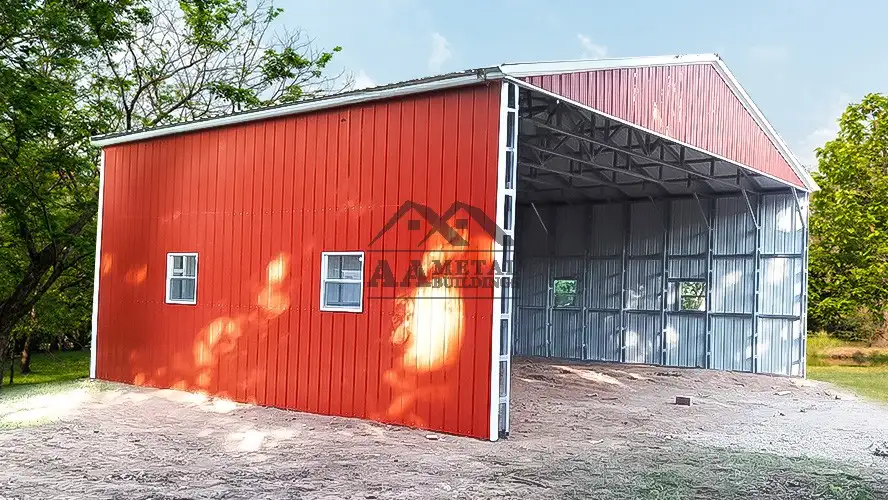
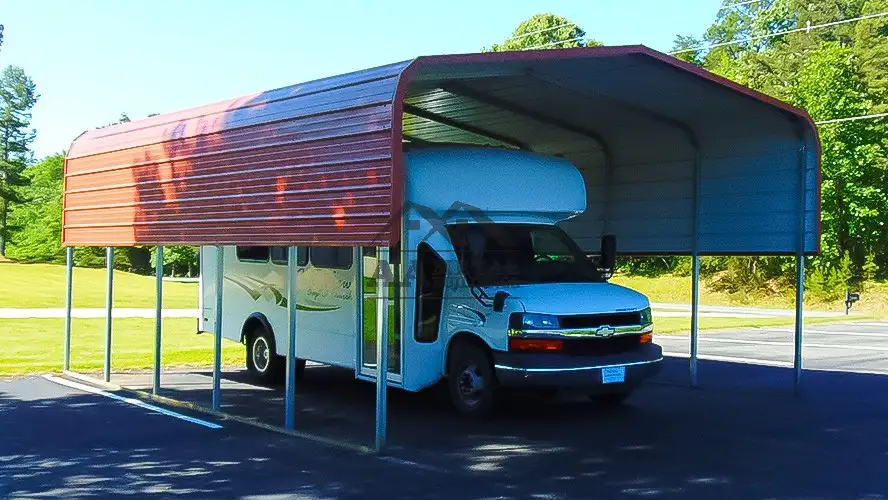
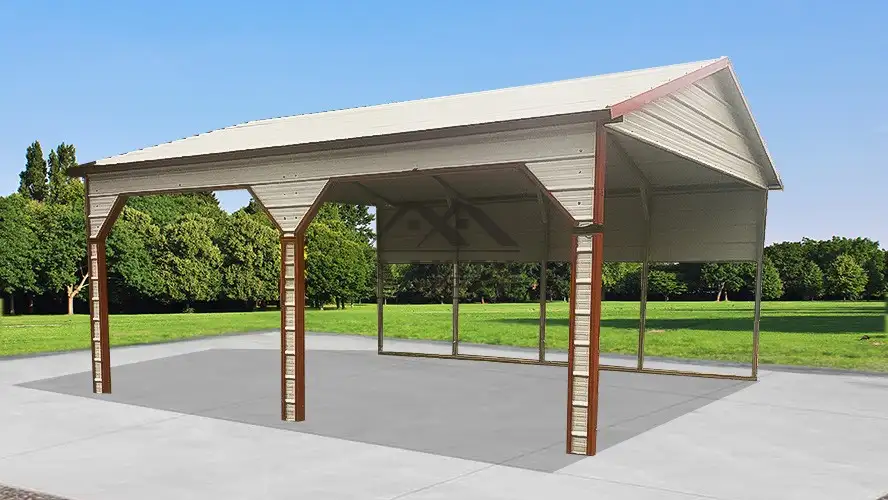
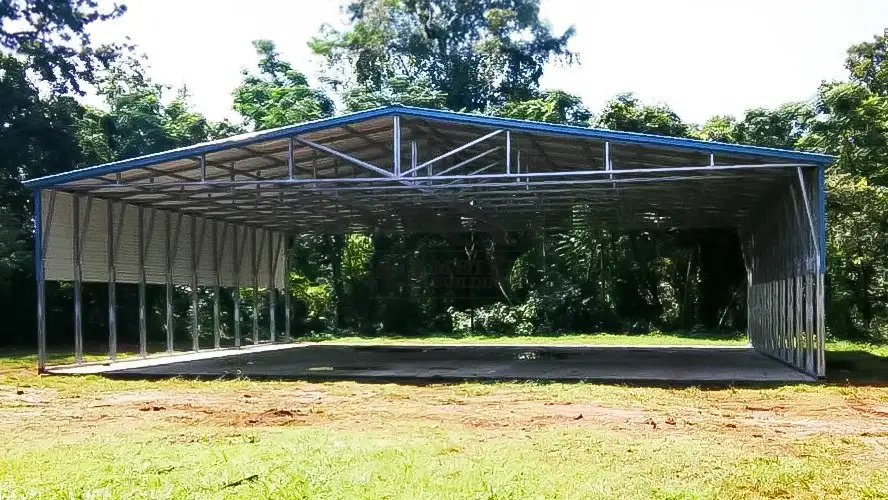
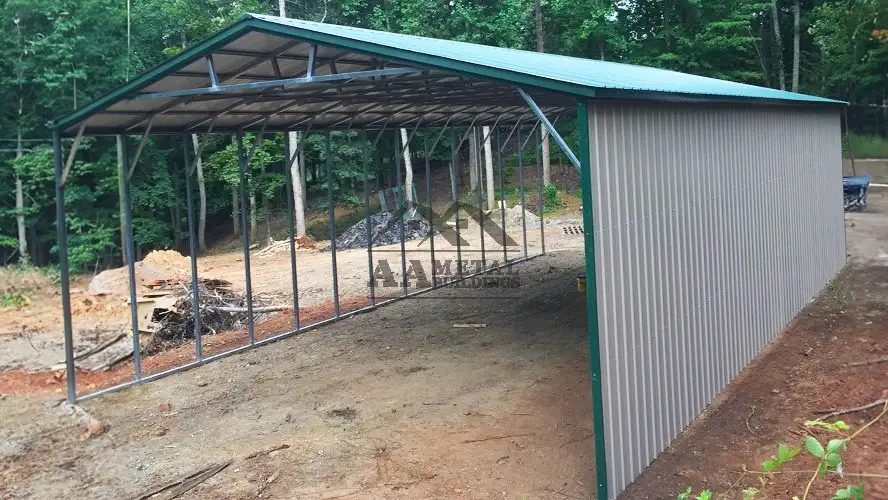
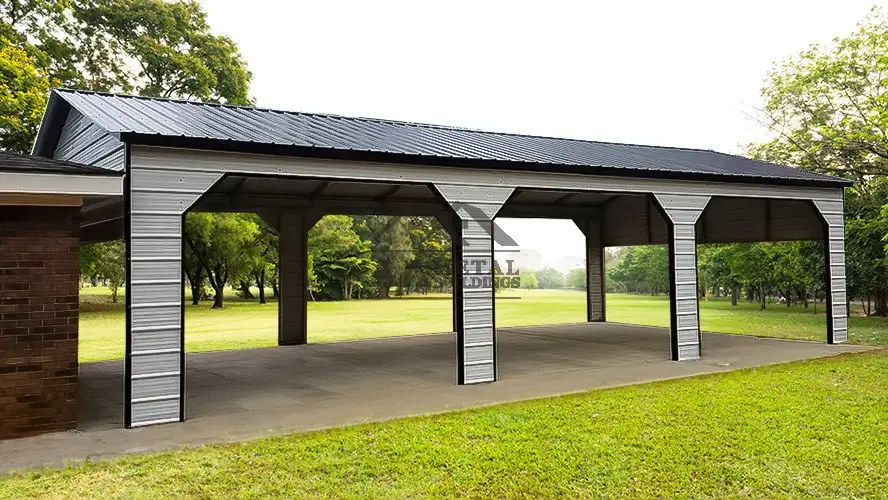
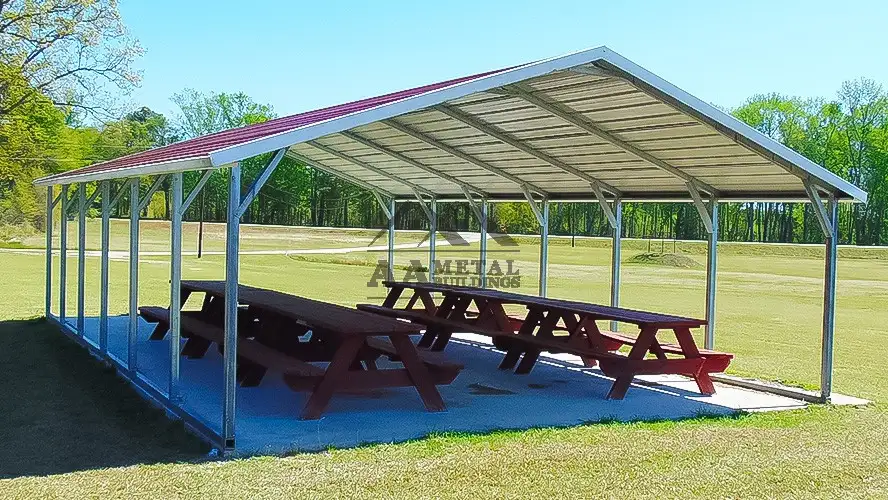
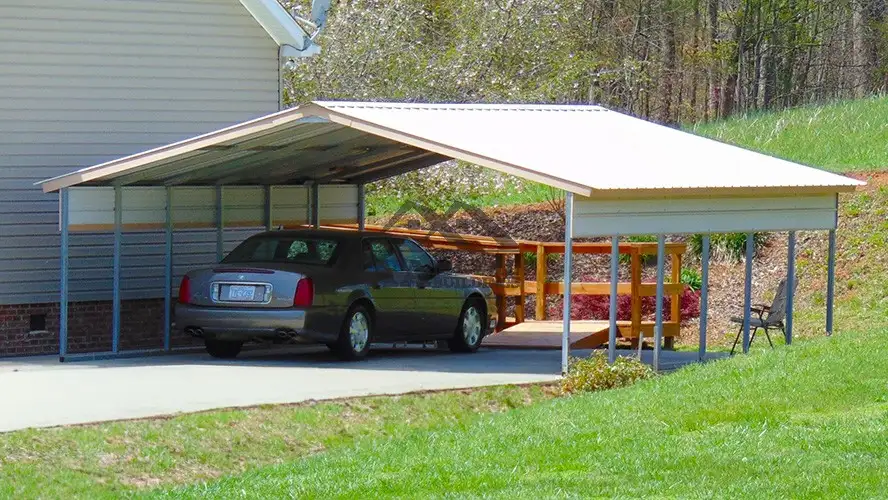
Most people mess up a 2-car carport in one of two ways: they buy it too narrow so doors bang and mirrors get clipped, or they buy it “plenty wide” but forget the length and end up with bumpers sticking out in the rain.
So we’re going to size it the way people usually wish they had after they’ve lived with it for a year.
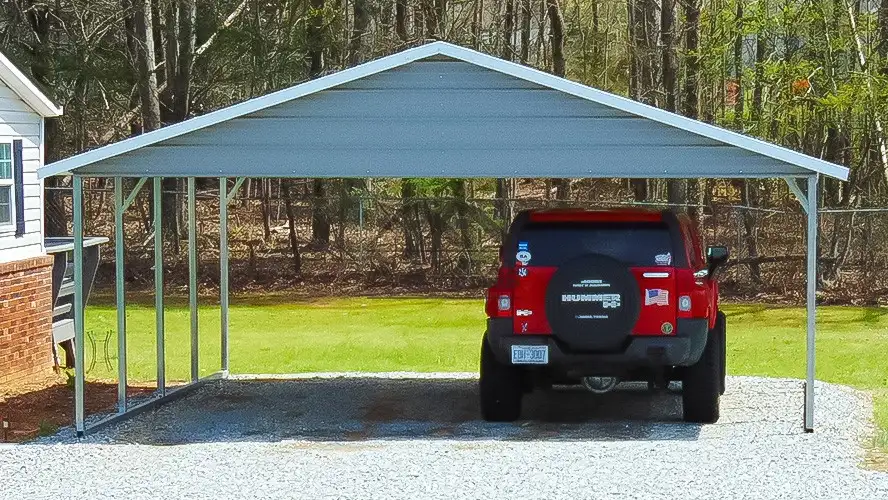
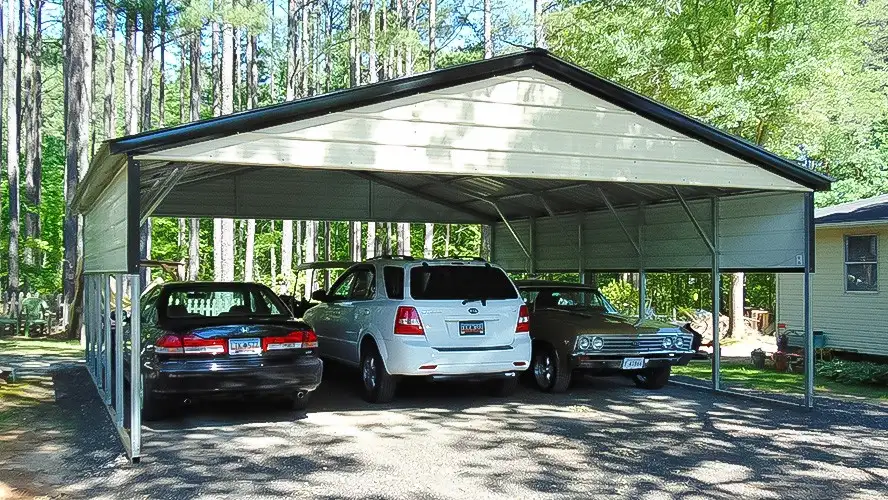
A true 2-car metal carport is usually 20–24 ft wide and 20–26 ft long with 6–8 ft legs. Go 20×20 only for two small cars and careful parking. 22×22 fits most daily drivers. 24×24 feels normal for trucks/SUVs and kids opening doors. If you want storage, bump length first.
Quick decision checklist
- Pick 20×20 if both cars are small, no racks, no kids, and you’re fine with tight doors.
- Pick 22×22 if you want normal door clearance for sedans and crossovers.
- Pick 24×24 if either vehicle is a truck or full-size SUV, or you hate squeezing.
- Pick 24×26 if you want two vehicles plus storage you can actually reach.
- Pick 7–8 ft legs if you have roof racks, cargo boxes, or plan to in the future.
- Upgrade anchors/bracing if you’re in a 110–140 mph wind zone or open terrain.
- Add length before extras if you want bikes, mowers, or bins without blocking parking.
Start with what you’re parking (not “2-car”)
“2-car” is marketing. Two cars can mean:
- Two compact sedans
- Two full-size pickups with tow mirrors
- One SUV plus a car seat door that swings wide
- A driver who parks straight and a driver who… doesn’t
If you don’t size for real life, you’ll hate it.
Width: the part people regret the most
What width actually means
Width is the clear roof span left-to-right. Your usable space depends on:
- How close the legs sit to your parking area
- Whether you add side panels
- Whether you want to walk between vehicles
The widths that actually work
18 ft wide
This is “two cars technically fit.” Doors get tight fast. If both cars are small and both drivers park like robots, it can work. Most families regret it.
20 ft wide
Minimum I’m comfortable calling a 2-car in the real world. Works for two sedans or small crossovers. Still tight if you have a truck, big SUV, or kids.
22 ft wide
My most common “no-regrets” size for normal daily drivers. You can open doors without doing that sideways squeeze.
24 ft wide
This is where it starts feeling like a real two-bay setup. Great for trucks/SUVs, wide-opening doors, loading groceries, and not stressing every time you park.
26 ft+ wide
More “comfort width” than necessity. If you want a workbench on one side, room for motorcycles, or you’re constantly in and out with tools, it makes sense.
When wider causes problems
- If your site is tight near a fence or property line
- If you’re too close to a neighbor and runoff becomes an issue
- If you’re trying to squeeze a wide roof into a windy zone without upgrading anchoring/bracing
Wider is great, but only if the setup matches the site and wind rating.
Who regrets going too narrow
- Truck owners
- Parents with car seats
- Anyone adding side panels later
- Anyone who parks in a hurry after work
Length: don’t let bumpers live in the weather
What it actually is
Length is front-to-back coverage. It decides whether your windshield and hood stay dry, and whether you have space for storage.
Real-world length picks
20 ft long
Works for most cars and small SUVs. For full-size trucks, it’s often short.
22 ft long
A safer “most vehicles fit” length. Helps if you park a little crooked or want room at one end.
24 ft long
Great for pickups and SUVs. Also gives you space for bins, a lawnmower, or a bike rack without parking on top of it.
26 ft long
If you want two vehicles plus actual storage you can access without moving cars, 26 ft starts to feel right.
When longer causes problems
- More exposure to wind uplift if anchoring is weak
- Higher cost
- Needs more level ground (a sloped pad makes long structures annoying fast)
Who regrets going too short
- Pickup owners
- People who back in and leave the front hanging out
- Anyone who thought “I’ll store stuff in the back” but bought 20 ft
Height: measure the tallest thing and add breathing room
Height is where people get burned because they guess.
Typical leg heights
6 ft legs
Fine for cars, small SUVs. Tight for anything with a roof rack.
7 ft legs
A nice middle ground. Works for most SUVs and small trucks.
8 ft legs
Common for trucks, roof racks, and anyone who wants it to feel open.
What causes problems with height
- Taller = more wind load. You may need extra bracing and better anchors.
- Taller without adding a gable end or proper roof style can make rain blow in more.
Who regrets going too low
- Anyone with a roof rack, cargo box, or ladder rack
- People who later buy a taller vehicle
- Folks who want to add a lean-to or enclosed ends later
Foundation & anchoring (what actually holds it in place)
This part gets skipped in most size guides, and it shouldn’t.
Gravel vs concrete
Gravel pad
- Cheapest
- Fast install
- Needs deep mobile-home anchors in windy areas
- Can shift over time if not compacted right
Concrete slab
- Costs more
- Cleaner look
- Easier door operation if you enclose later
- Allows bolt-down anchors instead of ground augers
If you’re going wider than 24 ft or taller than 8 ft, concrete starts making more sense just for stability.
Anchoring reality
A 24×24 with 8-ft legs in open terrain catches a lot of wind. If you’re in a 130–140 mph zone, don’t cheap out on anchors and bracing or you’ll blame the size when the problem is the spec.
Regional sizing logic (this changes things)
High-wind zones (coastal, plains, desert)
- Avoid very tall legs unless needed
- Upgrade anchors and roof bracing
- Wider structures catch more wind — build smarter, not just bigger
Snow regions
- Go longer before wider if snow slides off the ends
- Vertical roofs matter more than size here
- Watch your eave height so snow doesn’t pile against vehicles
Heavy rain / tree cover
- Add length for runoff control
- Plan gutters and splash zones
- Keep storage off the ground if runoff crosses the pad
If you might enclose later, size now
Once you add side panels or doors, space feels smaller.
If enclosure is even a “maybe”:
- Add 2 ft of width now
- Add 2–4 ft of length now
- Keep legs at least 7 ft
It’s cheaper to build it right once than modify later.
One simple comparison table
| “2-Car” size | Cost (typical) | Best use |
|---|---|---|
| 20×20 | $ | Two small cars, basic coverage, tight doors |
| 22×22 | $$ | Most daily drivers, reasonable door space |
| 24×24 | $$$ | Trucks/SUVs, easier parking, less regret |
| 24×26 | $$$$ | Two larger vehicles + real storage room |
(Exact pricing depends on roof style, gauge, wind/snow rating, and your site conditions.)
Buyer mistakes I see all the time
1) Buying 18 ft wide because it’s called “2-car.”
Two cars fit. You won’t like it. Doors hit. People stop using it the way they planned.
2) Measuring the car, not the door swing.
Cars aren’t the problem. Door clearance is.
3) Forgetting mirrors and racks.
Tow mirrors, roof racks, cargo boxes—those are the things that surprise people.
4) Sizing for the vehicles you own today.
Most folks change vehicles before the carport wears out. Size for the “next one” too.
5) Not thinking about where the rain dumps.
If runoff pours onto a walkway or right at the slab edge, you’ll hate it in winter.
6) Assuming the ground is “close enough level.”
A little slope turns into doors that swing shut, water that runs the wrong way, and posts that need extra work.
FAQs
Is 18×20 really a 2-car carport?
Technically, sure. In real life, most people feel cramped and regret it unless both cars are small and you don’t open doors much.
What’s the most common 2-car size you sell?
22×22 and 24×24. People want it to work without thinking about it every day.
Should I go wider or longer if I can only afford one upgrade?
Wider. A little extra width fixes door headaches forever. Extra length is nice, but width is what stops daily frustration.
What size for two full-size pickups?
I’d start at 24 ft wide, and I like 24–26 ft long. If you’ve got tow mirrors or you’re constantly loading tools, don’t go skinny.
Do I need taller legs for an SUV?
Not always. But if you have a roof rack, cargo box, or you plan to, 7–8 ft legs save you from scraping and stress.
Can I enclose the sides later?
Usually yes, but plan for it now. If you might add panels, don’t buy the tightest width.
Do I need a bigger carport if I live in a windy area?
Not bigger—built smarter. Wind rating, bracing, and anchors matter more than size.
What if I want a little storage area too?
Add length first. Going from 22 to 26 ft long gives you space you can actually use without parking on top of your stuff.
Permits and codes
Most areas don’t require a permit under a certain square footage, but:
- 24×24 = 576 sq ft (often the cutoff)
- Taller than 8 ft or enclosed usually triggers review
- Wind zones and snow loads override size exemptions
Always check before pouring concrete.
If you’ve made it this far, you already know this isn’t about picking a number off a chart. It’s about building something that still feels right five years from now when your vehicles change, your storage grows, and the weather does what it always does.
At AA Metal Buildings, this is what we do — help homeowners and contractors size structures that actually work long-term, not just on paper. We’ve seen what lasts, what fails, and what people end up wishing they’d done differently.
When you’re ready to move forward, talk to our building expert, who will ask the right questions before you spend the money. A properly sized carport doesn’t just protect your vehicles — it saves you from replacing, modifying, or regretting it later. Call us now to connect.