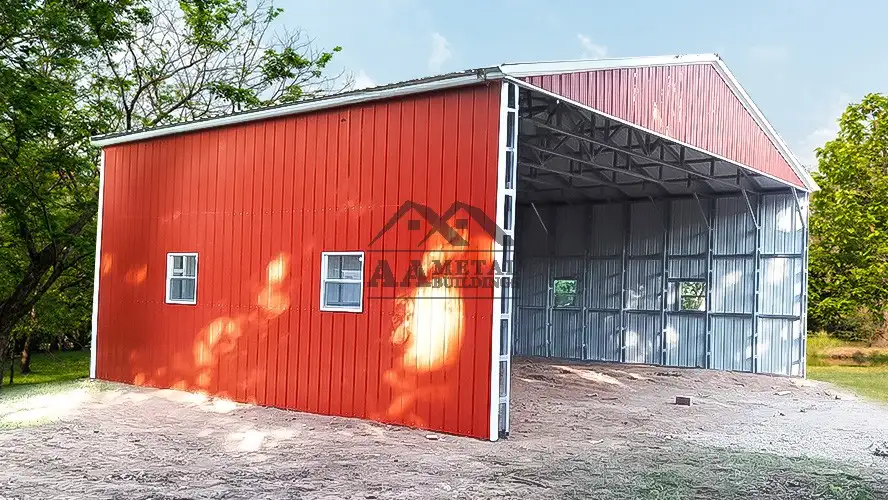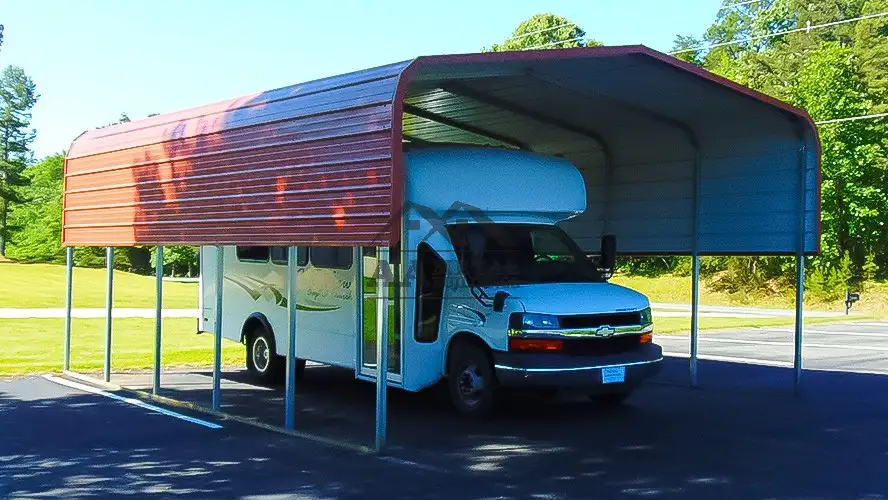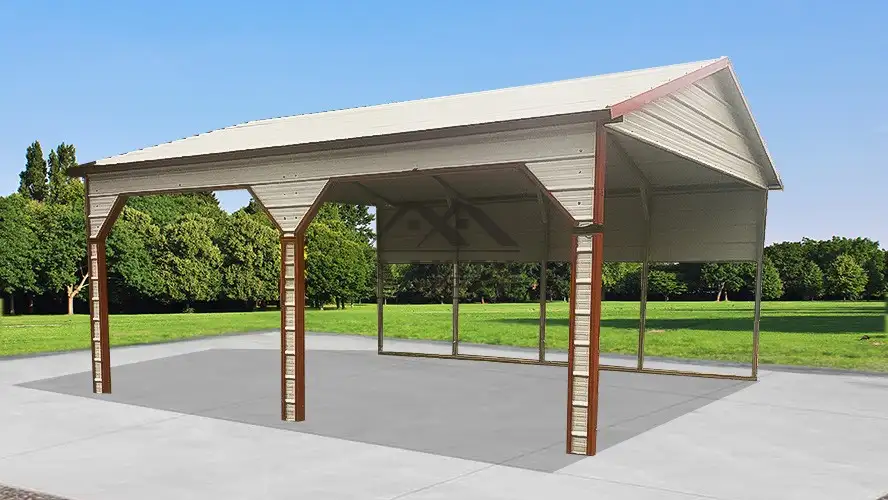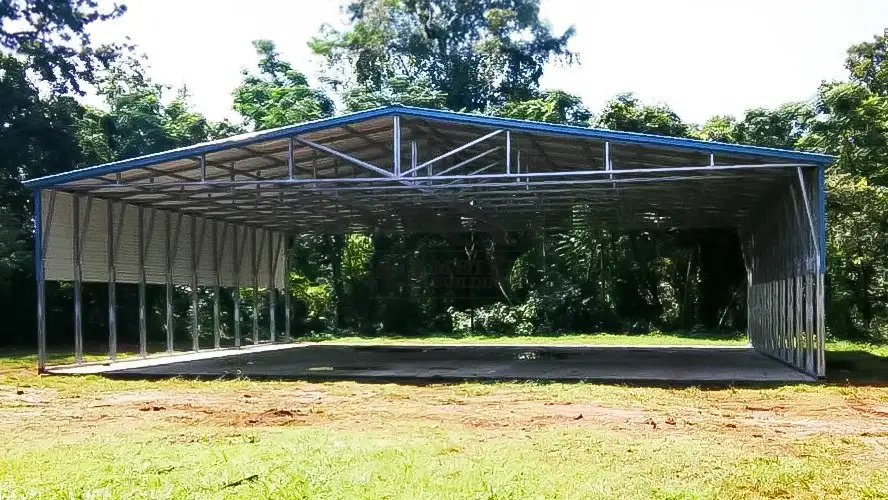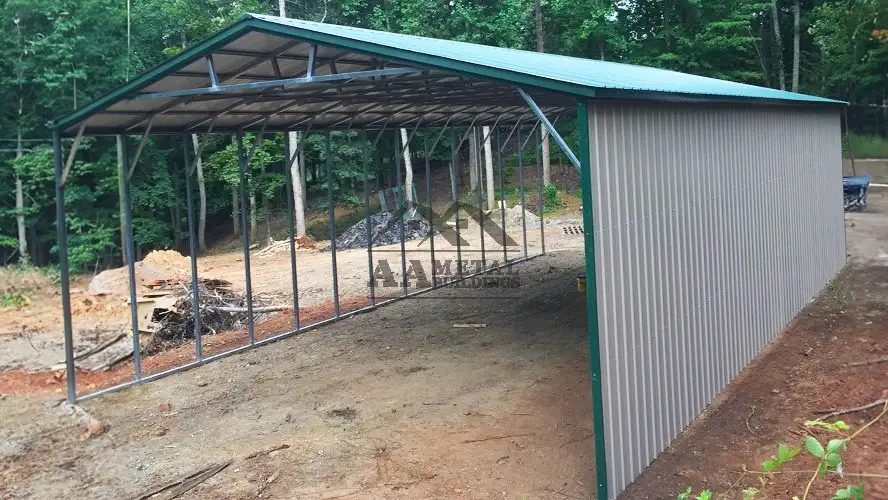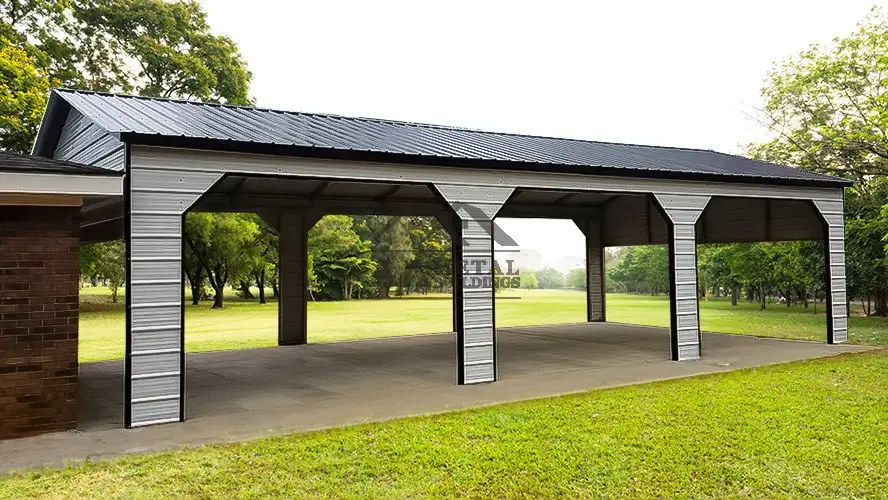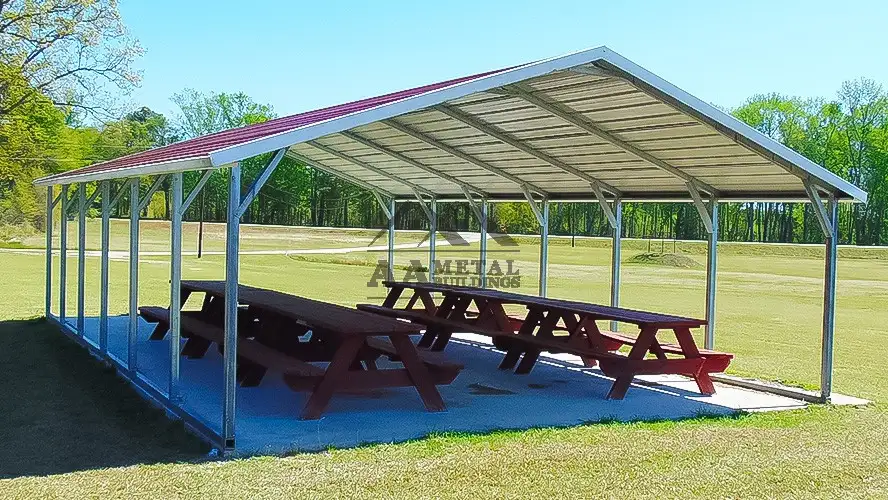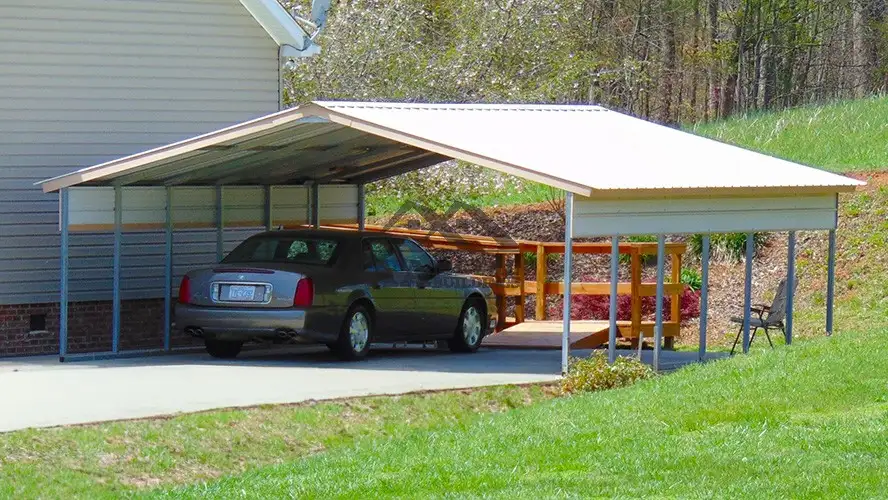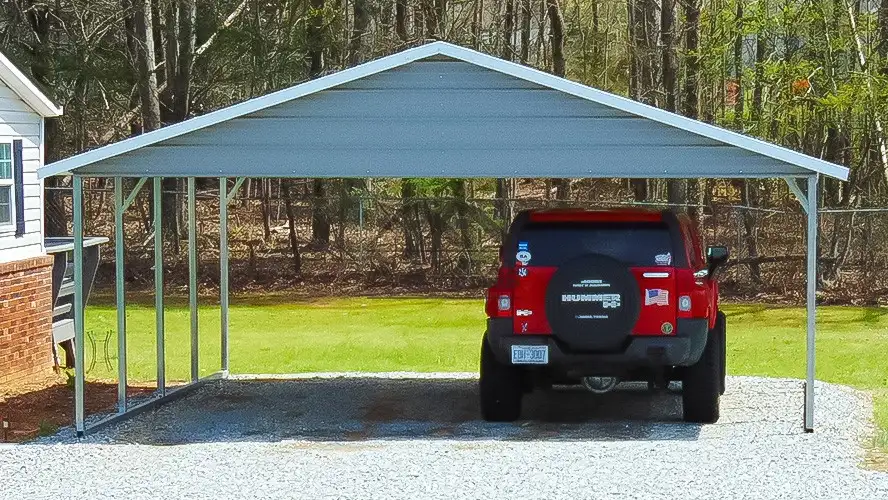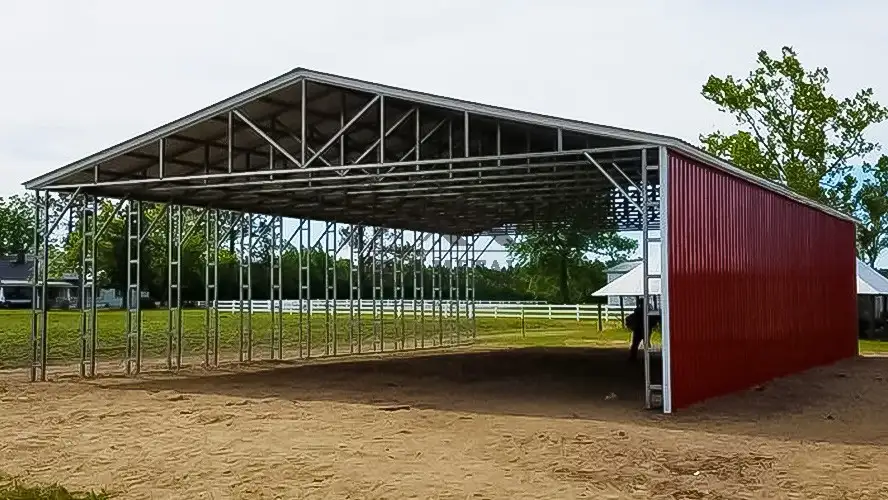






A 40x60x17 commercial carport is usually chosen when someone needs serious covered space without fully enclosing the structure. With 2,400 square feet and 17 feet of height, it works well for commercial trucks, box trucks, trailers, equipment, farm machinery, RV storage, fleet vehicles, or oversized work vehicles that need overhead clearance.
What makes this size stand out is the combination of width, depth, and height. It is not just about covering more vehicles. It is about making sure taller units can get in and out comfortably without feeling boxed in or forced into a space that was really built for standard cars and pickups.
For a lot of commercial uses, yes. A 17-foot-tall carport gives you much more flexibility than a standard-height unit, especially when you are dealing with taller service trucks, trailers, lifted vehicles, tractors, or equipment with attachments.
The big advantage is not only vertical clearance but everyday ease of use. A structure can technically fit a vehicle and still be annoying to pull into if the clearance feels tight. A taller carport gives drivers more breathing room and makes the whole setup feel more practical for regular use.
That depends on the vehicle types and how much space you want between them, but this size can handle multiple commercial vehicles, trailers, or equipment units under one roof. Some owners use it for a small fleet, while others use it for two or three larger units with open working space left over.
The smarter way to think about it is not just total capacity, but usable capacity. It is usually better to have enough space to park, walk, load, and move around comfortably than to squeeze in the maximum number of vehicles and make the space harder to use every day.
A commercial carport makes sense when the main goal is overhead protection rather than a sealed interior space. If you need coverage from sun, rain, hail, and general weather exposure, but still want fast access and easier drive-through use, a carport can be the better fit.
A lot of buyers go this route because it keeps the structure simpler and more open. For fleet parking, equipment coverage, agricultural use, or vehicle staging, that open design can actually work better than a fully enclosed building, especially when trucks or machinery are moving in and out throughout the day.
The first thing to think about is what will actually go underneath it. Vehicle height, turning space, approach angle, and how traffic moves across the property matter just as much as the structure size itself. A commercial carport may look large on paper, but the layout still has to make sense on the site.
It is also important to think about ground conditions, anchoring, local code requirements, and whether the structure needs to be certified for specific wind or weather conditions. The smoother projects are usually the ones where the site and the use case are thought through before the order is placed.
Yes, especially for businesses that need flexible covered space without locking themselves into a fully enclosed setup right away. It can work for contractors, transportation companies, farms, service businesses, and property owners who need room for vehicles and equipment now but may expand later.
That flexibility is a big part of the appeal. A structure like this can solve an immediate storage or coverage problem while still giving you room to adapt how the space is used over time. For many buyers, that makes it a smart commercial option rather than just a temporary fix.
It does. The extra height changes how usable the structure feels, especially for taller vehicles and equipment. It is one thing for a truck or trailer to barely fit under a roof, and another for it to move in and out with confidence and enough overhead room to avoid stress every time.
That is why taller commercial carports are often the better choice for serious equipment or fleet use. The extra clearance helps now, and it also gives you more flexibility later if your vehicle mix changes.
This size is usually a strong fit for buyers who have already outgrown smaller standard carports. That includes business owners with work trucks, operators with trailers or machinery, agricultural properties, fleet users, and anyone who needs larger covered space that still stays open and easy to access.
It works best for people who care more about function than appearance alone. The value is in the usable clearance, the open layout, and the ability to protect expensive vehicles and equipment without slowing down day-to-day operations.