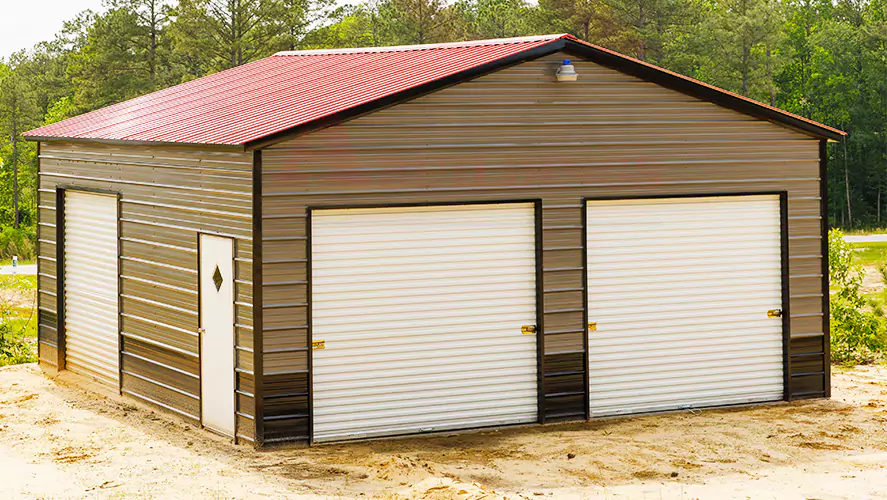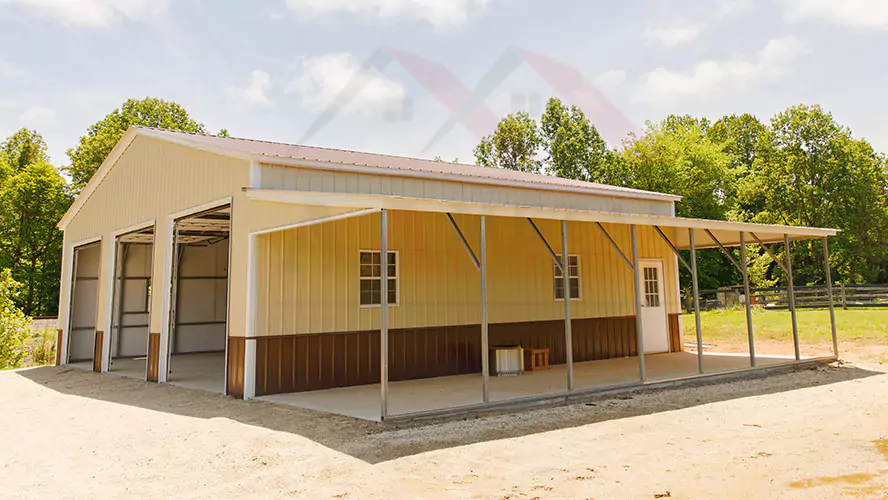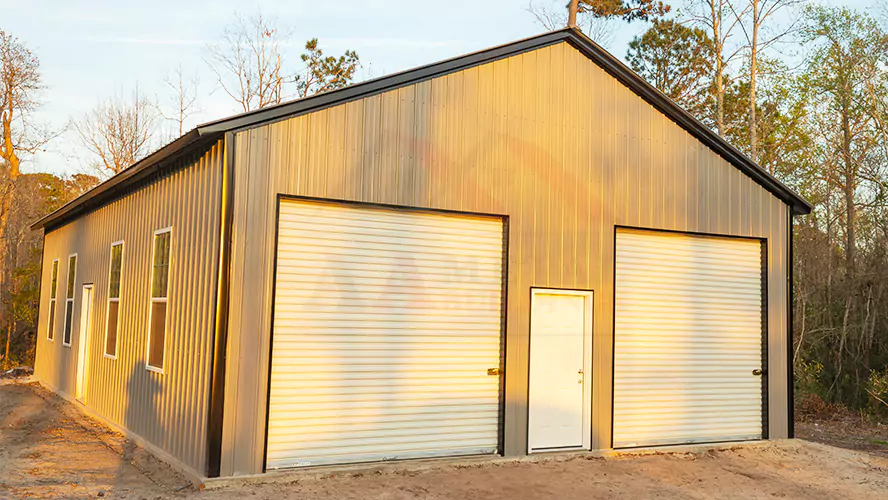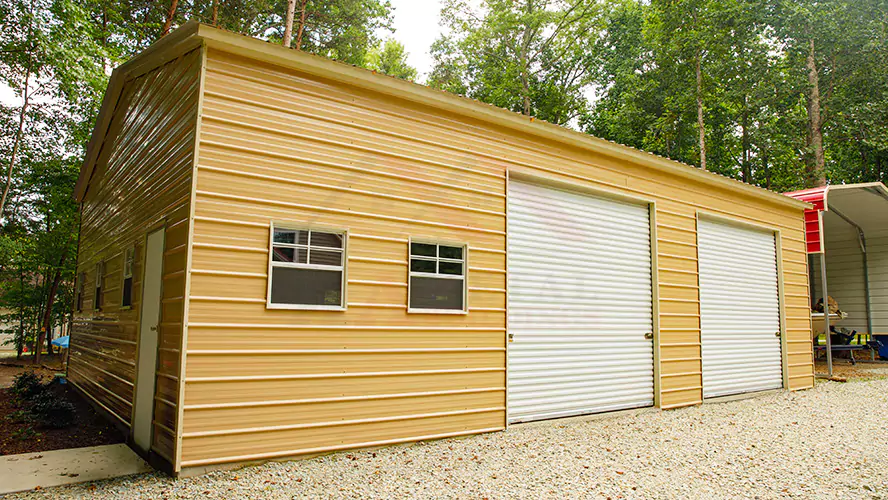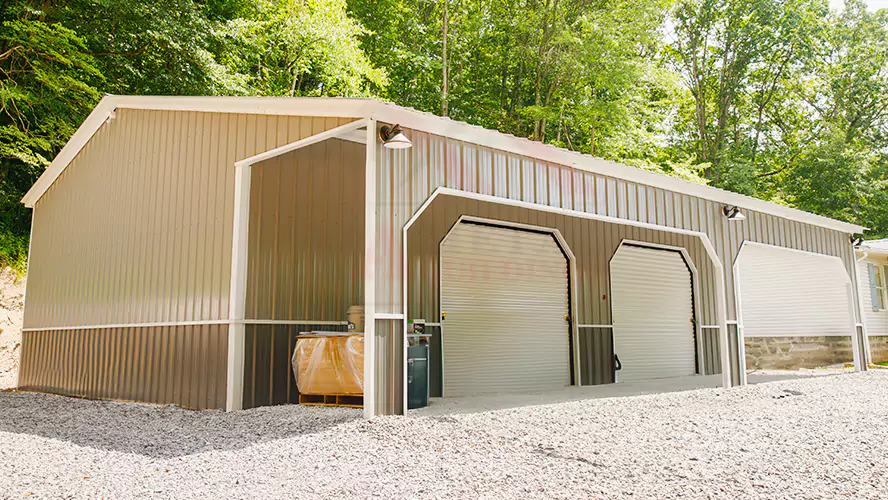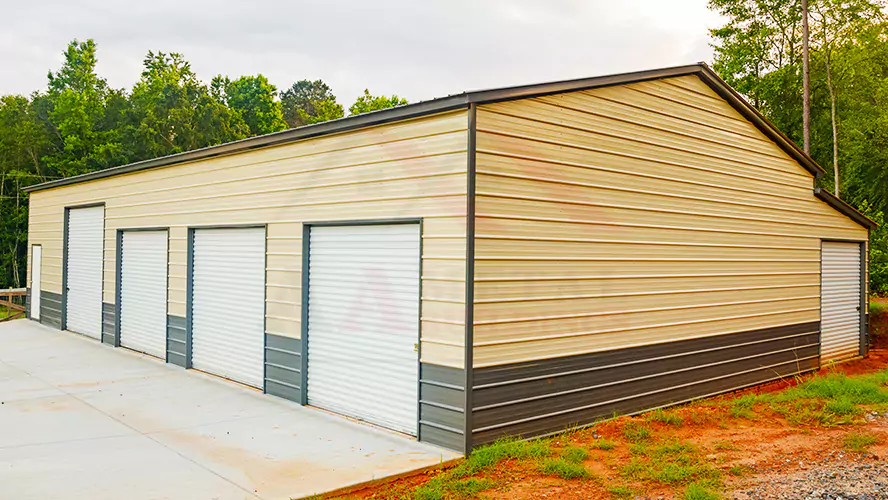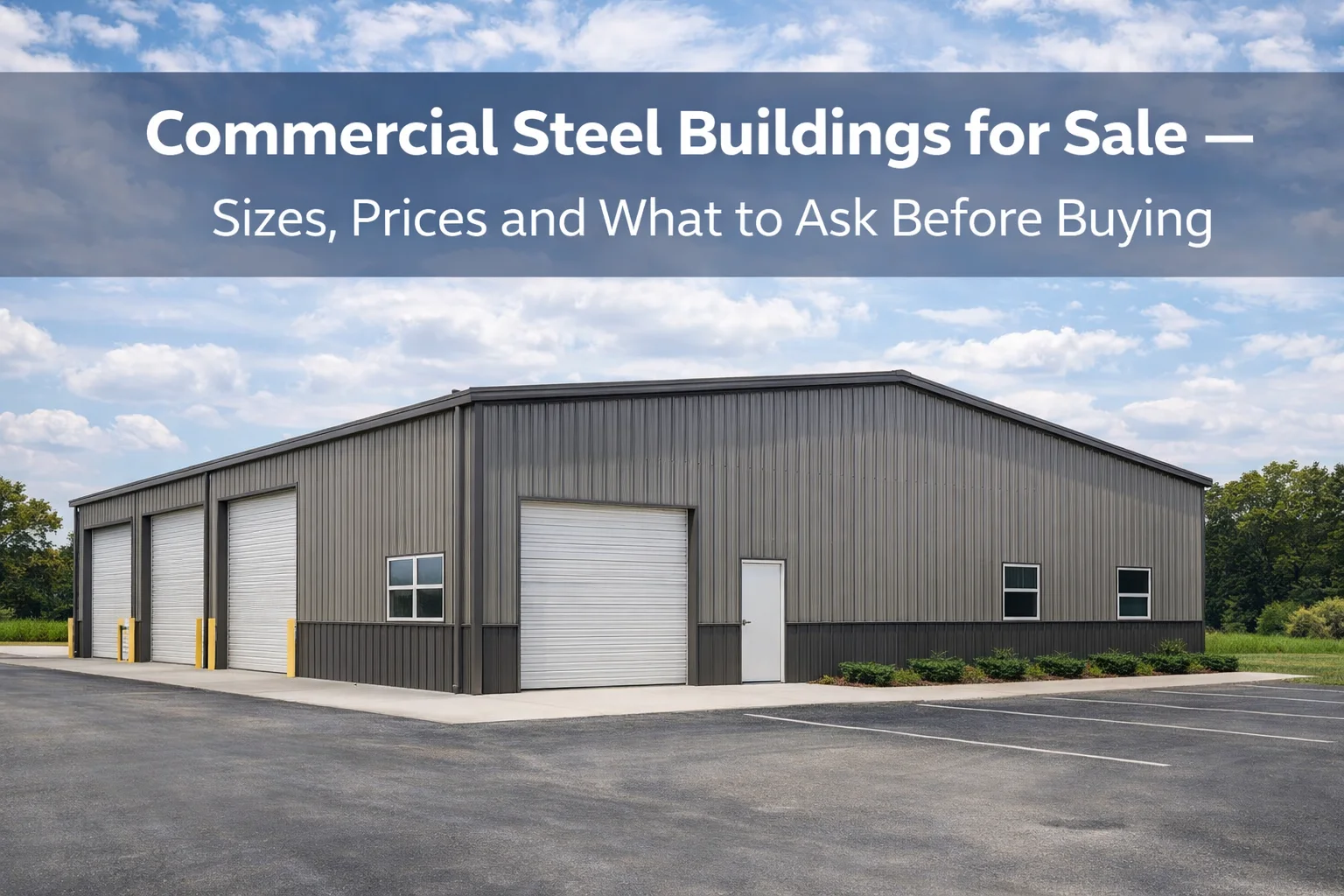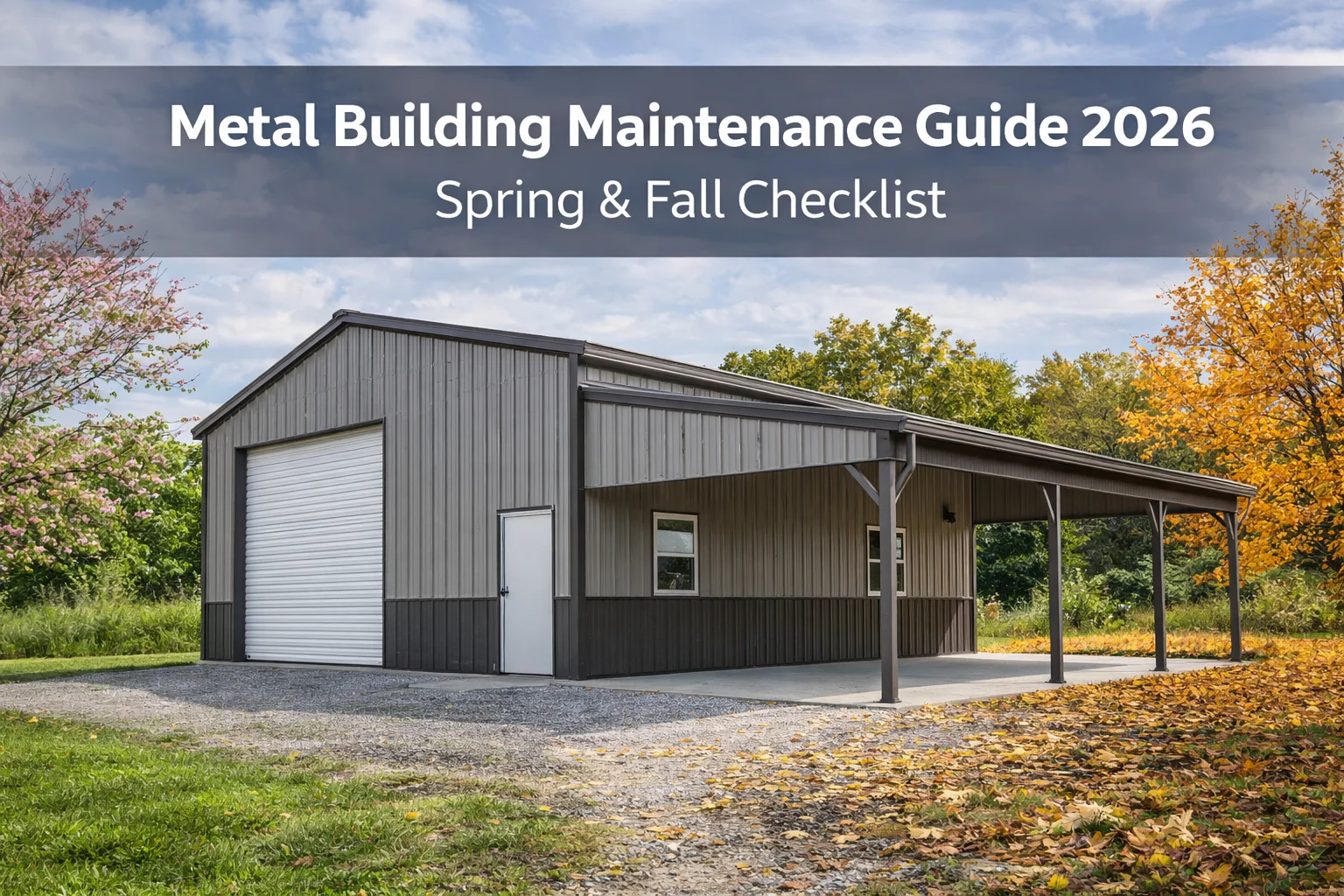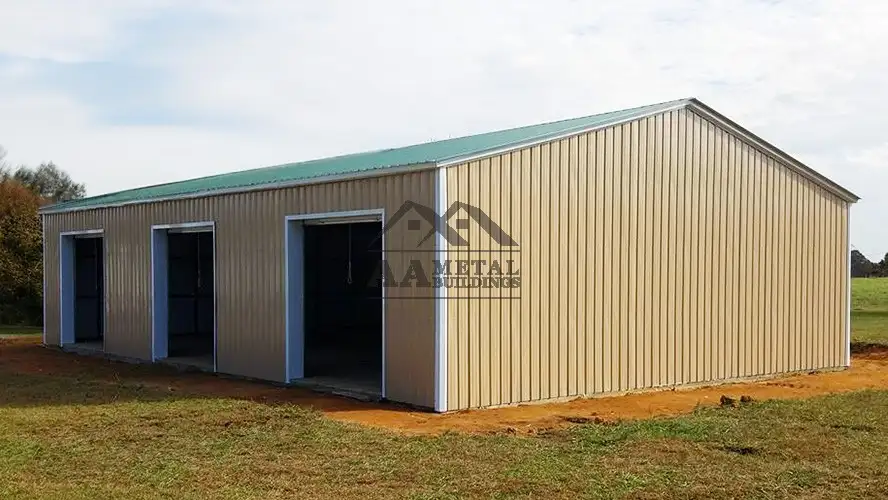






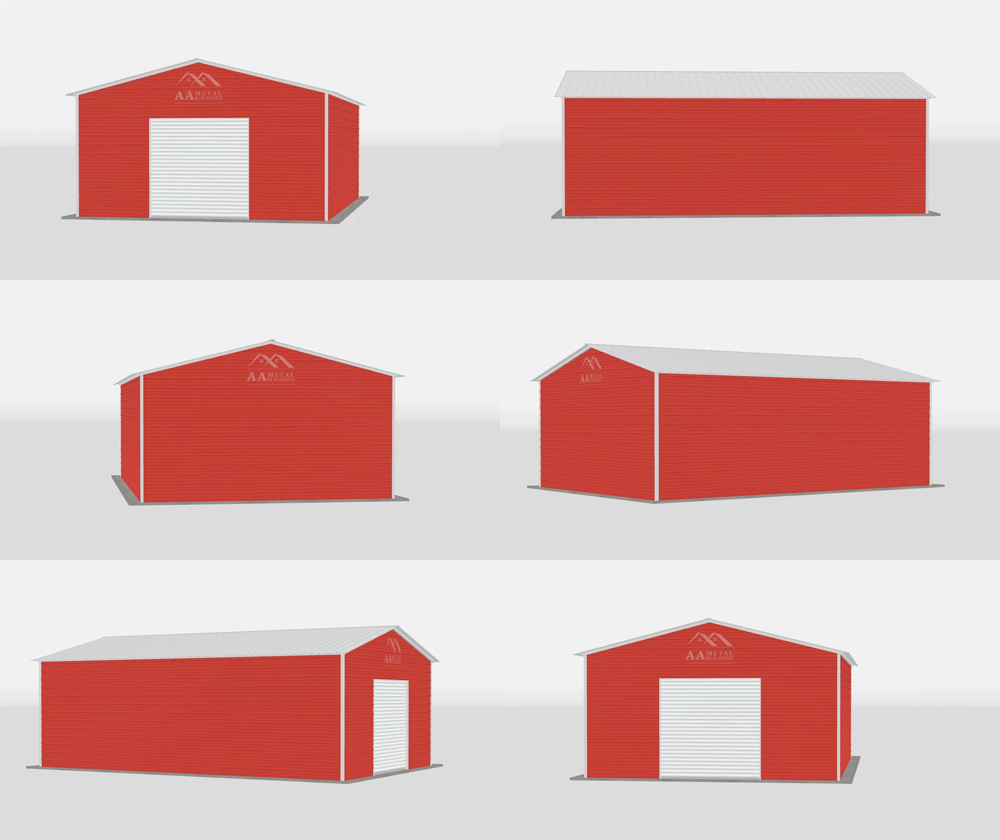
A 40x60x14 vertical metal warehouse is a strong fit for buyers who need serious enclosed space for storage, inventory, equipment, materials, or light commercial use. With 2,400 square feet, it gives you enough room to organize the interior properly instead of stacking everything into a space that feels full from day one.
This size works well for contractors, suppliers, agricultural operations, small distributors, and business owners who need a warehouse that can handle real day-to-day use without jumping into a much larger building.
A vertical roof is usually the better choice when you want better water runoff, cleaner roof lines, and a structure that feels more suited for long-term commercial use. On a warehouse, that matters because the roof is doing more than covering the building. It affects drainage, maintenance, and how the structure performs over time.
A lot of buyers go with a vertical roof because it feels like the more complete option. It is especially worth looking at if the warehouse is going in an area with frequent rain, changing weather, or heavier seasonal buildup on the roof.
For many small and mid-sized warehouse uses, yes. A 14-foot height gives you a good balance between usable clearance and practical cost. It is tall enough for many storage, shelving, equipment, and loading needs without making the building larger than it really needs to be.
The real answer depends on what is going inside. If the warehouse will hold pallet storage, contractor materials, equipment, or work vehicles, 14 feet is often a very solid starting point. If you need extra-tall storage or larger commercial units moving in and out, then height becomes something to plan more carefully.
The biggest difference is the roof system. A 40x60x14 vertical metal warehouse is usually chosen by buyers who want a setup that feels more upgraded and better suited for long-term use. The vertical roof gives the building a cleaner commercial look and often makes more sense for performance and upkeep than a simpler roof style.
It is not just about appearance either. For a warehouse that will be used regularly, small design choices matter more because the building is expected to keep working year after year, not just sit on the property as extra space.
That depends on what you are storing and how you lay it out, but 2,400 square feet gives you a lot of usable room. This size can handle inventory, tools, shelving, equipment, packaging space, contractor materials, or a mix of storage and workspace without immediately feeling cramped.
The better question is usually not how much can technically fit, but how much can fit while still keeping the building easy to use. A warehouse works better when there is room to move, load, unload, and access what you need without turning every trip inside into a shuffle.
That depends on the way the warehouse will function. A building used mostly for inventory and storage may need a different setup than one used for equipment, trailers, or commercial vehicles. The best door layout is the one that supports smooth access without wasting wall space or making loading harder than it needs to be.
For warehouse use, doors are not just a detail. They shape how the building works every day. Good placement can make the inside feel efficient, while the wrong setup can make even a large warehouse feel awkward.
Yes, that is one of the reasons people like this footprint. A 40x60x14 vertical metal warehouse is large enough to divide the inside into working zones. One part of the building can be used for inventory or equipment, while another section stays open for prep work, repairs, packing, assembly, or general operations.
That flexibility is important because a lot of businesses do not need a warehouse for just one purpose. They need a building that can store, support, and adapt at the same time.
Yes, it can. A vertical roof is often the preferred option when buyers want better drainage and a roof design that handles rain and runoff more effectively. That does not mean the rest of the building specs do not matter, but the roof style itself is one of the key reasons people choose this type of warehouse in the first place.
For a building that is meant to protect inventory, materials, and equipment, buyers usually feel better choosing the roof style that is built more around long-term function than short-term savings.
The footprint is only one part of the cost. The final price usually depends on the frame strength, vertical roof system, door package, insulation, local certification needs, installation, concrete, and site prep. The intended use also matters because a simple storage warehouse is different from one that needs to support regular commercial activity.
That is why price can vary even between buildings with the same size. The layout, weather requirements, and performance expectations all change what goes into the quote.
For a lot of buyers, yes. This kind of warehouse gives you a practical footprint, usable height, and a roof style that makes sense for long-term performance. It works especially well for people who want a building that feels dependable and business-ready instead of something basic that may feel limited later.
The value usually comes from getting the right setup from the start. When the size, access, and roof style all match the job the building needs to do, a warehouse like this can stay useful for years without feeling like a stopgap solution.